


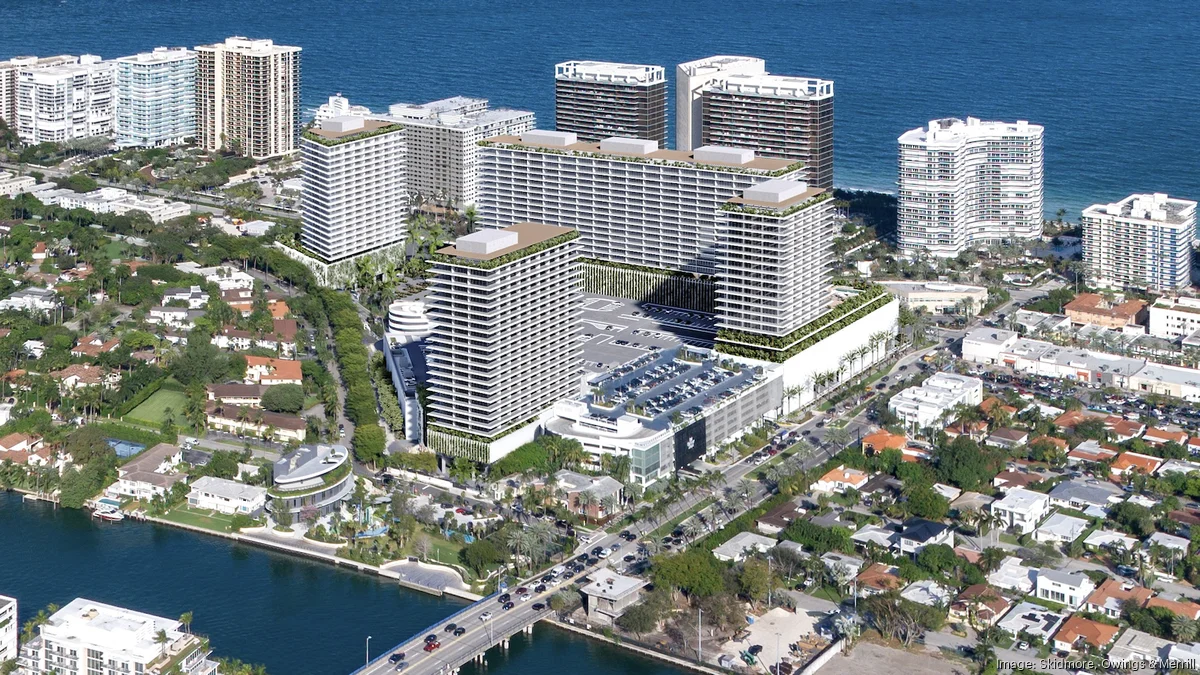
Officials in Bal Harbour have rejected a proposed legal settlement tied to a dispute over a housing project filed under Florida’s Live Local Act, highlighting ongoing tensions between municipalities and developers over how the state’s workforce-housing law should be applied in high-value coastal communities. The decision underscores how the legislation continues reshaping zoning authority and redevelopment expectations across South Florida.
The Live Local Act was designed to encourage workforce and affordable housing development by allowing qualifying projects to bypass certain local zoning restrictions when income-based affordability thresholds are met. However, several municipalities including Bal Harbour have challenged how the law applies within their jurisdictions, particularly when proposed developments exceed traditional height or density limits.
Town officials said rejecting the settlement allows the municipality to continue pursuing legal clarity around how the statewide housing statute interacts with local land-use regulations. Legal analysts say disputes like this are becoming more common as cities balance affordability goals with infrastructure planning, neighborhood character concerns, and long-term development strategies.
Developers across South Florida have increasingly relied on Live Local Act provisions to advance residential proposals in areas previously restricted to lower-density uses. Housing economists note that the law has become one of the most significant policy tools affecting Florida’s housing pipeline in 2026, especially in land-constrained coastal communities where traditional rezoning processes can take years.
According to estimates from the U.S. Census Bureau, Florida remains among the fastest-growing states nationally, increasing pressure on municipalities to expand housing inventory near employment centers and transit corridors. The Live Local Act was created in part to accelerate project approvals in these high-demand areas, though implementation has produced legal friction in several jurisdictions.
The dispute in Bal Harbour reflects broader questions about how workforce housing should be integrated into communities with limited available land and high property values. Analysts say projects proposed under the law often involve higher-density construction than previously allowed under local zoning codes, creating challenges for cities managing infrastructure capacity and neighborhood planning priorities.
Borrowing conditions remain another important factor shaping how quickly Live Local Act projects move forward statewide. Mortgage rates tracked by Freddie Mac have remained near the mid-6% range in recent months, increasing reliance on rental housing for many households delaying homeownership. Workforce-housing developments supported by policy incentives have therefore become increasingly important to maintaining supply balance.
Inflation trends reported by the Bureau of Labor Statistics continue influencing construction feasibility across Florida. Labor shortages and materials pricing volatility have contributed to estimated cost increases of roughly 5% to 10% in recent years, reinforcing the importance of zoning flexibility and tax incentives included in the Live Local Act framework.
Interest-rate expectations shaped by the Federal Reserve also affect development timelines. Stabilizing borrowing conditions could encourage additional workforce-housing proposals, particularly if municipalities and developers reach clearer agreements on how state law interacts with local planning authority.
For developers, the Bal Harbour decision signals that Live Local Act approvals may continue facing legal review in certain municipalities, especially in coastal markets with limited redevelopment parcels. Analysts say this uncertainty can influence land-acquisition strategies and financing timelines as builders evaluate project risk.
Investors are also monitoring the dispute closely because workforce housing has become an increasingly important segment of institutional real estate portfolios. Projects supported by statewide affordability incentives often offer predictable absorption rates in migration-driven markets such as South Florida, making regulatory clarity especially valuable.
The outcome of the Bal Harbour case may also influence other municipalities considering similar legal strategies. Urban planning experts note that court decisions tied to Live Local Act implementation could establish precedents affecting future residential proposals across Miami-Dade and Broward counties.
For renters and future homebuyers, the dispute highlights the ongoing role policy decisions play in shaping housing availability across South Florida. Expanding workforce housing supply remains a key objective of the Live Local Act, particularly in areas where rising land values have limited moderately priced housing development.
Looking ahead, housing economists say conflicts between municipalities and developers over the Live Local Act are likely to continue as cities interpret the law’s zoning provisions. While the legislation is expected to remain a central tool for expanding housing inventory statewide, legal challenges such as the Bal Harbour dispute may influence how quickly new workforce-housing projects move from proposal to construction.