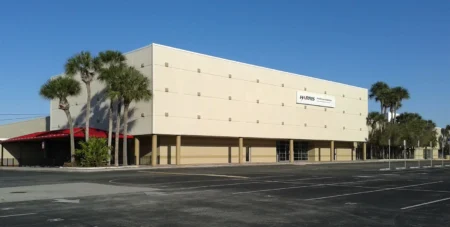



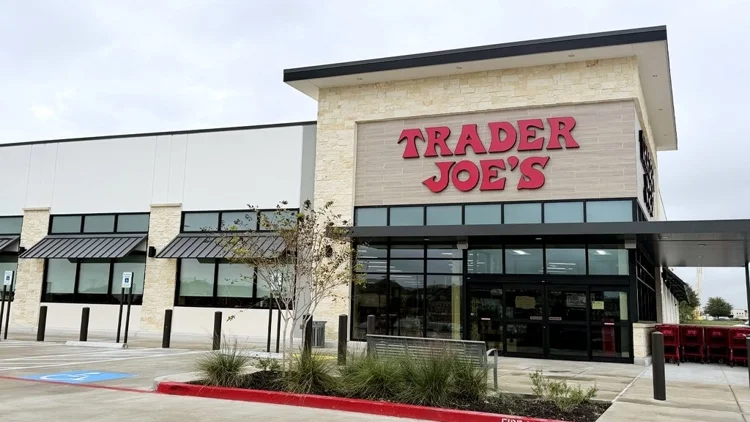
Land identified for a proposed new Trader Joe’s grocery store has been sold to a development group, according to preliminary reporting and property transaction disclosures, marking another sign of continued demand for neighborhood-scale retail anchored by specialty grocers across growing U.S. metro areas. While project timelines and final construction approvals remain subject to local planning review, analysts say grocery-anchored retail typically signals confidence in long-term population growth and household income stability in surrounding communities.
Trader Joe’s has historically followed a selective expansion strategy, often targeting mid- to high-density suburban corridors and walkable mixed-use districts with strong demographic fundamentals. Real estate professionals note that the company’s presence is frequently associated with rising retail foot traffic and increased investor interest in nearby commercial parcels, although the company itself rarely confirms store openings until late in the development process.
Property acquisition activity tied to grocery-anchored sites tends to precede broader retail corridor repositioning. Industry analysts say specialty grocers like Trader Joe’s often serve as “credit tenants,” meaning their leases can improve financing conditions for surrounding retail projects. According to commercial brokerage research cited in national retail reports, grocery-anchored centers historically demonstrate lower vacancy rates than non-anchored neighborhood shopping centers, particularly during periods of economic uncertainty.
Population migration trends continue to play a central role in grocery-led development decisions. U.S. Census Bureau estimates show that many Sun Belt markets—including large parts of Florida—have recorded above-average population inflows in recent years. Economists note that expanding household formation typically supports demand for neighborhood retail centers anchored by food and essential-goods tenants.
Inflation and borrowing costs remain key variables shaping how quickly projects tied to newly acquired sites move forward. Construction materials and labor expenses remain elevated compared with pre-2020 levels, with industry estimates suggesting development costs in many U.S. retail projects are still 5% to 15% higher than historical norms. Higher costs can influence whether projects proceed immediately or follow phased timelines after land acquisition.
Interest rate conditions also continue to shape commercial development feasibility. Federal Reserve policy tightening cycles pushed commercial borrowing costs higher through 2024 and into 2025, according to Federal Reserve data and lending market indicators. Analysts say higher financing costs can delay construction starts even after land sales are completed, particularly for grocery-anchored centers requiring multiple tenant commitments before vertical development begins.
Still, grocery retailers tend to remain resilient expansion drivers compared with discretionary retail categories. Bureau of Labor Statistics consumer spending data consistently shows food-at-home expenditures represent a stable share of household budgets, which supports long-term investor confidence in supermarket-anchored development corridors.
For residential real estate markets, the introduction of a Trader Joe’s location—or even the announcement of a potential site—can influence buyer perceptions of neighborhood desirability. Housing economists frequently note that proximity to high-quality grocery retail is associated with modest price premiums in many suburban housing markets. While exact increases vary widely by location, industry observers say walkable access to daily-needs retail often supports stronger resale performance over time.
In Florida specifically, grocery-anchored retail corridors have historically played an important role in shaping suburban housing growth patterns. Markets across Central Florida, Tampa Bay, and South Florida have seen similar projects coincide with increased demand for nearby single-family homes and townhome developments. According to National Association of Realtors housing trend analyses, access to everyday retail amenities remains one of the most cited neighborhood preferences among U.S. homebuyers.
Developers also benefit from grocery-anchored tenancy when assembling adjacent parcels for mixed-use projects. Specialty grocers can strengthen underwriting assumptions for nearby apartments, townhomes, and office-retail hybrid developments by increasing projected foot traffic and supporting stable occupancy expectations. In many markets, such anchors can improve loan-to-value confidence for construction financing compared with stand-alone retail concepts.
Investors often monitor these transactions closely because grocery-anchored developments historically attract long-term institutional capital once completed. Pension funds, real estate investment trusts, and private equity groups frequently view stabilized grocery-center assets as lower-volatility holdings relative to other retail property classes.
For consumers, the addition of a specialty grocer may influence both lifestyle convenience and housing affordability decisions. Buyers often weigh proximity to daily-needs retail when evaluating commuting patterns and neighborhood walkability. In many housing markets, improved amenity access can contribute to incremental home price increases in surrounding subdivisions.
Mortgage affordability remains a balancing factor. Freddie Mac data shows mortgage rates have fluctuated near the mid-6% range in recent periods, and even a one-percentage-point shift in rates can change monthly payments by roughly $150 to $300 on a $300,000 loan depending on loan terms. That variability can influence whether households prioritize amenity-rich neighborhoods or seek lower-priced alternatives farther from retail corridors.
Renters may also see indirect effects if grocery-anchored development supports additional multifamily construction nearby. Historically, areas receiving new neighborhood retail investment often experience gradual rent increases as convenience and accessibility improve, though outcomes vary significantly by market conditions.
Looking ahead, the land acquisition tied to the proposed Trader Joe’s location could signal early momentum for additional retail investment in the surrounding corridor if approvals move forward. Analysts say project timing will likely depend on financing conditions, tenant commitments, and local planning decisions, but grocery-anchored developments typically remain among the more resilient indicators of sustained suburban growth trends.