


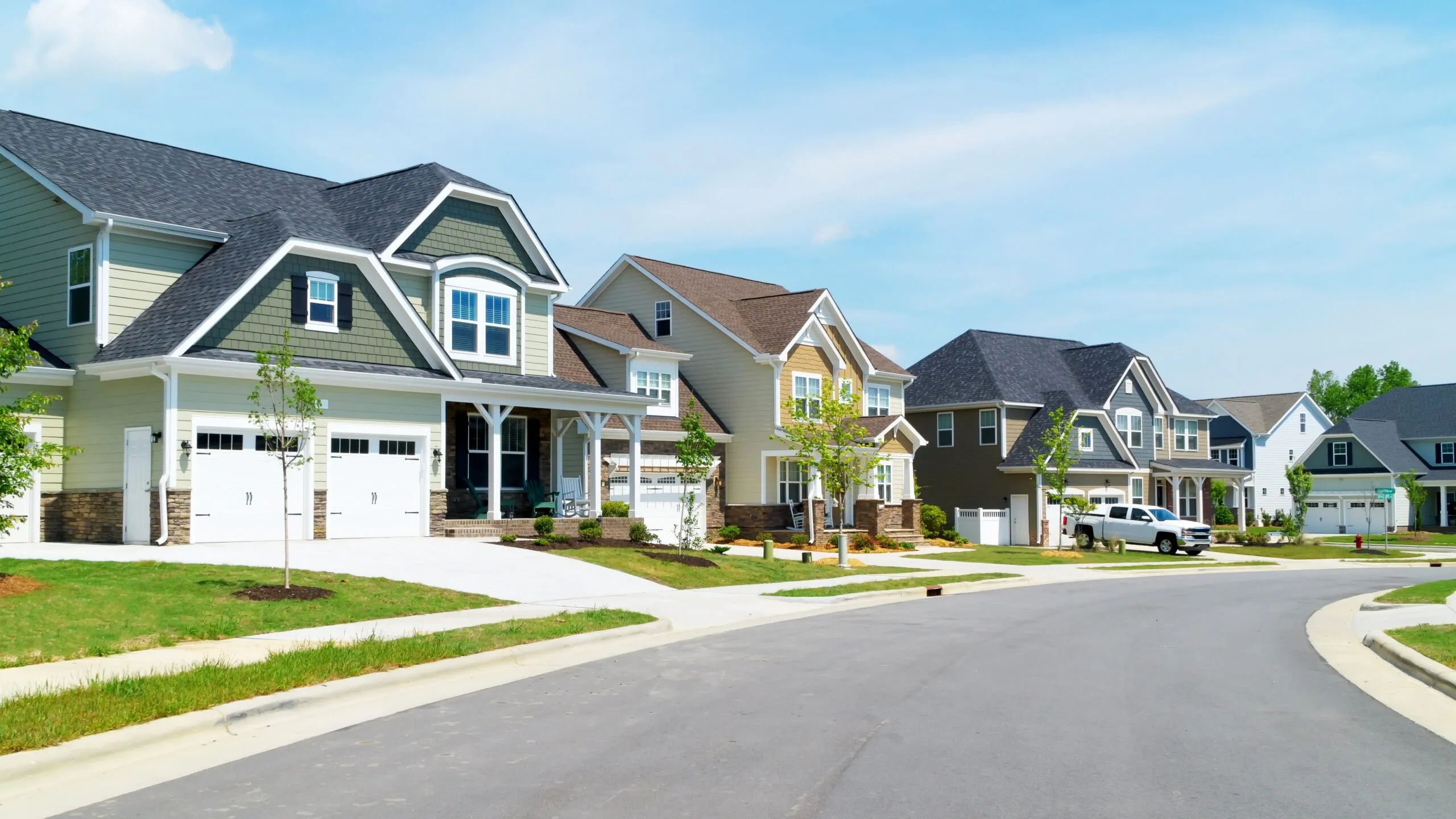
The median asking price for a single-family home in Florida reached approximately $415,000 in early 2026, per Florida Realtors association data, which is why the question of how to invest in Florida real estate with under $50,000 requires an honest answer rather than a misleading one. The direct answer is that $50,000 will not buy a typical Florida home outright. What it will buy is access to one of four distinct investment pathseach with a specific risk profile, income potential, and liquidity characteristicthat have produced verifiable returns for Florida investors at this capital level.
The four paths: using $50K as a down payment on a rental property in one of Florida’s entry-level investment markets (where acquisition plus financing produces immediate rental income), purchasing manufactured housing in specific communities, buying raw or semi-improved land in North and Central Florida’s rural counties, or entering Florida’s real estate market through publicly traded REITs and fractional ownership platforms with as little as $1,000. Each path is real, each has genuine tradeoffs, and each serves a different investor profile.
The Freddie Mac PMMS benchmark for a 30-year fixed investment property mortgage stood near 6.87% as of the week of April 9, 2026 (investment properties typically carry a 0.25% to 0.50% premium above the owner-occupant rate). At that rate, $50,000 deployed as a 20% down payment on a $250,000 Florida rental property funds a $200,000 mortgage with a P&I payment of approximately $1,319 per month. Whether that produces positive cash flow depends on rent, taxes, insurance, and vacancyall Florida-specific variables that this article models with real numbers.
By the end of this article, you will understand exactly what each path costs, what it produces, and what the Florida-specific risks are for each investment structure.
What You Will Learn From This Article
- $50,000 is sufficient for a 20% down payment on a $250,000 Florida rental property in markets like Ocala, Gainesville fringe, Jacksonville’s Northside, and North Florida rural countiesmarkets where median investment property prices remain in the $190,000 to $260,000 range as of early 2026.
- Investment property mortgages in Florida carry a rate premium of 0.25% to 0.50% above the owner-occupant benchmark. At an estimated 6.87% on a $200,000 investment loan, monthly P&I is approximately $1,319. A property in Ocala or Marion County renting for $1,400 to $1,600/month produces thin but positive gross cash flow before expenses.
- Manufactured homes in Florida parks (leased land) can be purchased for $15,000 to $45,000 in specific markets, but these are chattel property, not real estate. They do not appreciate like real property, face different financing rules, and carry specific Florida insurance risks tied to park age and storm exposure. They are an income play, not an appreciation play.
- Raw land in Putnam, Marion, Levy, Hamilton, and Suwannee counties is available from $5,000 to $35,000 per parcel. Land investment is a long-term capital appreciation strategy with zero cash flow, carrying costs of annual property taxes ($50 to $300/year for rural parcels) and no immediate income.
- Florida REITs (publicly traded real estate investment trusts with significant Florida exposure) allow entry from as little as $1,000 and provide diversified Florida real estate returns without property management responsibilities. The tradeoff is zero leverage, less control, and returns correlated to stock market volatility rather than individual property performance.
- Florida’s homeowners insurance crisis affects rental property investment more severely than primary residence ownership because investment property insurance typically costs 15% to 25% more than owner-occupant coverage for identical properties, and the same $8,292 average annual premium cited by Insurify for Florida homeowners is higher for non-owner-occupied rental properties.
- The single most common mistake among first-time Florida real estate investors with under $50K: targeting the wrong property type for the capital levelspecifically, attempting to purchase distressed properties requiring significant renovation with limited capital remaining after acquisition, leaving no cushion for carrying costs during the rehab period.
Strategy 1: Using $50K as a Down Payment on a Florida Rental Property
For most investors with $50,000 to deploy in Florida real estate in 2026, the down payment strategy produces the highest risk-adjusted return of the four available paths. This is because leveraged real estatea 20% down payment financing 80% of the purchase priceproduces returns on the full asset value, not just the equity invested. When a $250,000 property appreciates 4% annually, the investor gains $10,000 in equity. As a percentage of the $50,000 invested, that is a 20% return on equity before rental incomefrom an asset whose market rate of appreciation is only 4%.
The qualification for an investment property mortgage in Florida in 2026 is more demanding than for a primary residence. Fannie Mae guidelines for investment property conventional loans require a minimum 640 credit score, 15% down payment for single-unit properties (though 20% eliminates mortgage insurance), and reserves of 6 months of PITI for investment properties in addition to the down payment and closing costs. At 20% down on a $250,000 property, the investor needs $50,000 for the down payment plus approximately $4,500 to $7,500 for Florida closing costs plus 6 months of PITI reserves (6 × approximately $1,900 = $11,400). Total capital needed: approximately $66,000 to $69,000 for a clean conventional investment property loan. (Source: Fannie Mae Selling Guide B3-3.4-01, current)
This means $50,000 alone is tight for a 20% down conventional investment property loan once closing costs and reserves are factored in. Two practical solutions: target properties priced at $220,000 to $230,000 (where 20% down is $44,000 to $46,000, leaving more room for costs and reserves), or use a 25% down structure at a lower purchase price that meets the reserve requirement. Alternatively, a cash-out position from a different asset or a co-investor structure can supplement the $50,000 to meet the full capital requirement.
Where $50K Down Payment Makes Sense in Florida
The markets where $250,000 buys a rentable single-family property in 2026 are concentrated in North and Central Florida. These are markets with active rental demand from university populations, military communities, healthcare workers, and logistics employees.
Marion County (Ocala area): Single-family rentals in the $185,000 to $240,000 range in established neighborhoods. Monthly rents for 3-bedroom properties run $1,350 to $1,550. The Ocala area’s logistics and healthcare employment base has produced stable, lower-volatility rental demand compared to tourist-heavy Florida markets.
Alachua County (Gainesville fringe): Properties 5 to 15 miles outside Gainesville city limits in communities like Newberry, Archer, and Alachua run $185,000 to $250,000. University of Florida and UF Health employment provide sustained rental demand. USDA-eligible addresses in this fringe area also allow owner-occupant USDA financing if the investor is willing to live in the property for 12 to 24 months before converting to rental.
Duval County (Jacksonville Northside and surrounding areas): Jacksonville’s median home price of approximately $282,000 (Norada Real Estate, October 2025 data) has pockets of inventory in the $200,000 to $250,000 range in the Northside, Westside, and Arlington communities. Jacksonville’s finance, logistics, and military employment base provides diverse rental demand.
Putnam, Columbia, and Levy Counties: More rural markets with properties available below $200,000 and rents of $900 to $1,200/month for basic 3-bedroom homes. Lower rents require careful cash flow analysis but lower entry costs can offset the difference.
The Cash Flow Reality: What a $250K Florida Rental Actually Produces
Florida’s investment property returns are not fully captured by the purchase price and rent. Insurance, property taxes, and vacancy are the three variables that most first-time Florida investors underestimate most severely.
Monthly income and expense model: $230,000 rental property, Ocala/Marion County, 2026
Assumptions: 20% down ($46,000), $184,000 mortgage at 6.87%, 15-year lease tenant:
- Gross monthly rent: $1,450
- Vacancy allowance (8% annually): -$116/month
- Effective gross income: $1,334/month
- Mortgage P&I: -$1,214/month
- Property taxes (Marion County, new buyer assessment ~1.1%): -$211/month
- Landlord insurance (non-owner-occupied, estimated): -$425/month
- Property management fee (10% of collected rent): -$133/month
- Maintenance reserve (1.5% of purchase price annually / 12): -$288/month
- **Monthly net cash flow: $1,334$1,214$211$425$133$288 = -$937/month
This is a negative cash flow position with a professional property manager and full maintenance reserve. The math explains why Florida cash flow investing at today’s rates requires either much higher rents relative to price, a larger down payment that reduces the mortgage payment, or self-management to eliminate the management fee.
Self-managed, the cash flow improves to approximately -$804/monthstill negative. The investment thesis becomes appreciation plus principal paydown rather than immediate cash flow. Over 5 years at 4% annual appreciation, the $230,000 property reaches approximately $279,700. Combined with approximately $18,000 in principal paydown from 5 years of mortgage payments, total equity grows from $46,000 at purchase to approximately $113,700a 147% return on the original investment over 5 years before tax implications.
Florida Entry-Level Investment Property Market Comparison2026
| Market | Typical Price Range | Typical 3BR Rent | Gross Yield | Notes |
| Ocala / Marion County | $185K-$240K | $1,300-$1,550 | 6.0%-8.0% | Stable rental demand, lower insurance inland |
| Gainesville fringe / Alachua County | $185K-$250K | $1,200-$1,500 | 5.8%-7.2% | UF/UF Health demand, USDA-eligible fringe areas |
| Jacksonville Northside | $190K-$255K | $1,350-$1,600 | 7.0%-8.0% | Diverse employment base, Navy/port proximity |
| Lakeland / Polk County | $200K-$265K | $1,300-$1,600 | 6.0%-7.5% | Growing logistics corridor, I-4 access |
| Columbia/Suwannee Counties | $150K-$210K | $900-$1,200 | 6.0%-7.8% | Lower rents, lower prices, higher vacancy risk |
Sources: Florida Realtors market data Q4 2025/Q1 2026; Norada Real Estate 2026 Florida market analysis; Insurify 2026 Florida homeowners insurance data; author market observation April 2026. All rent and price ranges are approximate for standard 3-bedroom single-family rental inventory in indicated markets. Actual returns vary by specific property, condition, and management approach.
The gross yield column (annual rent divided by purchase price) tells part of the story but not all of it. Florida’s insurance costs, property tax rates, and vacancy rates determine whether a property with a 7% gross yield produces positive net cash flow. A 7% gross yield in Ocala with $5,100/year in insurance costs nets differently than the same yield in Jacksonville with $4,200/year in insurance.
Strategy 2: Manufactured Home Investment in Florida Parks
Manufactured homes on leased land in Florida parks represent the cheapest outright purchase price in Florida’s residential market. Under $50,000 cash purchases of park-model mobile homes, older double-wides, and 1990s-era manufactured homes in 55+ and family communities exist across the state, with concentrations in Fort Meade, Zephyrhills, Lakeland, and North Florida communities.
The fundamental limitation: a manufactured home on leased land is personal property (chattel), not real estate. It is financed with a chattel loan, not a mortgage. The lot renttypically $400 to $700 per month in Florida parks as of 2026is a fixed expense that does not build equity. The home can be repossessed more easily than real property if payments default. And most critically for investors: the home does not appreciate with the real estate market in the same way as land-and-home combinations.
A $35,000 manufactured home in a Zephyrhills park with a $550/month lot rent rented to a tenant at $900/month produces $350/month in gross income before taxes, insurance, and maintenance. The cash-on-cash return ($350 × 12 / $35,000) is approximately 12% gross, which is the highest gross yield number in Florida’s residential market. The problem is the exit strategy: when you want to sell, the buyer pool is small, chattel financing is expensive (rates of 7% to 12% for chattel loans versus 6.37% for conventional mortgages), and the lot rent structure caps the buyer’s ability to pay.
Manufactured home on owned land (where the land is purchased along with the home and the title is retired) is a different and more favorable investment structure. Mobile home and land packages in rural North Florida communities in Hamilton, Madison, Jefferson, and Taylor counties are available in the $45,000 to $80,000 range, straddle the upper boundary of this article’s scope, and qualify for FHA, VA, and USDA financing once the title is retired and the home is permanently affixed.
Strategy 3: Raw Land Investment in Florida’s Rural Counties
Florida’s rural counties offer land parcels from $5,000 to $35,000 in communities where water, electricity, and road access range from excellent to non-existent. Putnam County (Interlachen area), Marion County fringe, Levy County, and Suwannee County have the most active land markets in this price range.
Land investment in Florida is a patience trade. The parcel produces no income, requires paying annual property taxes of $50 to $300/year for rural sub-acre lots, and has no liquidity mechanism until a buyer is found. What makes it potentially worthwhile is the appreciation pattern: per Florida Realtors data, mobile homes with land in Florida appreciated approximately 70% over the 7-year period ending in 2026. Rural land in counties with improving infrastructure has followed similar trajectories in specific zip codes adjacent to expanding development corridors.
The specific risk profile of Florida land investment: flood zone designation and wetland classification can significantly reduce or eliminate buildable potential. A $15,000 Putnam County parcel that appears suitable for a manufactured home may sit in a FEMA AE flood zone requiring flood insurance and elevated foundation costs that make development economically unfeasible. Verify: (1) county zoning classification, (2) FEMA flood zone designation via FEMA’s Flood Map Service Center, (3) wetland delineation from the Florida Department of Environmental Protection records, and (4) whether utility access (water, electricity, septic feasibility) exists before purchasing any land under $50,000 in Florida.
A Real-World Scenario: Latoya in Gainesville
Latoya is a 34-year-old registered nurse at UF Health Shands Hospital in Gainesville, earning $78,000 annually. She has $49,500 saved. Her credit score is 728. She owns her current Gainesville rental apartment at $1,150/month and wants her first investment property.
She identifies a 3-bedroom, 2-bath single-family home in Newberry, Alachua County (approximately 14 miles west of Gainesville) listed at $218,000. The property has a current tenant in place at $1,275/month with 7 months remaining on their lease.
Latoya’s acquisition plan:
- Purchase price: $218,000
- Down payment (20%): $43,600
- Florida closing costs (approximately 3.5%): $7,630
- Reserves required (6 months PITI, estimated): $10,800
- Total capital needed: $62,030
Latoya is $12,530 short of what the conventional investment property loan structure requires with 6 months of reserves. She adjusts the plan: she approaches her 401(k) for a $15,000 loan (available penalty-free, repaid over 5 years at 6% to herself), bringing her total available capital to $64,500. This covers the acquisition costs with a small buffer.
Investment analysis:
- Mortgage on $174,400 (80% of purchase) at 6.87%, 30 years: $1,149/month P&I
- Property taxes (Alachua County, estimated post-purchase assessment at 1.1%): $200/month
- Landlord insurance (estimated for post-2005 construction, inland Alachua): $310/month
- Management fee (she self-manages): $0
- Maintenance reserve (1.5% annually / 12): $273/month
- Vacancy allowance (8%): $102/month
- **Effective monthly cash flow: $1,275-$1,149-$200-$310-$273-$102 = -$759/month
Latoya’s investment runs negative cash flow of approximately $759/month. On $78,000 income, this represents approximately 11.7% of gross monthly income as an investment subsidy. Her thesis: 5 years of appreciation and principal paydown.
At 4% annual appreciation, the $218,000 property reaches approximately $265,200 in year 5. Principal paydown over 5 years reduces the $174,400 loan to approximately $160,100. Equity at year 5: $265,200-$160,100 = $105,100, versus $43,600 at purchase (not counting the 401K loan repayment cost). That is a 141% return on the original down payment, achieved through a negative cash flow position of $759/month ($45,540 total investment subsidy over 5 years).
The non-obvious Florida dimension: Newberry is in a USDA-eligible area. If Latoya had been an owner-occupant buyer instead of an investor, she could have purchased this property with 0% down under the USDA program. The investor designation changes
Strategy 4: REITs and Real Estate CrowdfundingFlorida Exposure Without Direct Ownership
Publicly traded Real Estate Investment Trusts with significant Florida exposure allow investors to participate in Florida’s real estate market with as little as $1,000 and complete liquidity (stock market trading hours). Florida’s major publicly traded REITs include healthcare-focused REITs with South Florida medical facilities, retail REITs with Florida shopping center portfolios, and residential apartment REITs with significant Central and South Florida presence.
The return profile of a publicly traded REIT is fundamentally different from direct property ownership: returns are correlated with stock market movements rather than individual property performance, there is no leverage beyond the REIT’s own balance sheet borrowing, and dividend yields in the 3% to 6% range represent income returns without capital gain exposure on the underlying properties (capital gains flow through at sale of the REIT shares). REITs are required by law to distribute at least 90% of taxable income to shareholders as dividends, making them an income-oriented vehicle.
Real estate crowdfunding platforms (Fundrise, RealtyMogul, and similar) allow fractional investment in specific Florida properties with minimums as low as $500 to $1,000. These platforms pool capital from multiple investors to fund commercial and residential acquisitions that individual investors could not otherwise access at this capital level. Returns have historically ranged from 7% to 12% annually on Fundrise’s eREIT products over their operating history, though past performance does not predict future results and crowdfunding investments are illiquid during the investment period (typically 3 to 7 years).
For an investor with exactly $50,000 and a preference for not managing physical property, the REIT or crowdfunding path provides Florida real estate exposure with no landlord responsibilities, no insurance decisions, and no property management friction. The tradeoff is the absence of the leverage effect that makes the down payment strategy compelling for direct property.
From My Experience: Florida Market Insight
In the Jacksonville and Gainesville markets, the under-$50K investment question produces a specific behavior pattern I observe consistently: investors who anchor their expectations to a single strategyusually “I want to buy a house to rent out”and then become frustrated when the math does not produce the cash flow they expected at entry-level prices and today’s interest rates. The $250,000 property that rented for $1,500/month in 2022 was purchased when 30-year investment property rates were 4.5% to 5%, producing a genuinely positive cash flow picture. The same property today at 6.87% on the mortgage, with insurance 40% higher than 2022 levels, and property taxes assessed at the new purchase price rather than the prior owner’s homesteaded assessment, is a negative cash flow position for nearly every investor who self-finances at 20% down.
What I observe among investors who succeed in the Jacksonville Northside and Gainesville fringe markets at the $200,000 to $250,000 price range is that they have either (a) adjusted their thesis from “cash flow now” to “equity accumulation over 5 to 7 years,” (b) deployed more capital (30% down rather than 20%) to reduce the monthly mortgage payment, or (c) found properties with existing below-market tenants that produce higher relative rent and transition to market rent at renewal.
In Ocala’s Marion County, I observe a specific insurance cost miscalculation that consistently underestimates the true cost of investment property ownership. Investors who pull their property tax and insurance assumptions from Zillow estimates or generic online investment calculators use owner-occupant insurance rates because that is what the national tools default to. Investment property landlord insurance in Floridaspecifically in Marion County, where the combination of older housing stock, insurance market exits following Hurricane Ian’s ripple effects, and increased carrier scrutiny of rental properties has pushed premiums higherruns 15% to 25% above comparable owner-occupant rates. On a property where the owner-occupant insurance estimate would be $3,600/year, the landlord policy runs $4,200 to $4,500/year. That $600 to $900 annual difference ($50 to $75/month) does not sound significant but changes a marginally positive cash flow to a deficit in a market already producing thin margins at current rates.
Common Mistakes Florida Real Estate Investors Make Under $50K
Mistake 1: Targeting Properties That Require Rehabilitation With Limited Capital An investor with $50,000 who sees a distressed Florida property listed at $130,000 that “needs work” is often looking at a transaction that requires $30,000 in purchase acquisition cost (using hard money or seller financing), $40,000 in renovation, and $5,000 to $10,000 in carrying coststotaling $75,000 to $80,000 before the property is rentable or saleable. The investor’s $50,000 is insufficient and must be supplemented with expensive short-term capital. In Florida’s construction cost environment, where licensed contractor rates and material costs have escalated substantially since 2020, rehabilitation budget overruns of 20% to 40% are common and can consume any anticipated profit margin. Beginners with under $50K should prioritize stabilized, tenant-occupied or move-in-ready properties over distressed inventory.
Mistake 2: Underestimating the True All-In Capital Required for an Investment Property Loan As documented in the Latoya scenario above, the capital required for a 20% down conventional investment property loan is not just 20% of the purchase price. It also includes Florida closing costs (approximately 2% to 4%), 6 months of PITI reserves required by Fannie Mae underwriting, and ideally 3 to 6 months of operational reserves for vacancy and maintenance after closing. An investor who deploys their entire $50,000 as a down payment and arrives at closing without closing cost funds or reserves will either fail to close or close in a financially precarious position where a single month of vacancy creates a personal cash crisis.
Mistake 3: Not Budgeting for Landlord Insurance Before Committing to a Purchase Price The difference between the generic insurance estimate a lender uses in a pre-approval and the actual landlord insurance quote for a specific rental property in Florida can be $1,000 to $2,500 per year. For a rental property at the $225,000 to $250,000 price point in Ocala or Jacksonville, getting an actual landlord insurance quote from at least two Florida carriers before making an offer is the same as verifying the acquisition cost. An insurance quote that comes in $200/month higher than anticipated changes the investment analysis by $2,400 annuallypotentially the difference between a viable investment and an unworkable one.
Mistake 4: Confusing Gross Yield With Net Return “This property has a 7% cap rate” means the annual net operating income (after vacancy, insurance, taxes, and maintenance but before debt service) is 7% of the purchase price. It does not mean the investor nets 7% on their invested capital. A 7% cap rate on a $230,000 property means net operating income of $16,100/year. Against a $46,000 down payment, the return on equity before debt service is 35%before the mortgage payment. After a $1,149/month mortgage payment ($13,788/year), the cash-on-cash return is ($16,100$13,788) / $46,000 = 5.0%. After management fees and vacancy, it turns negative. Investors who conflate gross yield, cap rate, and actual return on investment make acquisition decisions based on incomplete math.
Mistake 5: Purchasing Manufactured Home Park Units Without Exiting the Park A manufactured home in a Florida park on leased land is the most accessible entry point under $50K, but it is the least defensible investment position. The park owner controls lot rent increases, park rules, and ultimately the right to terminate leases. Florida law provides some tenant protections for mobile home park residents, but investors who purchase homes in parks face rent increases that can erode cash flow rapidly, park closures that force expensive relocations, and resale to a buyer pool limited to those who can qualify for chattel financing at 7%+ rates. Investors who want Florida manufactured home exposure should target land-and-home combinations specifically, even if it requires a higher purchase price or a smaller home on a larger parcel.
Mistake 6: Ignoring the USDA Hack for First-Time Owner-Investor Entry An investor who is willing to live in the property for 12 to 24 months before converting it to a rental can access USDA Section 502 Guaranteed Loan financing in eligible areas with 0% down payment. This preserves the entire $50,000 for reserves, renovation, and operational capital while the investor occupies the property. After the occupancy period, the property can be converted to a rental while the investor moves to a new primary residence. This is a legal strategy that requires genuine occupancy intent at originationit cannot be used to fraudulently obtain a primary residence loan on an intended investment property. But for investors who are flexible about their living situation and targeting USDA-eligible communities in Alachua, Marion, Levy, or Columbia counties, it produces a meaningfully different entry cost structure than a conventional investment property loan.
Final Analysis
The combined picture of Florida real estate investment under $50,000 in 2026 reflects two structural realities that mainstream investment content systematically downplays. First, at current Florida home prices and current investment property mortgage rates, entry-level rental property investment is not a cash flow playit is an equity accumulation play with a monthly subsidy cost. This is not a temporary condition created by 2026’s rate environment; it is a structural outcome of Florida’s appreciation over the past decade that has pushed prices above the level where 80% leverage at current rates produces positive cash flow for most buyers. The investor who accepts this reality and frames their investment as 5- to 7-year equity accumulation is working with the actual market. The investor who expects cash flow at these price and rate levels in most Florida markets will consistently be disappointed.
The underreported dimension of under-$50K Florida investing is the USDA owner-occupant strategy for investors willing to start as residents. The markets where this strategy is availableAlachua County’s fringe communities, rural Marion County, Columbia County, Suwannee Countyare also the markets with the most favorable entry-level investment pricing. The combination of USDA’s 0% down, seller concessions covering closing costs, and a 12-to-24-month occupancy period before conversion to rental preserves the investor’s capital entirely while acquiring the asset. This pathway is documented in USDA’s own guidelines but is almost never discussed in investment content because it requires occupancy rather than pure investment, making it less attractive to content targeting passive investors.
Two observations not covered elsewhere in this article: Florida Realtors data from Q4 2025 shows that investor purchase activity (defined as purchases by entities rather than individuals, or purchases in which the buyer does not claim Homestead Exemption within 12 months) in the $200,000 to $300,000 price range declined approximately 18% year-over-year in Q4 2025 across North and Central Florida markets, consistent with the cash flow squeeze described above. And the National Association of Realtors’ 2025 Investment and Vacation Home Buyers survey found that the median down payment for investment property purchases was 25% nationallysuggesting that investors who reach the market are deploying more capital than the minimum 20%, supporting the thesis that under-$50K investors face a tighter entry path than the headline numbers suggest.
Frequently Asked Questions
Can I buy a rental property in Florida with $50,000? Yes, but not easily with a standard conventional investment property loan. A 20% down payment on a $230,000 property in Ocala or Gainesville fringe requires $46,000, leaving only $4,000 for closing costs ($7,000 to $10,000 needed) and 6-month PITI reserves ($10,800 required by most lenders). The full capital requirement for a clean conventional investment property purchase typically runs $65,000 to $70,000 including all closing costs and reserves. Investors with exactly $50,000 can make it work by targeting lower purchase prices ($200,000 to $215,000), using seller concessions to offset closing costs, or supplementing with a 401(k) loan. The USDA owner-occupant strategy in eligible areas allows 0% down if the investor occupies the property for 12 to 24 months before converting to rental.
What is the cheapest way to invest in Florida real estate in 2026? The cheapest entry point in dollar terms is a Florida REIT or crowdfunding platform (entry from $500 to $1,000). The cheapest entry for physical property is a manufactured home on leased land in a Florida park ($15,000 to $45,000 for older units in communities like Zephyrhills, Fort Meade, and North Florida parks). The cheapest entry for land ownership is rural acreage in Putnam, Marion, Hamilton, or Suwannee counties ($5,000 to $20,000 for sub-acre parcels). Each entry point carries different risk, return, and liquidity characteristics. The manufactured home park approach has the highest gross yield but the weakest long-term appreciation and exit profile. The land approach has near-zero yield but no management burden and potential long-term appreciation.
What Florida markets have the best returns for small investors in 2026? The markets with the best combination of price accessibility and rental demand for under-$50K investors targeting the down payment strategy are Marion County (Ocala area), Alachua County fringe (Gainesville area), Duval County (Jacksonville Northside and Westside), and Polk County (Lakeland corridor). These markets have median investment property prices in the $190,000 to $260,000 range, gross rental yields of 6% to 8%, and stable rental demand from healthcare, logistics, university, and military employment bases. All four markets experienced less insurance volatility than coastal Florida markets, which helps the investment math. Norada Real Estate’s 2026 Florida market analysis identified Jacksonville and Ocala as particularly favorable for investors seeking affordability combined with sustainable rental demand.
Do I need a property manager for a Florida rental if I live nearby? This depends on your time availability and tolerance for direct tenant interaction. Self-managing a Florida rental property eliminates the 8% to 10% management fee (approximately $120 to $145/month on a $1,450 rent), which is often the difference between negative and break-even cash flow at entry-level prices. Florida landlords must comply with Chapter 83 of the Florida Statutes, which governs landlord-tenant relationships, security deposit handling (within 15 days of receipt), required disclosures, and eviction procedures. Self-managing requires understanding these requirements and following them precisely. Improperly handled security deposits or eviction procedures in Florida can result in the landlord forfeiting their right to keep the deposit or facing statutory damages. Most first-time Florida investors benefit from at least consulting a local property manager before deciding to self-manage.
Can I use a USDA loan to buy an investment property in Florida? Not directlyUSDA Section 502 Guaranteed Loans require the property to be the borrower’s primary residence at the time of purchase and for a period following closing. USDA financing cannot be used to purchase a dedicated investment property. However, an investor who genuinely occupies the property as their primary residence and then subsequently moves while retaining the property as a rental is not prohibited from doing so, provided the original occupancy was genuine and not fraudulent at origination. This “owner-occupant to investor” strategy requires authentic occupancy intent, typically 12 to 24 months of actual residence, and is specifically available in USDA-eligible Florida communities. The strategy preserves capital by eliminating the down payment requirement.
What are the tax benefits of owning a Florida rental property? Florida has no state income tax, which means rental income is subject only to federal tax. Rental income from investment properties is taxed as ordinary income at the investor’s federal marginal rate, offset by deductible expenses: mortgage interest, property taxes, insurance premiums, management fees, maintenance and repairs, depreciation (residential rental property depreciated over 27.5 years under IRS rules), and travel for property management. Depreciation is the most valuable non-cash deduction: on a $230,000 property with $40,000 attributed to land (land is not depreciable), the annual depreciation deduction is $190,000 / 27.5 = $6,909/year, reducing taxable rental income without a cash outlay. Consult a CPA familiar with Florida investment property before relying on any tax benefit calculation for this type of investment.
Disclaimer:
This article is for educational and informational purposes only. It does not constitute mortgage advice, financial advice, legal advice, or an offer to lend. Examples and figures used are illustrative only and may not reflect current rates, program availability, or individual eligibility. Program requirements, lender overlays, and market conditions vary by lender, borrower profile, and property type. Always consult a licensed mortgage professional, financial advisor, or attorney before making any financial decision. ACT Global Media is not a mortgage lender, mortgage broker, or financial advisor.
Editorial Note: All mortgage-related content in this article has been reviewed for SAFE Act compliance, CFPB educational content standards, and Florida OFR advertising guidelines before publication.