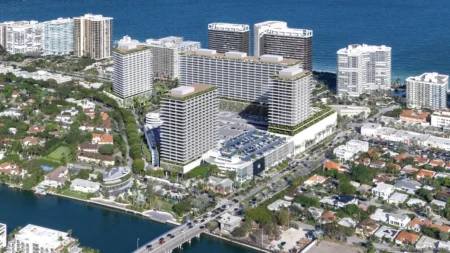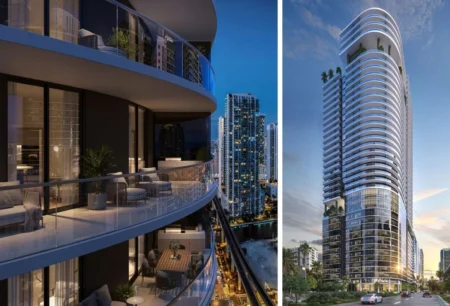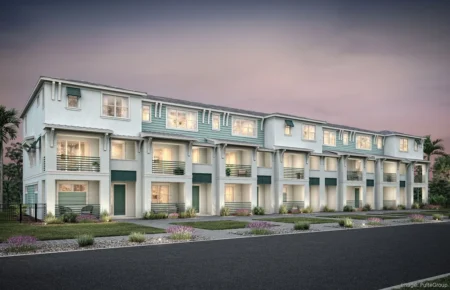




Alfonso Costa Jr., chief operating officer of Falcone Group, says mixed-use developments are playing an increasingly important role in expanding housing supply across urban markets as cities respond to affordability pressures, land constraints, and rising population growth in key regions such as South Florida.
Costa noted that mixed-use communities—projects combining residential, retail, office, and lifestyle components—are becoming central to modern urban planning strategies because they allow developers to maximize land use while supporting walkable neighborhoods close to employment centers and transportation corridors. Industry analysts say these projects are helping cities deliver additional housing units without requiring large-scale suburban expansion.
Across the United States, municipalities are increasingly encouraging mixed-use development as a solution to persistent housing shortages. According to estimates from the U.S. Census Bureau, household formation has continued to outpace housing construction in several major metro areas over the past decade, reinforcing the need for higher-density development models that integrate residential space with commercial infrastructure.
Costa explained that mixed-use developments also support long-term economic sustainability by attracting businesses alongside residential construction. Retail and office components often create employment opportunities within walking distance of housing, which can reduce commute times and strengthen neighborhood-level economic activity. Urban planners say these integrated environments are increasingly attractive to younger professionals and relocating households seeking convenience-oriented lifestyles.
The broader economic environment continues shaping how quickly mixed-use projects move forward. Mortgage rates tracked by Freddie Mac have remained near the mid-6% range in recent months, limiting affordability for some buyers but increasing demand for rental housing near employment centers. Analysts say mixed-use developments often benefit from this trend because they provide both ownership and rental options within the same community footprint.
Inflation trends reported by the Bureau of Labor Statistics continue affecting construction timelines nationwide. Materials pricing volatility and labor shortages have contributed to estimated cost increases of roughly 5% to 10% in recent years. Developers say mixed-use projects help offset some of these pressures by distributing infrastructure investment across multiple revenue-generating property types rather than relying solely on residential sales.
Interest-rate expectations shaped by the Federal Reserve also influence development planning decisions. When borrowing conditions stabilize, integrated communities that combine residential and commercial uses often attract financing more easily because diversified income streams can reduce overall project risk.
For homebuyers, mixed-use communities can expand housing options near transit corridors and employment districts where traditional single-family construction may be limited. Industry estimates suggest proximity to retail amenities and workplace access can support stronger long-term property values compared with standalone residential subdivisions located farther from urban cores.
Investors are also increasingly focusing on mixed-use developments as part of diversified real estate strategies. Projects that combine apartments, condominiums, retail space, and office components often produce multiple income streams, which can improve resilience during periods of market volatility. Analysts say this flexibility has made mixed-use construction particularly attractive in migration-driven regions such as Florida.
South Florida remains one of the strongest examples of how mixed-use projects are supporting housing expansion. Cities including Miami, Fort Lauderdale, and West Palm Beach continue attracting domestic and international residents, increasing demand for housing located near employment hubs and entertainment districts. Developers say integrated community planning helps meet that demand more efficiently than single-use zoning approaches.
Costa emphasized that collaboration between developers and municipalities is essential to advancing mixed-use housing pipelines. Zoning flexibility, infrastructure coordination, and transit-oriented planning policies often determine how quickly these projects move from concept to construction.
For renters and future homeowners, mixed-use developments can improve access to services such as grocery stores, healthcare facilities, and public transit within walking distance of residential units. Urban economists say these convenience factors frequently contribute to stronger occupancy rates and long-term neighborhood stability.
Looking ahead, Costa said mixed-use construction is likely to remain a central strategy for addressing housing shortages in fast-growing metropolitan areas. As cities continue adapting to population growth and affordability challenges, integrated development models are expected to play a larger role in shaping how urban housing supply expands through 2026 and beyond.