
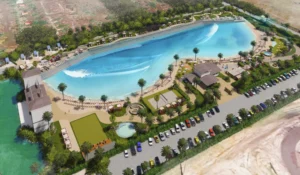


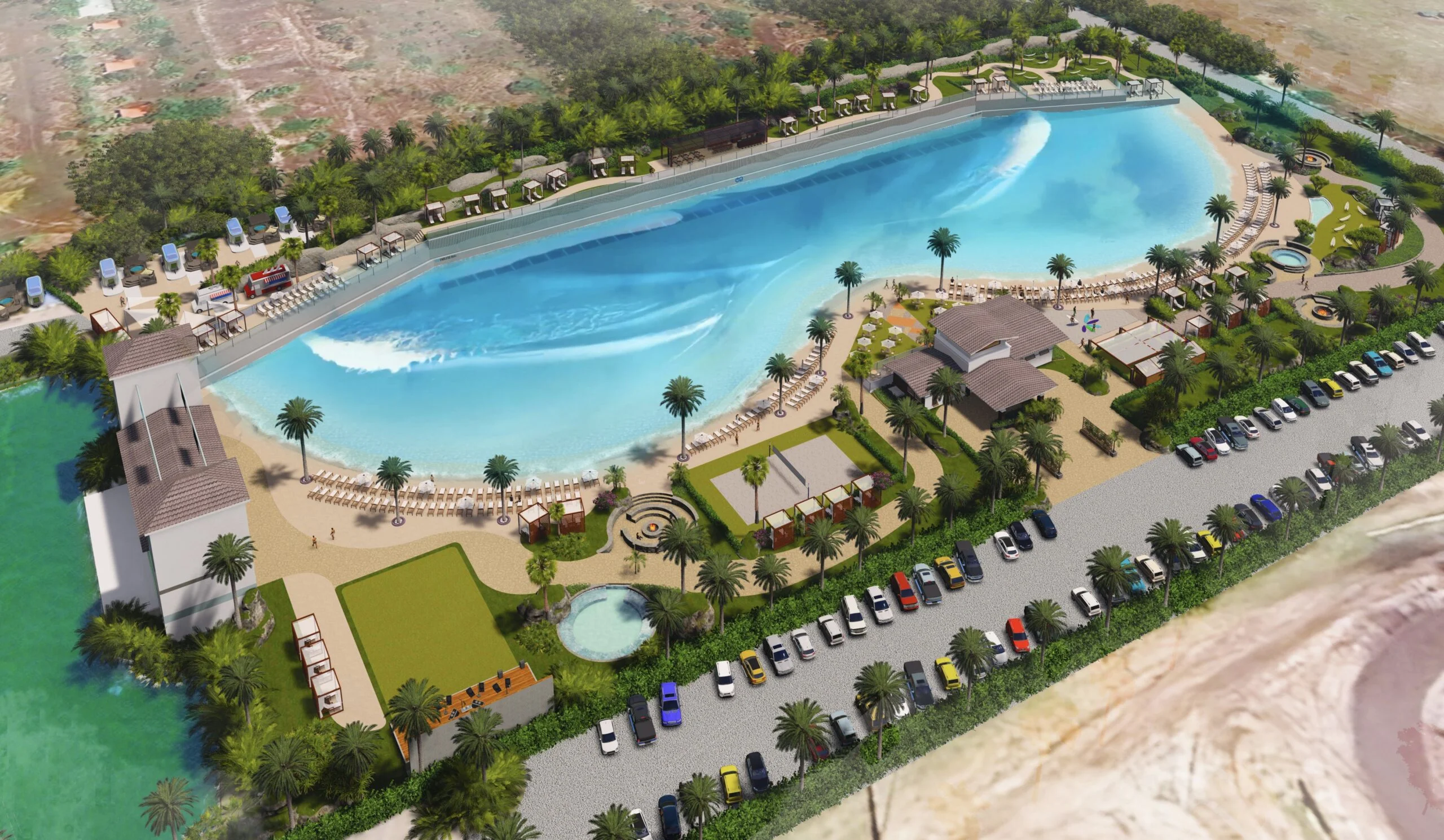
Surf parks are rapidly evolving from niche recreation concepts into powerful real estate catalysts across the United States, with developers increasingly positioning artificial wave lagoons as anchor amenities inside master-planned communities, hospitality districts, and mixed-use entertainment corridors. Analysts say the “business of surf parks” in 2026 reflects a broader shift toward experience-driven development strategies designed to boost land values, attract tourism, and support residential absorption in fast-growing Sun Belt markets.
Modern surf parks rely on advanced wave-generation technologies capable of producing consistent surfable waves inland, making them viable lifestyle amenities far from coastal regions. Developers are increasingly integrating these facilities into large-scale projects that combine residential housing, hotels, retail districts, and entertainment venues into destination-style environments.
Projects featuring surf lagoons have appeared across states such as Texas, Florida, and Arizona, where population growth and tourism demand support experiential development models. Economists say surf parks are becoming comparable to golf courses and marinas in earlier decades—signature amenities that help define the identity and value proposition of surrounding communities.
Developers say surf-centered mixed-use districts can significantly increase adjacent residential property values. Housing economists note that master-planned communities anchored by lifestyle amenities historically command pricing premiums compared with traditional suburban developments lacking destination features. Surf parks, in particular, appeal to younger buyers seeking recreation-focused neighborhoods with walkable retail and hospitality components.
Tourism demand is another major factor supporting surf park investment. According to data from the U.S. Travel Association, experiential tourism continues expanding faster than traditional destination travel categories, encouraging developers to pursue projects capable of attracting year-round visitors rather than seasonal guests. Surf lagoons allow inland cities to compete with coastal recreation markets by offering controlled, predictable wave conditions independent of weather or tides.
In Central Florida, surf-anchored developments are drawing attention as potential complements to the region’s tourism infrastructure led by Walt Disney World Resort and Universal Orlando Resort. Analysts say adding new destination-style recreational amenities can strengthen Orlando’s appeal as both a visitor hub and relocation destination for younger households seeking lifestyle-oriented communities.
Hospitality investment strategies are also shifting alongside surf park expansion. Developers increasingly pair wave lagoons with boutique hotels, short-term rental districts, and retail promenades designed to capture visitor spending beyond the attraction itself. Economists note that entertainment-anchored developments often generate multiplier effects supporting restaurant openings, event programming, and nighttime economies in surrounding neighborhoods.
Construction-cost conditions remain an important factor shaping surf park feasibility. Data from the Federal Reserve indicates elevated borrowing costs since 2022 have increased financing expenses across entertainment and hospitality developments nationwide. However, analysts say destination-style amenities capable of generating multiple revenue streams—including memberships, ticketed sessions, lodging partnerships, and retail leasing—continue attracting investor interest despite tighter capital markets.
For residential real estate markets, surf parks are increasingly being used as absorption accelerators for nearby housing inventory. Developers say wave-lagoon amenities help differentiate large master-planned communities competing for relocating households in fast-growing metro areas such as Orlando, Austin, and Phoenix.
Population growth remains one of the strongest drivers behind surf park–linked development strategies. According to the U.S. Census Bureau, migration into Sun Belt regions continues supporting long-term housing demand and encouraging developers to introduce lifestyle amenities that improve community competitiveness.
Investors are also evaluating surf parks as long-term land-value enhancement tools rather than standalone entertainment assets. Economists note that anchor amenities capable of increasing surrounding residential density and retail leasing performance often generate stronger returns through adjacent development parcels than through ticket revenue alone.
Short-term rental markets may also benefit from surf park expansion. Historically, entertainment-oriented destinations attract vacation-home investors seeking properties near year-round attractions. Analysts say inland surf parks could replicate similar investment patterns seen near ski resorts and golf communities, particularly in tourism-heavy regions such as Central Florida.
Mortgage-rate conditions remain a key factor shaping how quickly surf-anchored communities translate into residential sales activity. Recent Freddie Mac data shows mortgage rates have remained near the mid-6% range in recent periods, influencing affordability even as migration-driven demand continues supporting Sun Belt housing markets.
For renters, entertainment-centered districts anchored by surf lagoons often support multifamily development pipelines designed for younger residents prioritizing recreation access and walkable neighborhoods. Historically, lifestyle amenities integrated into mixed-use environments have contributed to stronger occupancy rates in surrounding apartment communities.
Looking ahead, economists say surf parks are likely to remain part of a broader shift toward experience-led real estate development strategies in 2026 and beyond. As developers compete to attract both residents and visitors in high-growth metros, inland wave lagoons may increasingly serve as signature anchors shaping the next generation of master-planned communities across the United States.