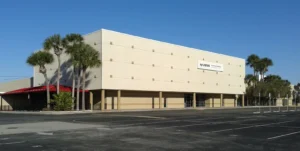



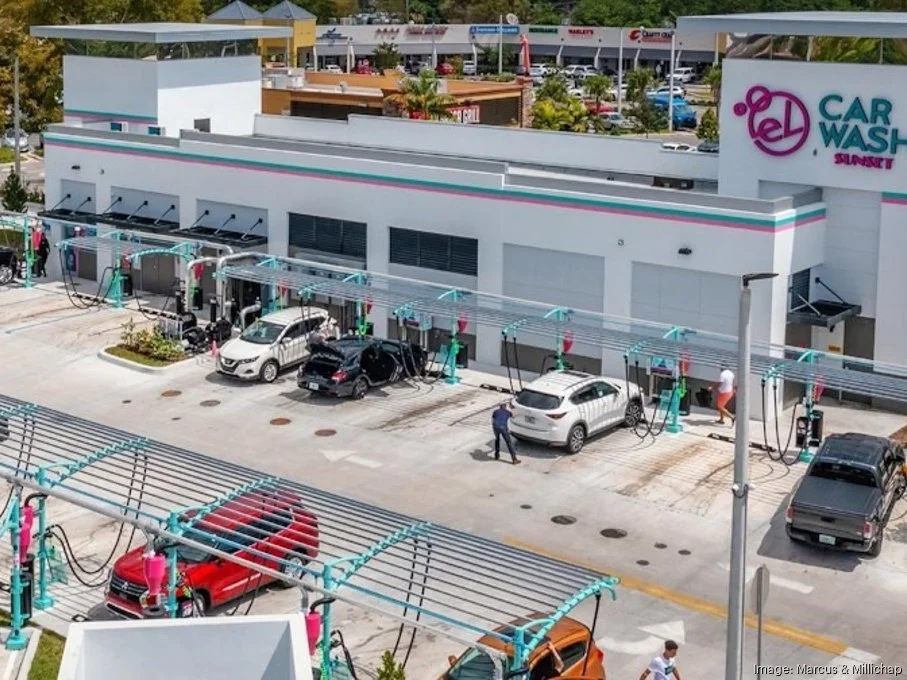
A Miami-based car wash operator has acquired three locations in Volusia County, Florida, for approximately $16 million, underscoring continued investor interest in service-oriented retail properties that generate recurring consumer traffic even as broader commercial real estate markets adjust to higher borrowing costs. The transaction reflects a growing trend across Florida in which automotive service operators expand footprints in fast-growing suburban corridors tied to population migration and commuting patterns.
The newly acquired sites are expected to strengthen the company’s presence in Central Florida, where Volusia County has experienced steady residential growth and rising vehicle ownership levels in recent years. Analysts say automotive service properties—including car washes, tire centers, and quick-service maintenance facilities—have increasingly become attractive investment targets because they tend to rely on repeat-use demand rather than discretionary spending cycles.
Retail-service acquisitions of this type are often structured as long-term operating investments rather than short-term redevelopment plays. According to commercial real estate economists, properties supporting everyday vehicle maintenance typically demonstrate more stable performance across economic cycles than apparel or specialty retail centers, which can be more sensitive to consumer sentiment shifts.
Florida’s continued population expansion has played a major role in shaping investor strategy. U.S. Census Bureau migration estimates show the state has remained one of the fastest-growing in the country in recent years, particularly in Central Florida corridors stretching between Orlando, Daytona Beach, and surrounding suburban communities. As vehicle ownership increases alongside household formation, demand for convenience-based automotive services tends to follow similar growth patterns.
The acquisition also comes at a time when inflation and interest rate conditions are reshaping how investors evaluate commercial property transactions. Federal Reserve tightening cycles between 2022 and 2024 pushed borrowing costs significantly higher than pandemic-era lows, according to Federal Reserve Economic Data indicators. Analysts say that environment has shifted investor attention toward properties with predictable cash flow rather than speculative redevelopment opportunities.
Construction and site development costs remain elevated as well. Industry estimates suggest labor and materials expenses for new retail-service construction projects remain roughly 5% to 15% above pre-2020 levels in many U.S. markets. As a result, acquiring existing operational locations—rather than building new facilities from the ground up—has become an increasingly common expansion strategy for regional operators.
For Florida’s broader real estate market, the $16 million transaction highlights the role smaller-format service properties are playing in suburban corridor development. While large mixed-use projects often attract attention, neighborhood-level service infrastructure such as car washes frequently signals confidence in sustained residential occupancy and commuting activity nearby.
Homebuyers in Volusia County and surrounding Central Florida areas may see indirect benefits from continued investment in convenience-based retail services. According to National Association of Realtors housing preference research, proximity to everyday amenities—including vehicle maintenance, grocery stores, and neighborhood retail—remains an important factor influencing home purchase decisions in suburban markets.
Investors are also monitoring the sector because automotive service properties have increasingly attracted institutional attention in recent years. Historically, single-tenant service properties with strong regional operators can provide relatively stable income streams compared with traditional retail assets facing e-commerce competition. Analysts note that these characteristics may support long-term valuation stability in growing Florida markets.
Developers often view automotive service expansion as an early indicator of sustained housing growth. In many suburban regions across Central Florida, car wash development has followed new subdivision construction and roadway improvements, reflecting expectations of long-term commuter traffic increases. That pattern has appeared in multiple counties surrounding the Orlando metro area as residential growth continues outward.
Mortgage market conditions remain a key factor shaping how quickly residential demand expands in corridors surrounding new service-retail investment. Freddie Mac data shows mortgage rates have fluctuated near the mid-6% range in recent periods, and even a one-percentage-point change in rates can shift monthly payments by roughly $150 to $300 on a $300,000 loan depending on loan terms. That variability continues influencing where buyers choose to locate within expanding metro regions.
For renters, service-retail investment can also signal strengthening neighborhood stability. Historically, areas experiencing consistent infrastructure and convenience-retail expansion tend to attract additional multifamily development over time, though outcomes vary depending on zoning conditions and construction pipelines across individual Florida counties.
Looking ahead, the acquisition of the three Volusia County locations may reflect broader confidence in Central Florida’s long-term growth trajectory, particularly as migration trends continue supporting household formation and vehicle-dependent suburban living patterns. Analysts say service-oriented retail operators are likely to remain active buyers in similar corridors if population gains and transportation usage continue at current levels.