



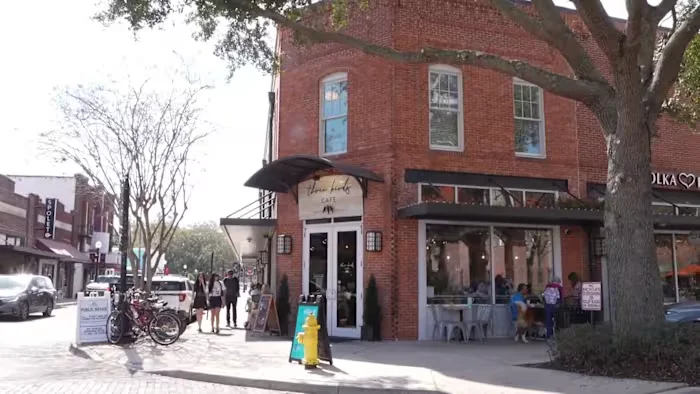
City leaders in Winter Garden, Florida, are weighing policy responses after a wave of commercial property acquisitions in the historic downtown district led to multiple small businesses losing leases, raising concerns about redevelopment pressures and the future character of one of Central Florida’s fastest-growing suburban cores. The issue has drawn residents to public meetings and prompted discussions about zoning tools, preservation strategies, and economic development priorities as the city balances private property rights with community expectations.
Over the past year, at least nine commercial buildings along the Plant Street corridor changed ownership, according to local reporting and property records, with several longtime tenants including boutiques and cafés—announcing closures after being informed their leases would not be renewed. The ownership concentration has triggered concerns among residents that the district could shift toward higher-end retail or national chains, although no formal redevelopment applications have yet been filed with the city.
Municipal officials have emphasized that lease renewals are private contractual matters and that local governments generally cannot intervene unless zoning or land-use regulations are implicated. Still, city planners said they are reviewing existing ordinances and architectural controls intended to preserve the historic district’s character, while continuing dialogue with property owners and stakeholders.
Residents have also urged officials to consider policy approaches used in other historic districts, including limits on chain establishments or vacancy-management strategies. At public meetings earlier this year, community members warned that concentrated ownership and tenant turnover could reshape the downtown environment that has historically supported independent retailers and restaurants.
Economists note that such transitions are common in fast-growing metro areas like the Orlando region, where rising land values and population growth often lead to reinvestment in legacy commercial corridors. According to U.S. Census Bureau migration trends and regional planning data, Central Florida continues to experience above-average population inflows compared with national averages, increasing demand for both retail and residential space near walkable town centers.
Higher borrowing costs over the past two years have complicated redevelopment timelines nationwide, however. Federal Reserve tightening cycles pushed mortgage rates above 6% and at times near 7% in 2024–2025, according to Freddie Mac data, which historically tends to slow construction starts and delay speculative projects. Analysts say that environment can create uncertainty around redevelopment intentions even when ownership consolidation occurs.
Inflation pressures in construction materials have also played a role. Industry estimates suggest that labor and material costs remain elevated relative to pre-pandemic levels, often increasing redevelopment budgets by 5% to 15% depending on project scope. That dynamic can make adaptive reuse or phased redevelopment more likely than immediate large-scale transformation of downtown commercial blocks.
For the real estate sector, Winter Garden’s situation reflects a broader trend affecting suburban historic districts across the United States. Concentrated property ownership in walkable downtown corridors frequently signals a transition toward higher-value uses such as mixed-use residential, boutique hospitality, or upgraded retail formats. Local real estate professionals say similar shifts have historically increased surrounding property values but also accelerated rent growth for small commercial tenants.
Residential markets near downtown Winter Garden could experience secondary effects if redevelopment plans emerge. Some local brokers have suggested that an upscale transformation similar to Winter Park’s Park Avenue corridor could attract additional buyers seeking proximity to walkable amenities, potentially lifting home prices in adjacent neighborhoods over time.
For developers, ownership consolidation can reduce entitlement complexity if future projects are proposed, because assembling multiple parcels is often the most difficult step in infill redevelopment. However, the absence of formal applications so far suggests that any large-scale redevelopment scenario remains speculative at this stage. Investors are also watching closely. In comparable Florida submarkets, retail-anchored historic districts undergoing repositioning have historically attracted private capital seeking long-term appreciation rather than immediate yield, particularly when population growth and tourism exposure support higher-rent tenants.
Homebuyers in the broader Orlando metro area may see indirect impacts as downtown revitalization pressures reshape surrounding neighborhoods. According to National Association of Realtors housing data, proximity to walkable downtown districts can add measurable premiums to nearby home values in many U.S. markets, especially where retail amenities expand.
Mortgage affordability remains a key constraint. A one-percentage-point change in mortgage rates can shift monthly payments by roughly $150 to $300 on a $300,000 loan, depending on loan structure, which can influence whether buyers choose historic-district neighborhoods or more distant suburban alternatives. That dynamic could shape demand patterns if redevelopment strengthens Winter Garden’s downtown appeal.
Renters may also feel effects if retail turnover leads to additional mixed-use development or residential infill projects. Historically, areas experiencing commercial reinvestment often see gradual increases in nearby rental rates as amenities improve and demand rises.
Looking ahead, Winter Garden officials are expected to continue evaluating preservation tools and economic development strategies while monitoring property-owner plans. The ultimate impact on the city’s downtown identity and on nearby housing and commercial real estate markets will likely depend on whether redevelopment proposals materialize and how quickly they move through the entitlement process.