


Author: Asim Iftikhar

 Asim Iftikhar
Asim Iftikhar is a Real Estate Contributor at ACT Global Media, providing educational content on U.S. residential real estate processes, market structure, and consumer awareness. He is a licensed Florida Real Estate Sales Associate (License No. SL3633555) and a commissioned Florida Notary Public (Commission No. HH 709161). This content is for informational purposes only and does not constitute legal, financial, or investment advice. Readers should consult licensed professionals for guidance specific to their situation.

Fix-and-flip investing has become one of the most recognizable strategies in residential real estate. The model involves purchasing a property—often below market value—renovating or improving it, and reselling it for a profit. Although the strategy appears straightforward, the financial outcomes of house-flipping projects vary widely. Successful investors rely on careful market research, accurate cost estimates, and disciplined acquisition strategies. However, inexperienced investors frequently encounter costly mistakes that can eliminate profit margins or even result in financial losses. The scale of the house-flipping market highlights the importance of proper investment analysis. According to real estate analytics firm ATTOM, approximately 308,922 homes…
A 2026 data-driven analysis of supply, prices, mortgage costs, and housing affordability Why Housing Inventory Matters for Affordability Housing affordability in Florida has become one of the most widely discussed economic issues in recent years. Property in Florida saw prices rise sharply between 2020 and 2022 as pandemic-era migration, historically low mortgage rates, and limited housing supply fueled intense demand. By 2024–2025, however, housing market dynamics began to change. Mortgage rates rose significantly, home sales slowed, and the number of homes listed for sale gradually increased in several regions. This shift raises an important question for homeowners, buyers, and investors…

A Market Transition After the Pandemic Boom Florida’s housing market experienced one of the most dramatic price surges in the United States during the pandemic-era housing boom from 2020 to 2022. Migration from high-cost states, record-low mortgage rates, and strong population growth pushed home values to historic highs. By 2024–2025, however, rising mortgage rates and affordability constraints slowed housing activity across the state. Entering 2026, economists increasingly describe the Florida housing market as being in a “normalization phase.” The key question for homeowners, buyers, and investors is straightforward: Will Florida home prices rise or fall in 2026? Most forecasts suggest…
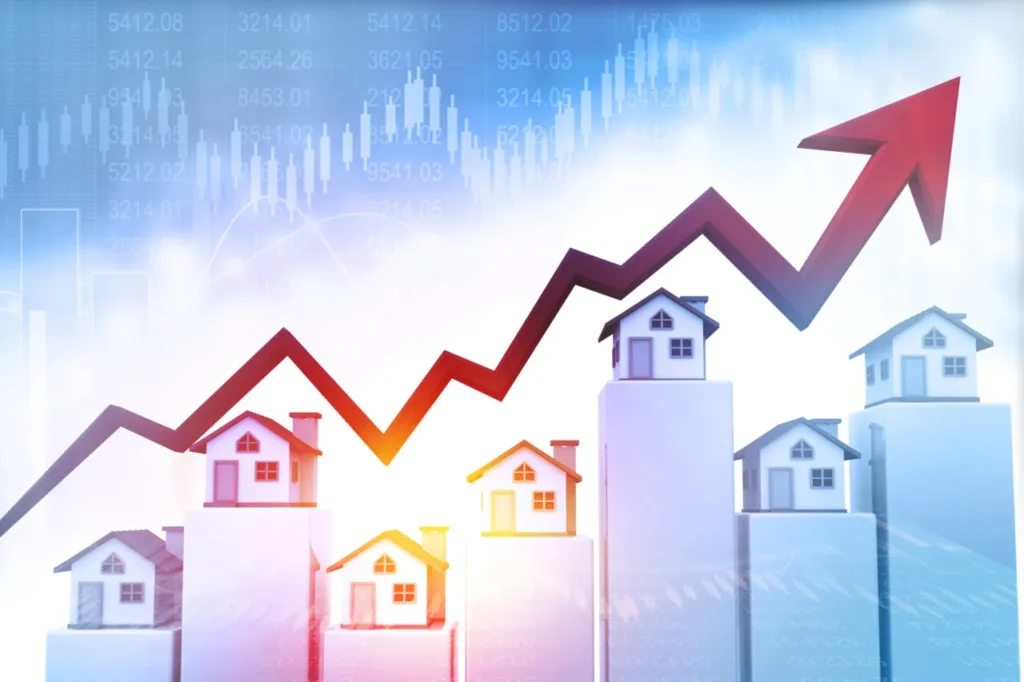
Florida’s Housing Market Enters a Normalization Phase Economists broadly agree that Florida home prices will grow slowly or remain stable in 2026. Forecasts suggest: price growth between 0% and 3% statewide stronger growth in high-demand regions slight declines in some oversupplied coastal markets For a deeper dive into statewide projections and whether prices are expected to rise or fall, see our detailed analysis here: Florida prices forecast 2026: Will price rise or fall? Recent statewide housing data suggests the median Florida home price remains around $412,800 in early 2026, with prices roughly flat year-over-year (+0.2%), indicating a transition from rapid…

Why Florida Remains a Top Rental Investment Market Florida has become one of the most active real estate investment markets in the United States. Rapid population growth, strong job creation, and sustained migration from higher-cost states have created strong demand for rental housing across many cities. For investors specifically exploring opportunities in Orlando, this guide on buying property in Orlando, including affordable and luxury options provides valuable insights into one of Florida’s most dynamic markets. Despite recent market normalization, Florida’s rental market remains strong. Statewide average rents remain significantly higher than pre-pandemic levels, with the average apartment rent around $1,672…

Property taxes represent one of the primary recurring costs associated with homeownership in the United States. Local governments rely heavily on property tax revenue to fund public services such as schools, police and fire departments, transportation infrastructure, and community programs. According to analysis based on U.S. Census Bureau housing finance data, property taxes nationwide generated more than $352 billion in revenue annually, representing a major source of funding for local governments. In Florida, property taxes play a particularly important role because the state does not impose a personal income tax. Instead, local governments depend on property taxes and sales taxes…

A Data-Based Look at Buyer Perception in the U.S. Housing Market When buyers walk into a home for the first time, their impressions form quickly. Research in consumer behavior and housing psychology consistently shows that buyers begin forming opinions within the first few minutes of entering a property. In residential real estate, those early impressions can influence how long buyers stay, how favorably they view the home, and whether they pursue further consideration. However, what buyers notice is not always the same as what ultimately adds resale value. U.S. housing data and appraisal practices show a recurring pattern: buyers tend…

Understanding the Difference in the U.S. Housing Market Home improvement spending in the United States exceeds $450 billion annually, according to national housing and construction estimates. Yet not all improvements affect home value in the same way. One of the most misunderstood distinctions in residential real estate is the difference between renovations that preserve value and cosmetic upgrades that primarily affect appearance. Many homeowners assume that any visible improvement increases resale value. U.S. housing data and appraisal practices show a more nuanced reality: some projects protect a home’s existing value by preventing deterioration or functional obsolescence, while others mainly influence…

Home renovation decisions are often made with the expectation that higher spending will translate into higher resale value. Yet U.S. housing data consistently shows that neighborhood price ceilings not renovation quality alone ultimately determine how much value a home can capture at resale. A neighborhood price ceiling refers to the upper price range buyers are willing to pay for homes in a specific area, based on location fundamentals, housing stock, school boundaries, local amenities, and recent comparable sales. Once a property approaches or exceeds this ceiling, additional renovation spending tends to yield diminishing or nonexistent financial returns. This article explains,…

Home renovations are often associated with increased home value, but U.S. housing data consistently shows that not all renovations add value—and many fail to recover their full cost. While some improvements may increase buyer appeal or reduce time on market, others primarily deliver lifestyle benefits rather than financial returns. According to national cost-versus-value research published annually by industry analysts, most home renovations do not return 100% of their cost at resale, and outcomes vary significantly by region, home type, and market conditions. This reality underscores an important distinction: a renovation can improve a home without necessarily increasing its market value…