

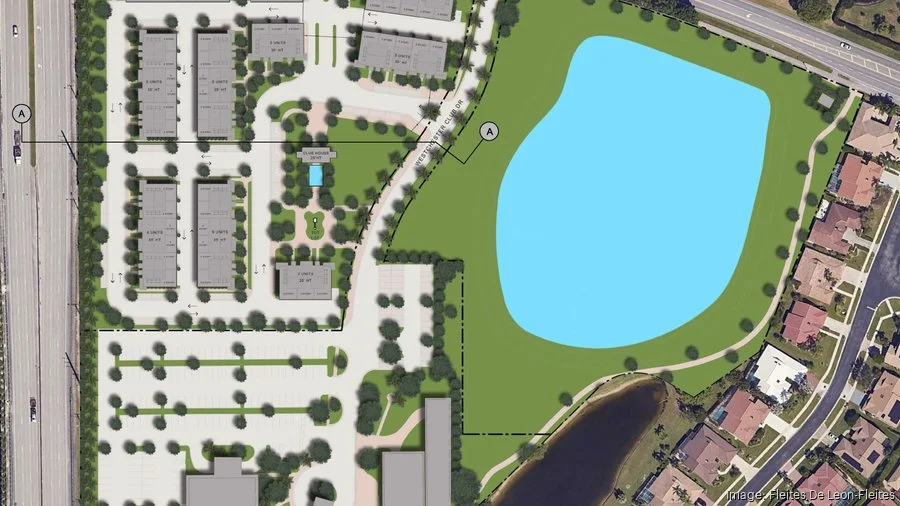
A new residential development proposal in Palm Beach County could transform a former golf course into a large mixed housing community, reflecting a growing trend of repurposing underused recreational land to address housing demand across South Florida.
Plans submitted by developer GL Homes outline an approximately 800 unit project on a closed golf course site in Greenacres. The proposal includes 500 single family homes and 300 multifamily apartment units, marking a significant shift from traditional land use to higher density residential development.
The golf course, previously known as The Falls Country Club, ceased operations in 2025, opening the door for redevelopment. The property spans nearly 168 acres, with a portion expected to remain as open green space even after construction.
Why Golf Courses Are Being Redeveloped
The proposal reflects a broader real estate trend across Florida where aging or underperforming golf courses are being converted into housing developments. Analysts say several factors are driving this shift:
- declining golf course usage in some areas
- rising land values in urban and suburban corridors
- strong demand for both ownership and rental housing
- pressure to increase housing supply in high growth regions
Palm Beach County continues experiencing population growth, creating demand for new housing options across multiple price segments. Developers are increasingly targeting large parcels like golf courses because they offer scale, infrastructure access, and redevelopment flexibility.
Project Details and Housing Mix
The proposed development is designed to include a mix of housing types:
- single family homes ranging from mid sized to larger residences
- multifamily apartments in low rise buildings
- workforce housing units, with a portion reserved for moderate income residents
Approximately 27 of the apartment units are expected to be designated as workforce housing, targeting households earning up to 140 percent of the area median income.
Developers plan to create separate entrances and amenities for the single family and multifamily sections, effectively building a mixed community within the same master planned site.
Zoning and Approval Process
For the project to move forward, the developer must secure rezoning approval to change the land designation from commercial recreation to planned unit development.
Local officials are expected to review:
- infrastructure capacity
- traffic impact
- environmental considerations
- community compatibility
These approvals are a critical step, as golf course conversions often face scrutiny from nearby residents concerned about density and neighborhood changes.
Impact on Local Real Estate Market
Housing analysts say projects like this could help address supply shortages in Palm Beach County, particularly in the workforce and mid market segments.
Potential impacts include:
- increased housing inventory
- improved affordability options in select segments
- higher density development in suburban areas
- shifting land use patterns away from recreational properties
However, some residents and community groups may oppose the development due to concerns about congestion, environmental impact, and loss of open recreational space.
A Growing Trend in Florida Real Estate
The proposed project is part of a wider shift in Florida’s development landscape. As land becomes scarcer and more expensive, developers are repurposing large legacy properties such as golf courses, shopping centers, and office parks into residential communities.
Similar redevelopment efforts are being explored across South Florida, signaling a long term change in how land is used to meet population growth and housing demand.
Outlook
If approved, the Palm Beach County project could become one of the more notable examples of golf course redevelopment in Florida, blending single family homes with multifamily housing in a large scale master planned environment.
As housing demand continues rising across the region, projects like this are expected to play an increasingly important role in shaping the future of South Florida’s residential market.