

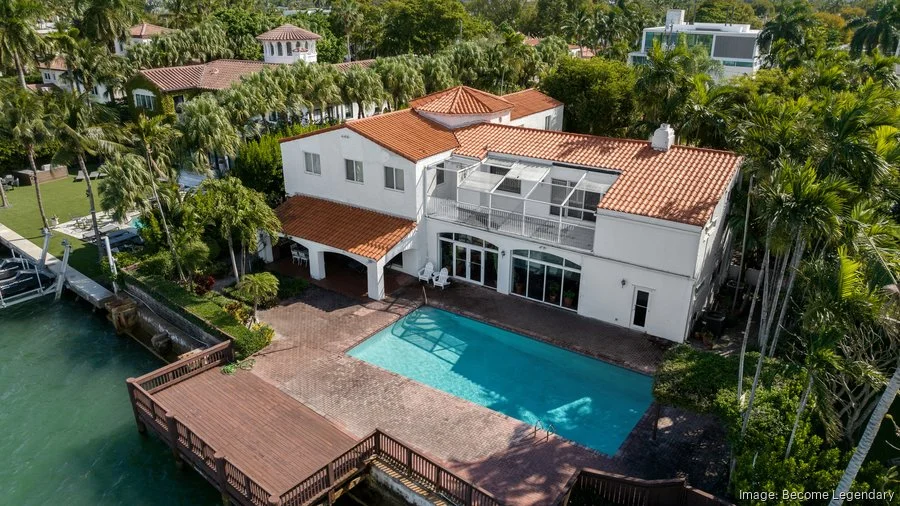
A corporate executive has sold a luxury waterfront mansion in Miami Beach for approximately $22 million, highlighting continued strength in South Florida’s high-end residential market as migration-driven demand and limited waterfront inventory continue supporting premium property values across the region.
Industry analysts say luxury home sales above $20 million remain an important indicator of confidence among high-net-worth buyers and investors positioning themselves in Florida’s coastal markets. Transactions at this level are typically driven by lifestyle preferences, tax advantages, and long-term asset diversification strategies rather than short-term financing conditions.
Miami Beach continues to rank among the most competitive luxury housing destinations in the United States. Waterfront properties in particular attract strong demand because of limited supply, private dock access, and proximity to financial districts, hospitality corridors, and international travel infrastructure serving South Florida.
The $22 million sale reflects a broader pattern of executive-level relocations and portfolio repositioning across the region. Corporate leaders from finance, technology, and professional services sectors have increasingly expanded their presence in South Florida in recent years, contributing to sustained demand for high-value single-family homes along Biscayne Bay and surrounding barrier-island neighborhoods.
According to migration estimates from the U.S. Census Bureau, Florida continues to experience strong population growth compared with most other states, reinforcing long-term housing demand across coastal and urban markets. Analysts say this demographic momentum remains a key driver supporting resale activity in Miami Beach’s luxury segment.
Luxury housing transactions in this price range are typically less sensitive to borrowing-cost conditions than mid-market purchases. Mortgage rates tracked by Freddie Mac remain near the mid-6% range nationally, but many buyers in Miami Beach’s ultra-high-end market rely heavily on cash purchases or structured financing tied to broader investment portfolios.
Inventory constraints also continue supporting property values in waterfront neighborhoods. Limited availability of redevelopment-ready parcels and strict zoning regulations along Miami Beach’s shoreline contribute to long-term scarcity, making completed luxury estates especially attractive to both domestic and international buyers.
Inflation trends reported by the Bureau of Labor Statistics have also reinforced real estate’s role as a portfolio diversification tool among high-net-worth households. Analysts say trophy residential properties in coastal markets are often viewed as stable long-term assets during periods of economic uncertainty.
Developers and investors closely monitor executive-level transactions because they often signal confidence in local housing fundamentals. High-profile sales in Miami Beach frequently influence comparable pricing across nearby luxury corridors including Surfside, Bal Harbour, and North Bay Road.
The transaction also reflects ongoing strength in South Florida’s relocation-driven housing demand. Business-friendly tax policies, climate advantages, and expanding employment opportunities continue attracting executives from higher-cost states such as California and New York, supporting absorption across luxury residential inventory.
For the broader Miami Beach market, sales above $20 million remain an important benchmark for investor sentiment and neighborhood valuation trends. Analysts say consistent activity in this segment suggests continued confidence in the region’s long-term positioning as a global luxury real estate destination.
Looking ahead, economists expect Miami Beach’s waterfront housing market to remain active through the remainder of 2026 as migration patterns, limited supply, and international investment continue shaping demand across South Florida’s premium residential communities.