


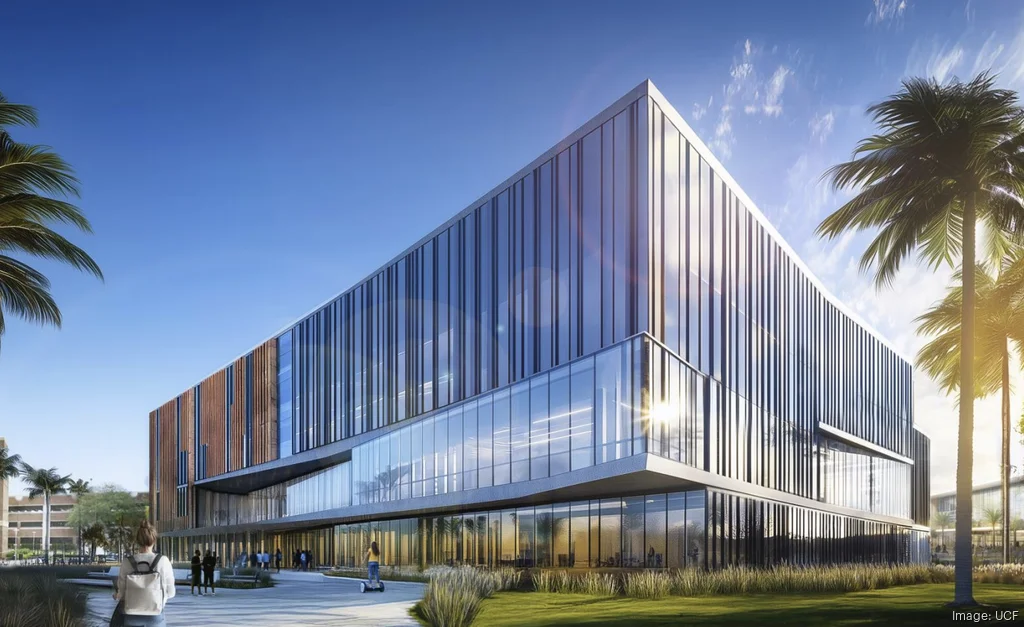
The University of Central Florida (UCF) is evaluating plans for a mixed-use development across more than 60 acres near its main Orlando campus, a move that could reshape land use patterns in one of Central Florida’s fastest-growing education and innovation corridors and reinforce long-term demand for nearby housing, retail, and workforce infrastructure.
University officials have indicated the site could support a combination of residential units, research facilities, retail space, and student-oriented services, aligning with a broader national trend in which large public universities are leveraging surplus land to support innovation districts and community-linked development. Analysts say projects tied to major research universities often serve as anchors for long-term economic activity, particularly in regions experiencing sustained population growth like metro Orlando.
The proposed development would sit within reach of UCF’s main campus, one of the largest universities in the United States by enrollment. That scale creates consistent demand for housing, transportation access, and commercial services that extend beyond traditional campus boundaries. According to economists who track higher-education-driven growth clusters, university-adjacent mixed-use districts frequently attract private investment in technology startups, healthcare partnerships, and workforce housing.
Central Florida has continued to experience strong inward migration in recent years, with thousands of new residents relocating monthly across the Orlando metropolitan area. Data from regional planning agencies shows sustained pressure on both rental and for-sale housing inventory near employment and education hubs. In that environment, land positioned near major institutions such as UCF tends to attract developer interest because of stable long-term occupancy patterns tied to student populations and research employment.
From a macroeconomic perspective, large-scale mixed-use developments linked to institutional anchors often emerge during periods when developers are balancing higher financing costs with long-term growth expectations. Elevated borrowing costs have slowed some speculative construction nationally, but projects supported by universities and public-sector partnerships tend to remain more resilient because they are tied to predictable population flows and employment pipelines.
Interest-rate conditions continue to shape how quickly projects like this move forward. Mortgage rates near recent multi-year highs have reduced affordability for many households, according to housing economists, but sustained population expansion in Central Florida continues to support underlying demand for new housing supply. Industry estimates suggest that even a 1% increase in mortgage rates can raise monthly payments by roughly $150 to $300 on a $300,000 loan, affecting how quickly nearby residential projects are absorbed.
Inflation trends also influence construction feasibility. Building-material costs and labor expenses remain elevated compared with pre-2020 levels, and developers across Florida have adjusted project timelines in response to financing and supply-chain pressures. Analysts say mixed-use developments tied to institutional partners may still move forward because they benefit from phased construction strategies and diversified revenue streams.
For the real estate sector, the potential UCF land development carries implications across multiple segments of the Orlando market. Homebuilders could see additional demand for workforce-oriented housing near the university corridor, particularly as research employment expands alongside enrollment growth. Historically, university-adjacent developments tend to support apartment construction first, followed by townhome and entry-level ownership housing.
Investors are also likely to monitor the project closely. Mixed-use districts anchored by higher-education institutions often generate stable rental demand because they serve students, faculty, researchers, and healthcare workers. In Florida markets where rental vacancy remains relatively tight compared with national averages, additional supply near employment centers may help moderate rent growth over time while still supporting long-term asset performance.
Retail developers may benefit as well. Student populations typically support neighborhood-scale retail such as grocery stores, dining, and service businesses, while research-focused campuses attract professional office tenants and healthcare providers. Analysts say these activity patterns can strengthen surrounding land values, particularly along major transportation corridors east of downtown Orlando.
Mortgage lenders and financial institutions are also watching university-driven development corridors more closely. Projects associated with institutional anchors tend to attract long-term financing interest because they are historically linked to lower vacancy volatility than purely speculative developments. That dynamic may support additional lending activity in the UCF area as site planning advances.
For consumers, the proposed development could influence both housing affordability and commuting patterns across eastern Orange County. Additional housing supply near employment and education centers may help reduce transportation costs for some households, particularly as fuel prices remain a consideration in monthly budgets. At the same time, increased development activity can place upward pressure on nearby property values, affecting both renters and first-time buyers evaluating options in the corridor.
Rent-versus-buy decisions may also shift as new housing inventory enters the market over time. Historically, expanded multifamily supply near university districts can stabilize rent growth in surrounding neighborhoods, although timing depends on construction cycles and financing conditions.
Looking ahead, the scale and timing of UCF’s proposed 60-acre mixed-use development will likely depend on permitting progress, infrastructure planning, and broader capital-market conditions. If the project advances as expected, analysts say it could become a long-term catalyst for residential and commercial expansion in east Orlando, reinforcing the university’s role as a central driver of regional real estate activity.