



Understanding Cost of Living Differences Across Florida
Florida has become one of the fastest-growing states in the United States, attracting new residents from across the country due to its warm climate, employment opportunities, and tax environment. However, while Florida is often perceived as a relatively affordable state, the cost of living varies significantly between cities and regions.
Housing costs, rent levels, transportation expenses, healthcare, and household income all contribute to the overall cost of living in a particular location.
Recent economic data suggests that Florida’s overall cost of living is about 1% higher than the U.S. national average, although some individual cities remain considerably more affordable than others.
Housing costs play the largest role in determining affordability. Florida’s median home price is approximately $405,000, while typical apartment rents range from roughly $1,506 for one-bedroom units to over $2,200 for larger homes depending on the location.
Income levels also influence affordability. According to the U.S. Census Bureau, the median household income in Florida is approximately $74,568, while the statewide poverty rate is about 12%.
Because income levels differ across regions, the same housing costs can affect households differently depending on where they live.
This article provides a comprehensive analysis of cost-of-living differences across Florida cities, including:
- housing costs and rent levels
- transportation and healthcare expenses
- household income levels
- affordability comparisons between major metropolitan areas.
The analysis incorporates statistical data from:
- U.S. Census Bureau
- American Community Survey (ACS)
- National Association of Realtors (NAR)
- U.S. Department of Housing and Urban Development (HUD)
The objective is to provide a neutral and educational overview of cost-of-living patterns across Florida’s major cities.
What Determines Cost of Living?
Cost of living measures the amount of money required to maintain a certain standard of living in a specific location.
Major components of cost-of-living calculations include:
Housing
Housing is typically the largest household expense.
It includes:
- rent payments
- mortgage payments
- property taxes
- homeowners insurance
- utilities.
Housing costs often determine whether a city is considered affordable or expensive.
Transportation
Transportation expenses include:
- fuel costs
- vehicle ownership
- public transit
- commuting time.
Cities with longer commute times may have higher transportation expenses.
Food and Consumer Goods
Groceries and everyday goods represent a major portion of household budgets.
In Florida, food costs are estimated to be roughly 3% higher than the national average, depending on location.
Healthcare
Healthcare expenses vary based on local insurance markets, hospital systems, and demographics.
Florida healthcare costs are estimated to be approximately 4% lower than the national average on average.
Taxes
Florida’s tax structure significantly affects cost of living.
The state has:
- no personal income tax
- moderate property taxes
- average sales taxes.
This tax structure is one reason Florida attracts residents from higher-tax states.
Housing Costs: The Largest Cost-of-Living Factor
Housing typically accounts for 30–40% of household spending in most U.S. metropolitan areas.
In Florida, housing affordability has become a major issue due to rising home prices and rents.
The median home price in Florida is about $405,000, although prices vary widely by region.
For example:
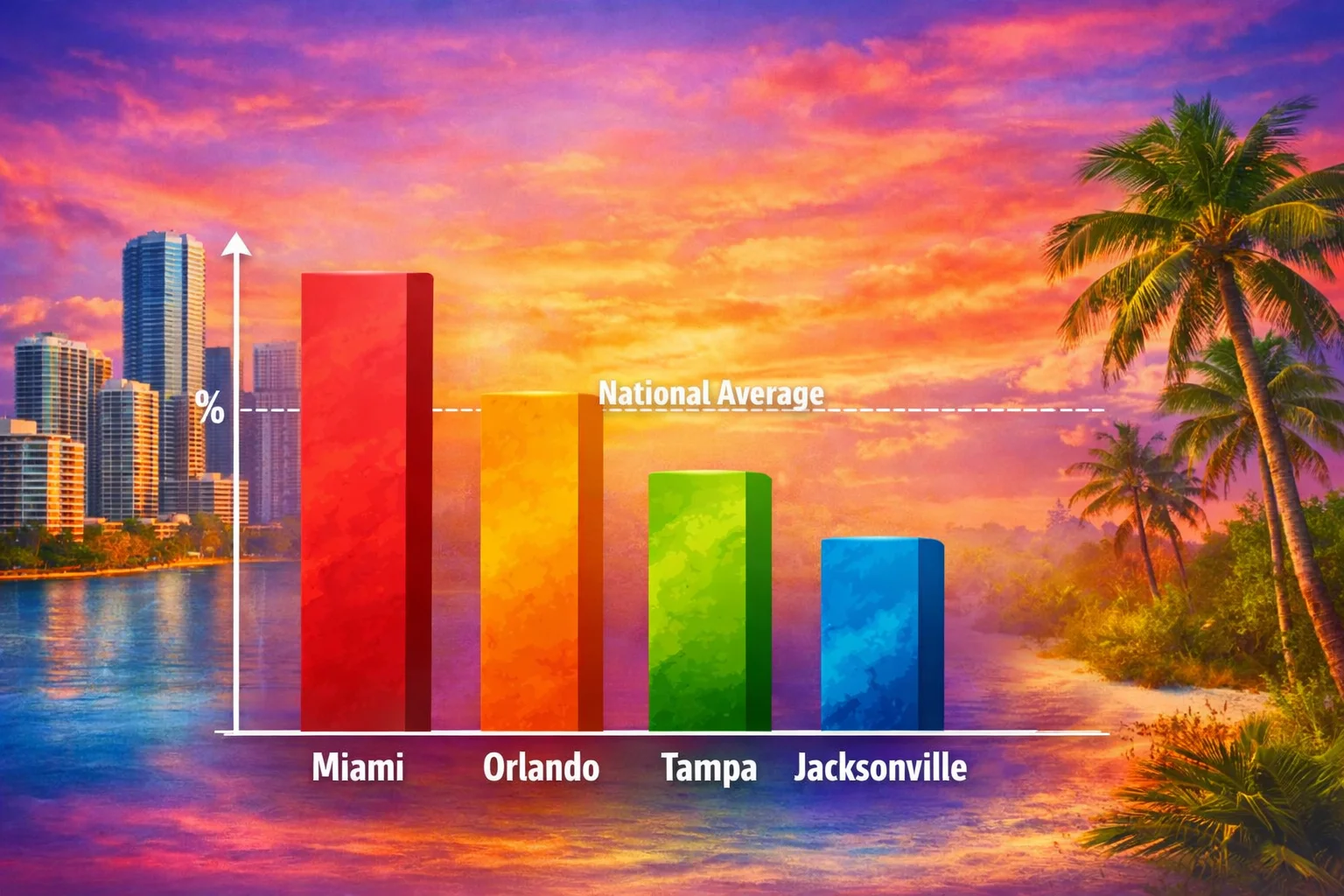
- Miami median home price: around $600,000
- Orlando median home price: about $382,000
- Jacksonville median home price: roughly $309,000.
This variation significantly affects the cost of living across Florida cities.
Cost of Living in Major Florida Cities
Miami
Miami is one of the most expensive cities in Florida.
Housing costs are particularly high due to:
- strong international demand
- limited land supply
- high population density.
Average rental prices include:
- one-bedroom apartment: about $2,730 per month
- two-bedroom apartment: about $3,450 per month.
Median home prices exceed $600,000, making Miami one of the most expensive housing markets in the state.
Despite high costs, Miami attracts residents due to strong employment opportunities in finance, tourism, and international trade.
Fort Lauderdale
Fort Lauderdale has one of the highest costs of living in Florida.
Overall living expenses in the city are estimated to be about 23% higher than the state average.
Housing costs and insurance expenses contribute significantly to this higher cost structure.
The city’s coastal location and tourism industry also influence pricing.
Tampa
Tampa has become one of Florida’s fastest-growing metropolitan areas.
Average rents include:
- one-bedroom apartment: about $1,900 per month
- two-bedroom apartment: about $2,150 per month.
Median home prices are around $449,000.
Although housing costs have risen in recent years, Tampa remains more affordable than Miami and Fort Lauderdale.
Orlando
Orlando offers a relatively balanced cost-of-living environment compared with other large Florida cities.
Average rent prices include:
- one-bedroom apartment: about $1,740 per month
- two-bedroom apartment: about $2,155 per month.
The city’s large tourism industry and population growth contribute to housing demand.
Despite these pressures, Orlando remains relatively affordable compared with South Florida markets.
Jacksonville
Jacksonville is often considered one of the most affordable major cities in Florida.
Housing costs are significantly lower than in many coastal cities.
Average rent prices include:
- one-bedroom apartment: about $1,365 per month
- two-bedroom apartment: about $1,580 per month.
Median home prices are approximately $309,000, well below the national median home price.
Because of these factors, Jacksonville is frequently ranked among the most affordable large cities in Florida.
Tallahassee
Tallahassee, the state capital, has one of the lowest costs of living among Florida’s larger cities.
The city benefits from:
- lower housing prices
- large student population
- government employment.
The income required to live comfortably in Tallahassee is significantly lower than in many other Florida cities.
Rent vs Homeownership Costs
Housing affordability also depends on whether residents rent or own homes.
In some markets, renting may be more affordable than owning.
Recent research suggests that in many large metropolitan areas — including Miami — owning a home can cost significantly more per month than renting due to higher home prices and mortgage rates.
These differences can influence housing choices among residents.
Income Levels and Affordability
Income levels play a major role in determining cost-of-living affordability.
Cities with higher median incomes may support higher housing costs.
For example:
- Tampa median household income: about $59,893
- Orlando median household income: about $58,968.
In many cities, however, housing costs have risen faster than wages.
This trend has increased the number of households spending a large share of income on housing.
Housing Cost Burden in Florida
Housing affordability is often measured using the concept of cost-burdened households.
A household is considered cost-burdened when it spends more than 30% of its income on housing expenses.
In Florida, a large share of renters fall into this category.
Housing research shows that many households struggle to keep housing costs below this threshold due to rising rents and home prices.
Population Growth and Cost Pressures
Population growth has been one of the most important drivers of rising costs in Florida.
Many new residents move from states with higher housing costs.
These migrants often bring higher incomes, which can increase housing demand and push prices upward.
Cities such as Orlando, Tampa, and Miami have experienced particularly strong population growth.
This growth increases demand for housing, infrastructure, and services.
Regional Differences in Cost of Living
Florida’s cost of living varies significantly across regions.
South Florida
Cities such as Miami and Fort Lauderdale tend to have the highest housing costs.
These markets attract international investment and tourism.
Central Florida
Cities such as Orlando offer moderate costs relative to other major Florida metros.
Population growth and tourism drive economic activity.
North Florida
Cities such as Jacksonville and Tallahassee typically offer lower housing costs and a more affordable lifestyle.
Southwest Florida
Areas such as Sarasota and Naples often have higher costs due to coastal property demand and retirement migration.
Cost-of-Living Trends in Florida
Several trends are shaping cost-of-living patterns across Florida.
Migration
Population migration from higher-cost states increases housing demand.
Housing Supply
New housing construction may help stabilize costs in some areas.
Interest Rates
Mortgage rates influence home affordability and rent demand.
Insurance Costs
Property insurance costs have increased in some regions, affecting overall housing expenses.
Implications for Residents
Understanding cost-of-living differences can help residents evaluate where to live.
Lower-cost cities may offer advantages such as:
- lower housing costs
- reduced living expenses
- more affordable homeownership.
Higher-cost cities may offer:
- stronger job markets
- higher incomes
- more economic opportunities.
Conclusion
Florida’s cost of living varies significantly across cities and regions.
Key findings include:
- Florida’s overall cost of living is about 1% higher than the national average.
- The median home price in the state is approximately $405,000, although prices vary widely between cities.
- Cities such as Miami and Fort Lauderdale have some of the highest living costs, while Jacksonville and Tallahassee remain among the most affordable.
- Housing costs represent the largest share of household expenses across Florida.
Understanding cost-of-living differences across Florida cities can help individuals evaluate housing affordability and economic opportunities across the state.
Author
Asim Iftikhar — Real Estate Contributor, ACT Global Media
Florida Real Estate License: SL3633555
Florida Notary Commission: HH 709161
Asim Iftikhar contributes educational real estate content focused on U.S. residential processes, market structure, and consumer understanding. Content is informational and general in nature.
Editorial Disclosure
This article is provided for educational and informational purposes only and does not constitute financial, real estate, or investment advice. Cost-of-living estimates vary by household circumstances and may change over time. Readers should consult official government sources and qualified professionals when evaluating housing or relocation decisions