

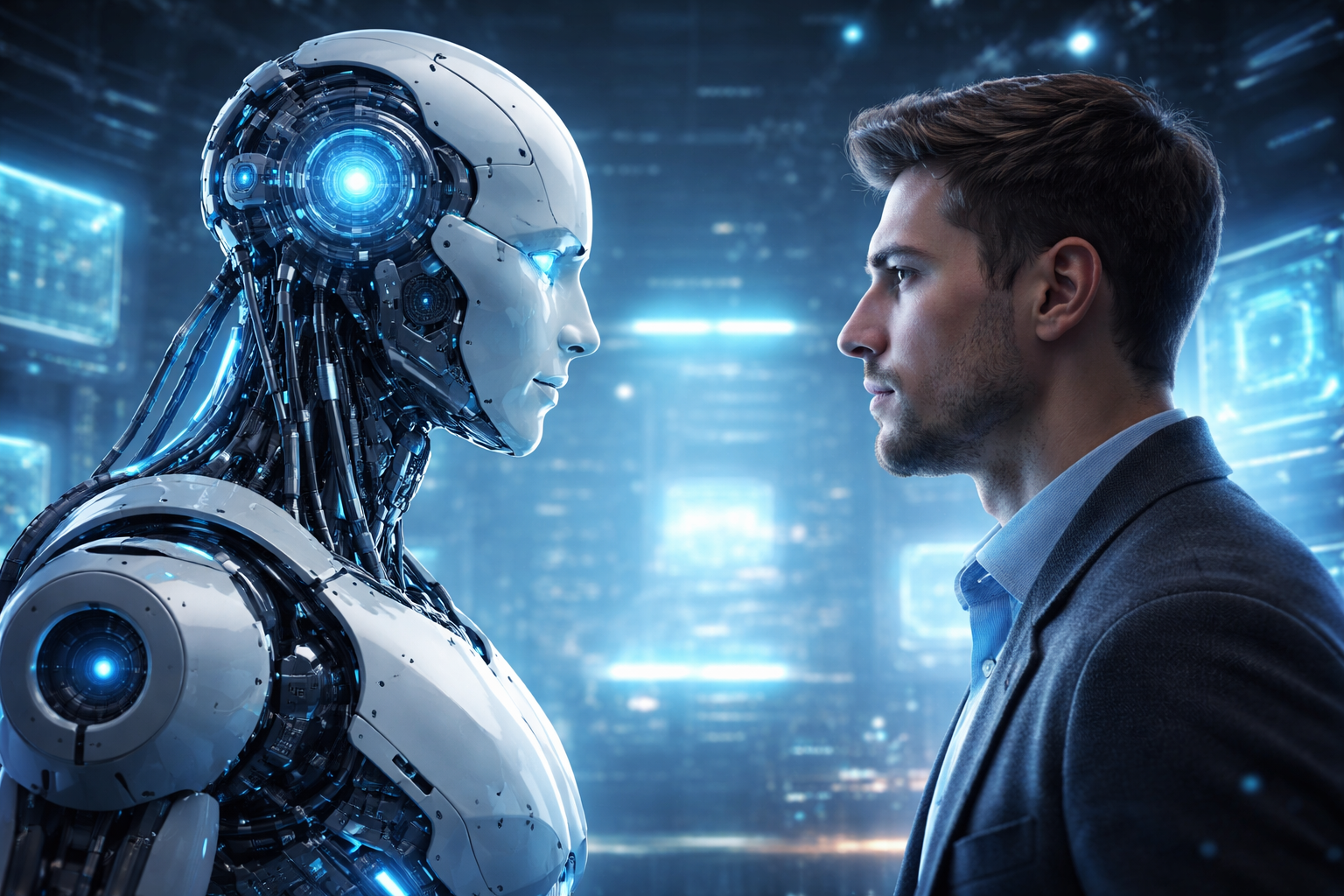
Picture this: It’s 2030, and your robot coworker just crunched a year’s worth of sales data in seconds while you sip coffee. Scary? Exciting? Both? The big question everyone’s asking is whether AI will boot humans out of jobs—or even society—entirely. Spoiler: It’s not that simple. AI won’t replace us, but it’ll supercharge how we live and work. Let’s break it down.
Jobs AI Will Transform (But Not Erase)
AI shines at the dull, data-heavy grind. Factories already hum with robots assembling cars at Tesla, chatbots handle 80% of basic customer queries at companies like Zendesk, and algorithms predict supply chain hiccups better than any human. In healthcare, tools like IBM Watson spot cancer patterns in scans faster.
These shifts mean fewer entry-level repetitive roles, but they birth new ones: AI trainers, ethicists, and maintainers. It’s evolution, not extinction—think how spreadsheets didn’t kill accountants; they made them sharper.
The Human Edge AI Can’t Touch
Some jobs are pure magic only we can do. Need a nurse comforting a scared patient? A comedian roasting the crowd just right? A CEO navigating a crisis with gut instinct and team morale? AI fumbles here. It lacks empathy, intuition, and that creative chaos—like Picasso’s wild strokes or a teacher’s knack for inspiring a kid.
Even in “AI-friendly” fields like writing or design, humans lead. Tools like Midjourney generate art, but you decide the vision. Gallup reports empathy-driven roles (therapy, leadership, education) are growing 20% faster than average.
AI as Your Ultimate Sidekick
The smartest companies aren’t ditching humans; they’re pairing us with AI. Google’s DeepMind helps scientists fold proteins for new drugs, but researchers call the shots. OpenAI’s ChatGPT drafts code, yet programmers debug and innovate.
Future winners? “Centaur” teams—half-human, half-AI. McKinsey predicts AI will automate 45% of work activities by 2030, freeing us for high-value stuff like strategy and relationships. Upskill in AI literacy, and you’re golden.
Lessons from History: We Adapt and Thrive
Steam engines crushed farmhand jobs in the 1800s, but spawned engineers and factories. Computers? They axed typists but exploded tech careers. AI follows suit. The World Economic Forum forecasts 97 million new jobs by 2025 in green tech, data, and AI ethics—outpacing the 85 million lost.
So, What’s the Play?
AI isn’t coming for your soul; it’s a tool demanding adaptation. Hone irreplaceable skills: critical thinking, emotional smarts, lifelong learning. Governments like Singapore are already reskilling millions.
Bottom Line: No, AI won’t replace humans. It’ll amplify us. Embrace it, and the future’s brighter—with more time for what makes life human: creativity, connection, and coffee breaks.
