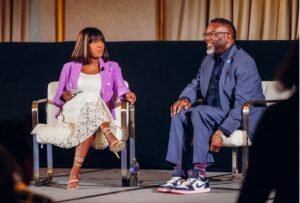


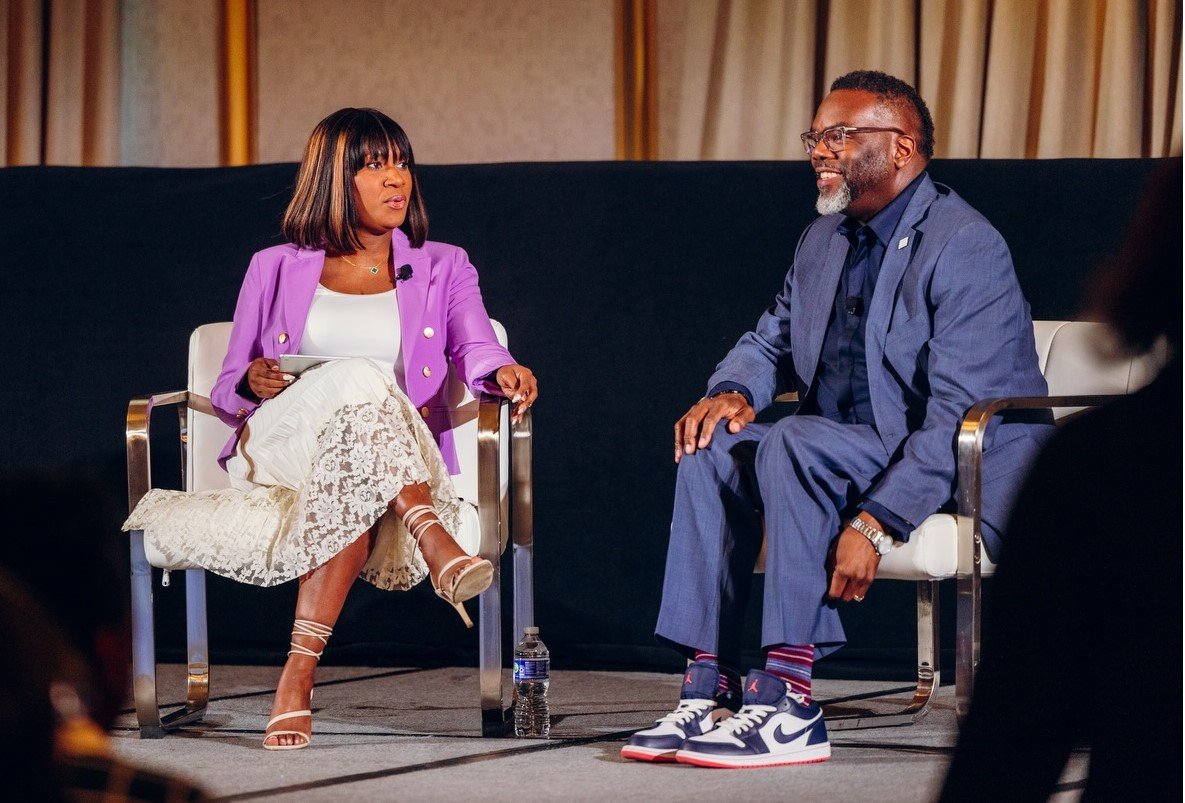
Chicago Mayor Brandon Johnson called for stronger protections for journalists and an end to wage inequality, while outlining a nuanced view of the First Amendment that has fueled debate at ONA26.
Imran Malik – Act Global Media, Orlando
CHICAGO — Press freedom, accountability, AI, and the evolving role of journalism dominated discussions at the ONA26 conference, where Mayor Brandon Johnson delivered a message centered on both protecting the media and addressing modern challenges tied to free speech.
“To ask questions is the basic right of every journalist, and governments must answer,” Johnson said, reinforcing the idea that accountability remains at the heart of democracy.
His remarks drew strong applause, but also renewed attention on how he views the boundaries of free expression in today’s digital environment.
Press freedom with a modern lens
Johnson’s position reflects support for the core protections of the First Amendment, particularly the role of a free press in holding power to account. At the same time, he acknowledged growing concerns around misinformation, harmful content, and the broader societal impact of speech in an era shaped by social media and artificial intelligence.
The mayor suggested that while free expression must be protected, there is also a need for responsibility — especially when content can influence public safety, trust, and democratic institutions.
Panel underscores urgency
The mayor’s appearance came during a featured session with Sasha-Ann Simons, who later moderated a panel featuring Karen Attiah, Nick Valencia, Versha Sharma, and Gunita Singh.
Panelists discussed rising pressures on journalists, including political rhetoric, legal threats, and the spread of misinformation, emphasizing that defending press freedom is essential to maintaining democratic systems.
“Only strong media is the sign of a strong democracy,” Johnson said.
Balancing freedom and responsibility
Johnson’s remarks highlighted a broader national conversation: how to preserve free speech while addressing its misuse in the digital age. His approach points to a balancing act — protecting constitutional rights while recognizing the real-world consequences of unchecked content.
This perspective has drawn mixed reactions, with some viewing it as a necessary evolution of free speech in a complex media landscape, while others remain cautious about any shift that could impact constitutional protections.
Equity message resonates
Beyond media issues, Johnson also addressed economic inequality, calling for an end to wage discrimination against Black and brown women. He urged media organizations to lead by example in ensuring fair pay and inclusive workplaces.
The message resonated strongly with attendees, reflecting ongoing conversations around diversity and equity in U.S. newsrooms.
A defining moment for journalism
The 90-minute session was described as candid and energizing, with participants exchanging ideas on resilience, ethics, and the future of journalism in an era shaped by AI and rapid digital transformation.
As ONA26 concluded, one theme stood out: the fight for press freedom is evolving — and so is the conversation around the First Amendment.
For many in attendance, the takeaway was clear — safeguarding democracy today requires both protecting the right to speak and confronting the challenges that come with it.