



Property taxes are one of the most significant ongoing costs of owning real estate in the United States, yet they are often among the least understood. Unlike a fixed-rate mortgage payment, property taxes can change regularly due to assessment updates, local government budgets, and policy decisions made at the state or county level.
According to the U.S. Census Bureau, property taxes are the primary revenue source for local governments nationwide and play a central role in funding schools, infrastructure, emergency services, and municipal operations. Because property taxes vary widely by location, two similar homes with similar purchase prices can carry very different long-term ownership costs.
This article provides a neutral, educational, U.S.-specific, research-backed overview of how property taxes work, how assessments are determined, why tax bills increase over time, and how appeals generally function. It does not provide legal, tax, or financial advice.
What Property Taxes Are (U.S. Context)
Property taxes are local taxes levied on real estate based on its assessed value. They are administered by counties, cities, school districts, and special taxing authorities rather than the federal government.
Property tax revenue commonly supports:
- Public education systems
- Police and fire departments
- Roads and public infrastructure
- Parks, libraries, and local services
Because each state sets its own property tax framework, the structure and impact of property taxes differ significantly across the country.
How Property Taxes Are Calculated
While the details vary by jurisdiction, the basic formula is consistent:
Property Tax = Assessed Value × Tax Rate
Understanding both components explains why property taxes change.
Assessed Value Explained
The assessed value is the value assigned to a property by a local tax assessor for taxation purposes. It may or may not equal the property’s current market value, depending on state law.
Assessment systems vary:
- Some states assess at 100% of market value
- Others assess at a percentage of market value
- Some reassess annually; others on multi-year cycles
Assessments are administrative valuations, not appraisals for lending purposes.
Tax Rates and Millage
Tax rates are often expressed as millage rates, where one mill equals $1 of tax for every $1,000 of assessed value.
Multiple taxing authorities may apply separate rates to the same property, including:
- County government
- City or town
- School district
- Special districts (water, flood control, fire)
The combined rate determines the total tax owed.
How Assessors Determine Property Value
Local assessors use standardized valuation methods, typically one or more of the following:
- Sales Comparison Approach
This method analyzes recent sales of comparable properties in the same area. It is commonly used for residential properties and reflects how buyers value similar homes.
- Cost Approach
The assessor estimates:
- The cost to rebuild the structure
- Minus depreciation
- Plus land value
This method is often used for newer homes or unique properties.
- Income Approach
Primarily used for rental or commercial properties, this method estimates value based on potential income.
Assessors follow state-mandated rules and mass appraisal techniques, which means individual property nuances may not always be fully reflected.
Why Property Taxes Increase
Property taxes can increase for several reasons, and increases often occur even when homeowners make no changes to their property.
- Rising Property Values
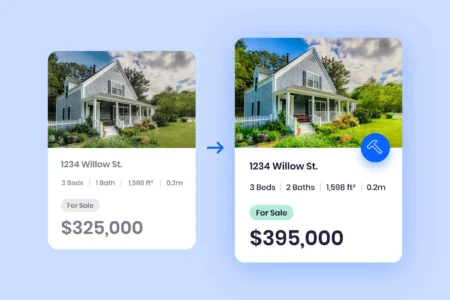
When home prices rise in a market, assessments may increase during reassessment cycles.
Data from the Federal Housing Finance Agency (FHFA) House Price Index shows that U.S. home values increased significantly in many regions in recent years. In areas that reassess frequently, rising market values can translate into higher assessed values and higher tax bills.
- Changes in Local Tax Rates
Even if assessed values remain stable, tax bills can increase if local governments raise tax rates to:
- Fund school budgets
- Cover infrastructure needs
- Address pension or public safety costs
- Offset declines in other revenue sources
Voter-approved levies and bond measures can also affect rates.
- Reassessment After Purchase
In some states, a property is reassessed to market value after a sale. This can cause a sharp increase in taxes for new owners compared to what the previous owner paid, particularly if the prior assessment reflected an older value.
This explains why first-year tax bills often surprise new homeowners.
- Expiration or Loss of Exemptions
Many jurisdictions offer exemptions or caps for:
- Owner-occupied homes
- Seniors
- Veterans
- Long-term owners
When eligibility changes or caps reset, taxable value may increase.
How Much Do Americans Pay in Property Taxes?
According to U.S. Census Bureau housing data:
- The median annual property tax bill for owner-occupied homes is approximately $2,690
- The effective tax rate nationally averages around 1.0% of home value
However, variation is substantial:
- Some states have median bills under $1,000
- Others exceed $6,000–$9,000 annually
Local policy choices and home values drive these differences.
Property Taxes and Monthly Mortgage Payments
For homeowners with escrowed mortgages, property taxes are typically collected monthly and paid by the loan servicer.
This means:
- Annual tax increases raise monthly mortgage payments
- Changes often occur after an annual escrow analysis
- Payment increases can happen even with fixed-rate mortgages
The Consumer Financial Protection Bureau (CFPB) has identified escrow-related changes as a common source of borrower confusion.
Property Tax Appeals: High-Level Overview
Most jurisdictions allow property owners to appeal assessments if they believe the assessed value is inaccurate.
Appeals generally focus on:
- Incorrect property characteristics
- Comparable sales that better reflect value
- Condition issues not considered in the assessment
Appeals typically do not challenge tax rates or local budgets. Procedures, deadlines, and standards vary widely by location.
Property Taxes vs. Home Value
Higher property taxes do not automatically mean higher home value. In some markets:
- High taxes can reduce affordability
- Buyers may compare tax burdens when choosing between homes
- Higher taxes can affect resale demand
Property taxes are one of several factors buyers consider when evaluating total ownership cost.
Differences by Property Type
Single-Family Homes
Taxes are assessed directly on the parcel and structure.
Condos and Townhomes
Owners pay taxes on their individual unit and may also indirectly fund services through HOA fees.
New Construction
Initial assessments may reflect land value only, with taxes increasing after the structure is assessed.
Common Property Tax Misconceptions
“My taxes only go up if I renovate.”
Renovations can affect assessments, but market appreciation and rate changes are more common drivers.
“Assessed value equals market value.”
Assessments may lag the market or follow statutory formulas.
“Property taxes are uniform nationwide.”
They vary widely by state, county, and city.
Long-Term Impact of Property Taxes
Over long ownership periods, property taxes can:
- Rival mortgage interest as a total cost
- Influence downsizing or relocation decisions
- Affect fixed-income households more significantly
Housing researchers emphasize evaluating total cost of ownership, not just purchase price.
Property Taxes and Resale Considerations
When selling a home:
- Buyers often review current tax bills
- Higher taxes may affect affordability calculations
- Taxes can influence days on market in competitive areas
While taxes do not determine value alone, they interact with demand and pricing.
Summary: A U.S. Data-Based Perspective
From a U.S. consumer education standpoint:
- Property taxes are a major ongoing ownership cost
- They are based on assessed value and local tax rates
- Taxes can increase due to market appreciation or policy changes
- New owners often experience reassessment-related increases
- Appeals focus on valuation accuracy, not tax policy
- Property taxes influence monthly payments and affordability
Understanding how property taxes work helps homeowners and buyers interpret one of the most important—and variable—costs of owning real estate.
Author Information
Written by:
Asim Iftikhar — Real Estate Contributor, ACT Global Media
Florida Real Estate License: SL3633555 | Florida Notary Commission: HH 709161
Editorial Disclosure
This article is provided for general informational purposes only and does not constitute real estate, legal, tax, or financial advice.
Fair Housing & Civil Rights Notice
ACT Global Media supports fair housing principles. Content is presented for general education and does not endorse discrimination or preferences prohibited by law.
Regulatory Notice
Property tax laws, assessment practices, and appeal procedures vary by jurisdiction and are subject to change. Information is based on publicly available U.S. sources.