

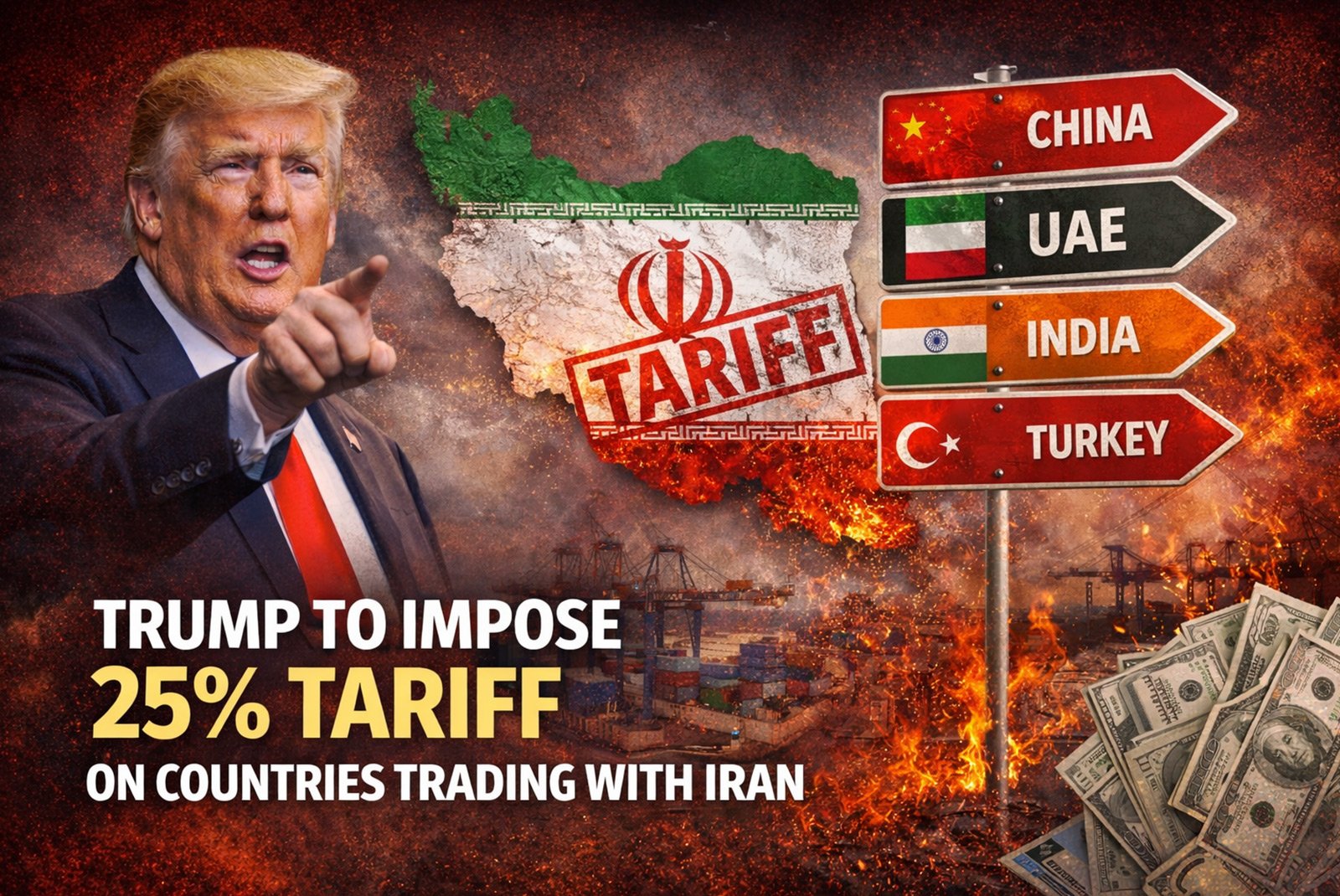
President Donald Trump has announced a 25% tariff on any nation conducting business with Iran, intensifying pressure on Tehran as widespread protests continue to sweep the country. The move, announced on January 12 via Trump’s Truth Social account, is part of a broader effort by the U.S. to isolate Iran economically while signaling support for protesters facing violent crackdowns.
The protests in Iran began in late December, initially triggered by economic hardships and the death of a young woman while in custody. They have since grown into a nationwide movement targeting both economic grievances and government policies. According to reports from activist groups, the unrest has become deadly, with over 2,000 people killed in clashes with Iranian security forces. The protests have also drawn international attention, highlighting concerns over human rights violations in the country.
In his announcement, Trump warned that the United States could intervene if Iranian authorities violently suppress peaceful demonstrators. In addition, he stated that planned meetings with Iranian officials would be postponed until the situation improves. Analysts suggest that the tariffs serve both as a direct economic measure and as a symbolic demonstration of support for the protesters, sending a message to Iran that the U.S. is closely monitoring the situation.
Major trading partners of Iran, including China, India, Turkey, and the UAE, could feel significant economic repercussions. While the administration has not yet provided detailed guidance on enforcement, these countries may face higher costs in trade with the United States if they continue business with Iran. Economists warn that the move could have ripple effects in global markets, particularly in sectors such as energy and commodities, which are closely tied to trade with Iran.
Iran has responded with strong rhetoric, warning that any U.S. or Israeli military involvement would be met with retaliation. Officials have indicated that foreign forces attempting intervention could be considered legitimate targets, underscoring the heightened risk of further escalation.
The new tariffs mark a significant step in the U.S.’s ongoing economic and geopolitical strategy regarding Iran. By targeting not only Iran but also its trading partners, the Trump administration is sending a clear message of both economic and diplomatic pressure. Observers around the world are watching closely, as the situation has the potential to influence trade patterns, international relations, and the balance of power in the region.
As the unrest continues and international tensions rise, all eyes remain on Tehran and Washington. The combination of domestic protests and escalating economic sanctions underscores the high stakes for Iran and the global community alike.
Sources: Trump Truth Social post, Reuters, Associated Press.
