



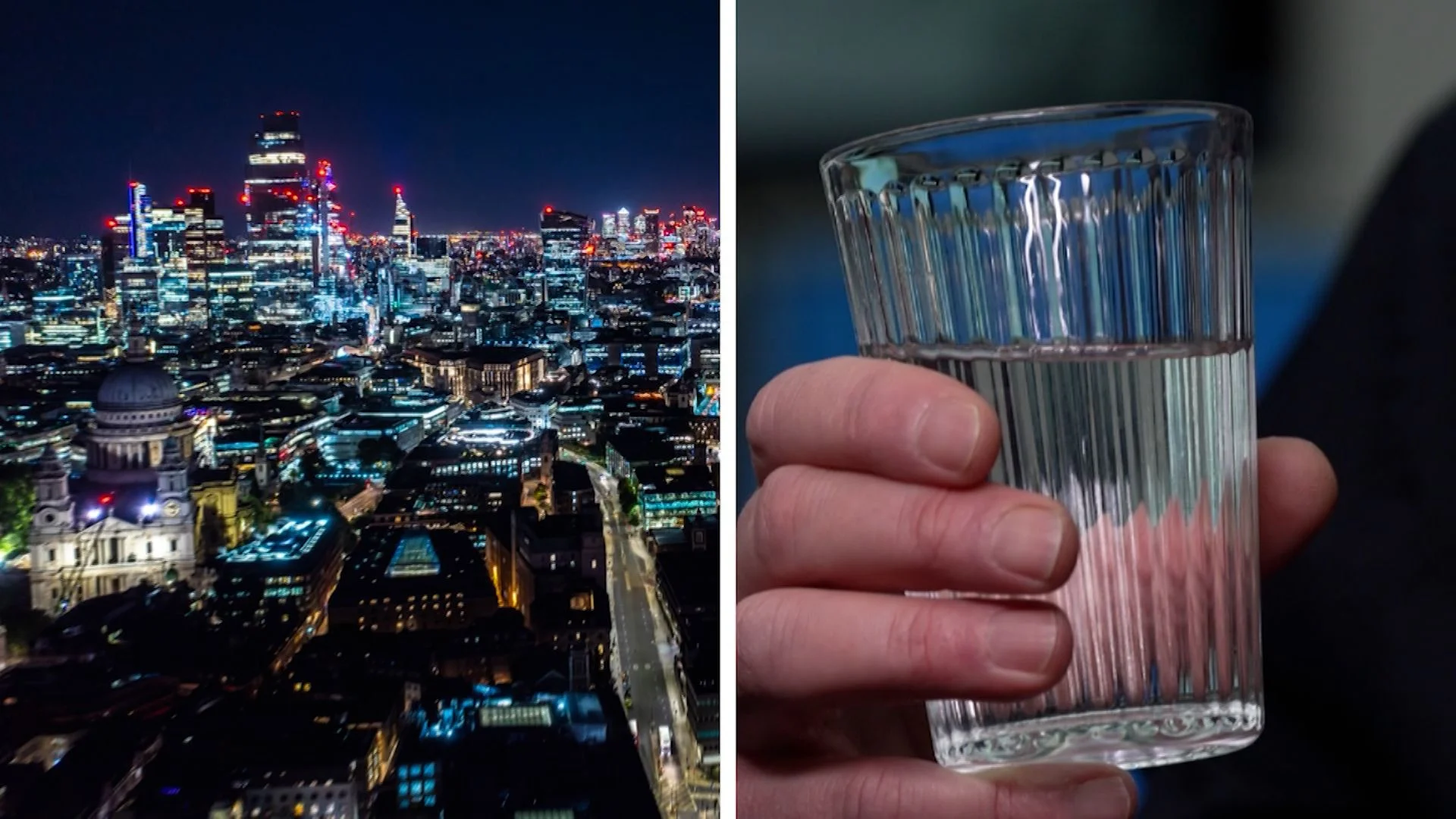
A United Kingdom-based clean-energy company says it is developing technology that could one day generate enough electricity to power an entire city using fuel derived from something as simple as a glass of water—highlighting the growing promise of next-generation nuclear fusion.
The company’s approach focuses on fusion energy, a process that replicates the same reaction that powers the sun. Fusion works by combining hydrogen isotopes—often extracted from water—to release vast amounts of energy without producing long-lived radioactive waste associated with traditional nuclear power.
Engineers involved in the project say only a very small quantity of fusion fuel is theoretically required to generate enormous amounts of electricity. In practical terms, the hydrogen contained in a single glass of water could provide the raw material for enough fusion reactions to supply energy for thousands of homes, illustrating the technology’s transformative potential if successfully commercialized.
Fusion has long been considered a “holy grail” of clean energy because it produces no carbon emissions during operation and relies on widely available fuel sources. However, scientists have spent decades attempting to make the process stable, efficient, and economically viable at commercial scale.
The UK firm’s announcement reflects accelerating global competition to bring fusion power online. Governments and private investors across Europe, the United States, and Asia are investing billions of dollars into research facilities and experimental reactors aimed at achieving reliable fusion-based electricity generation within the next decade.
Experts caution that while the concept is scientifically sound, significant engineering challenges remain before fusion can supply power grids at scale. Demonstration plants are still under development, and commercial rollout timelines remain uncertain.
Still, advocates say breakthroughs in materials science, laser systems, and reactor design are bringing fusion closer to reality—raising hopes that ultra-clean energy derived from simple resources like water could eventually help power future cities.