



Introduction
In the U.S. housing market, timing can influence both pricing and competition. While spring and early summer are traditionally associated with increased listing activity and buyer demand, historical housing data shows that winter months—particularly January and February—often present different market dynamics.
Multiple housing research firms have identified seasonal price patterns in U.S. residential real estate, where average price-per-square-foot figures tend to be lower during the early part of the year compared to late spring. These shifts are driven not by a single factor, but by a combination of buyer behavior, seller motivation, and transaction volume trends.
This article explains why winter months often show lower pricing, what the data indicates about seasonal cost differences, and how these patterns fit into broader housing market mechanics—using publicly available U.S. research and neutral, educational analysis.
Seasonal Home Price Patterns in the U.S.
Winter vs. Spring Pricing Trends
Housing data compiled by national research firms consistently shows that home prices follow a seasonal cycle. In many years:
- Prices tend to rise through spring and early summer
- Peak levels are often observed between April and June
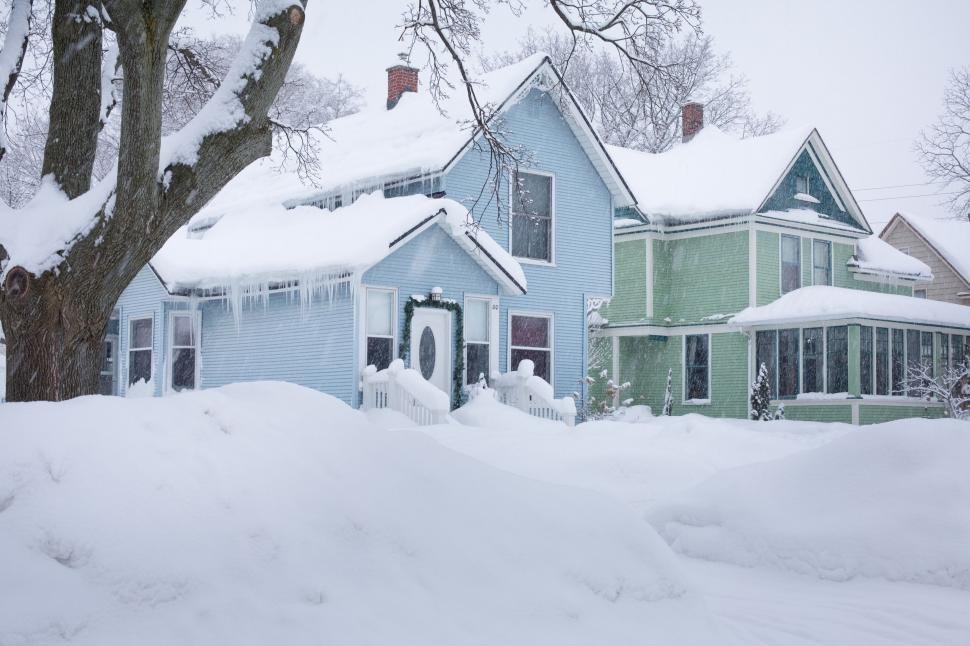
- Prices soften during late fall and winter
An analysis of national pricing data from recent years found that May often records the highest median price-per-square-foot, while January and February typically show measurable discounts compared with peak months.
In one nationwide review of monthly pricing patterns:
- May recorded median prices near $194 per square foot
- January prices were approximately 8% lower, averaging near $178 per square foot
- February prices were also discounted, roughly 5% below peak levels
These figures illustrate that seasonality alone can create meaningful price variation, independent of broader market conditions.
Why Prices Tend to Be Lower in Winter Months
Reduced Buyer Competition
One of the strongest seasonal influences is buyer activity.
During winter:
- Fewer buyers actively search for homes
- Family relocations slow due to school calendars
- Harsh weather in some regions reduces mobility
Lower buyer participation can reduce competitive bidding, particularly in markets that experience heavy spring demand.
Seller Motivation Differences
Homes that remain on the market into winter months often reflect:
- Sellers with stronger motivation to close
- Properties that did not sell during peak seasons
- Owners seeking to finalize transactions before spring
While this does not apply to every listing, research and transaction data suggest that seller concessions and negotiated pricing are more common in winter than during high-demand months.
Slower Transaction Volumes
According to historical transaction data:
- Winter months typically see lower sales volume
- Fewer transactions reduce upward price pressure
- Buyers who remain active may encounter more negotiating flexibility
This lower velocity environment can affect pricing dynamics even when long-term demand remains intact.
Mortgage Rates and Seasonal Affordability
Rates and Timing Interact
Mortgage rates influence affordability year-round, but their impact can be magnified when combined with seasonal pricing shifts.
When rates stabilize or decline modestly during winter:
- Monthly payment sensitivity becomes more manageable
- Buyers can benefit from both lower prices and reduced competition
Housing analysts often emphasize that price and rate movements interact, meaning seasonal pricing dips can partially offset higher borrowing costs, depending on market conditions.
Cost Impact of Seasonal Pricing Differences
Illustrative Cost Comparison (Educational)
Consider a hypothetical 1,500-square-foot home:
- At $194 per square foot, total price ≈ $291,000
- At $178 per square foot, total price ≈ $267,000
This difference—approximately $23,000—illustrates how seasonal pricing variation alone can materially affect total purchase cost, even before factoring in negotiation outcomes or seller concessions.
This example is illustrative and not predictive, but it helps demonstrate why timing can influence overall affordability.
Inventory Trade-Offs in Winter Markets
Lower prices do not come without trade-offs.
Winter markets often feature:
- Fewer active listings
- Limited selection in some neighborhoods
- Reduced new construction availability
Buyers may need to balance price advantages against inventory constraints, particularly in supply-constrained regions.
Regional Variations Matter
Seasonal pricing effects are not uniform across the U.S.
Differences arise due to:
- Climate
- Local employment cycles
- Migration patterns
- New construction pipelines
Sunbelt and coastal markets may experience less pronounced winter slowdowns than northern regions, while high-growth metros may retain stronger pricing even in off-peak months.
Buyer Psychology and Seasonal Behavior
Seasonality also influences buyer expectations.
In winter:
- Buyers may perceive less urgency
- Offers may be more deliberate
- Negotiations may focus more on terms than speed
In spring:
- Competitive pressure increases
- Time-on-market shortens
- Pricing becomes more sensitive to bidding dynamics
These psychological shifts play a meaningful role in observed pricing patterns.
What Seasonal Pricing Does Not Mean
It’s important to clarify common misconceptions:
- ❌ Lower winter prices do not guarantee “deals” everywhere
- ❌ Winter purchases are not inherently better or worse
- ❌ Seasonal patterns do not override local market fundamentals
Seasonality is one factor among many, including supply, employment, rates, and regional demand.
Educational Takeaways
- U.S. home prices often follow predictable seasonal cycles
- January and February frequently show lower median pricing than spring months
- Reduced buyer competition and motivated sellers contribute to winter softness
- Mortgage rates and seasonal pricing interact to influence affordability
- Regional differences can amplify or mute these effects
Understanding seasonal pricing patterns helps explain why some months may present different cost dynamics, without assuming universal outcomes.
AUTHOR INFORMATION
Written by:
Asim Iftikhar — Real Estate Contributor, ACT Global Media
Florida Real Estate License: SL3633555
Florida Notary Commission: HH 709161
Editorial Disclosure
This article is provided for general informational and educational purposes only and does not constitute real estate, mortgage, financial, or legal advice. Information is based on publicly available U.S. sources and may change over time.
Fair Housing & Civil Rights Notice
ACT Global Media supports fair housing principles. Content is educational and does not express or imply preferences or limitations prohibited by law