



Home value is often discussed as if it were a single number determined at the time of sale. In reality, a home’s value in the United States is the result of multiple overlapping forces, some within a homeowner’s influence and many completely outside of it.
According to data from the Federal Housing Finance Agency (FHFA), U.S. home prices increased more than 45% nationally between 2019 and 2024, yet that growth was not evenly distributed. Some markets appreciated far more, while others lagged—demonstrating that value is driven by market dynamics, not just property features.
This article provides an advanced, data-based, U.S.-specific explanation of what really affects home value. It separates factors inside an owner’s control from those outside an owner’s control, helping readers understand how valuation works in practice—without offering advice or recommendations.
How Home Value Is Determined in Practice
In the U.S., residential home value is typically inferred from:
- Recent comparable sales (“comps”)
- Market demand and supply
- Property characteristics
- Broader economic conditions
Appraisers, buyers, and lenders rely on market evidence, not subjective preference. Even well-maintained homes are constrained by what similar homes nearby have sold for.
Factors Outside a Homeowner’s Control
These elements tend to have the largest impact on value, yet are largely beyond individual influence.
- Location (The Primary Driver)
Location consistently ranks as the single most influential factor in residential value.
Key components include:
- Proximity to employment centers
- School district boundaries
- Transportation access
- Local amenities
- Perceived neighborhood desirability
According to research from National Association of Realtors, location and neighborhood quality are cited by buyers more frequently than property size or finishes when evaluating value.
Importantly, location value is relative, not absolute. A well-maintained home in a declining area may underperform a smaller home in a high-demand neighborhood.
- Local Supply and Demand
Home value responds strongly to inventory levels.
Data from U.S. Census Bureau and housing market analytics show:
- Low inventory environments tend to support higher prices
- Rising inventory often slows appreciation or leads to price declines
Months of supply is a commonly cited metric:
- <3 months: seller-leaning conditions
- 5–6 months: balanced market
- >7 months: buyer-leaning conditions
Individual homes are affected by these broader conditions regardless of quality.
- Interest Rates and Credit Conditions
Mortgage rates influence how much buyers can afford, which in turn affects home prices.
According to Freddie Mac, a 1-percentage-point increase in mortgage rates can reduce purchasing power by approximately 10% for many buyers.
This relationship explains why:
- Prices may flatten when rates rise
- Prices may accelerate when rates fall
Even if the property itself does not change.
- Employment and Regional Economic Health
Areas with strong job growth and wage expansion tend to experience stronger housing demand.
The Bureau of Labor Statistics tracks employment trends that correlate closely with housing performance. Markets with sustained employment growth often outperform those with job losses or stagnation.
- Property Taxes and Insurance Costs
Rising property taxes and insurance premiums affect affordability.
Research from Urban Institute indicates that higher non-mortgage housing costs can reduce buyer demand, indirectly influencing value—especially in high-tax or high-risk insurance regions.
- Zoning, Land Use, and Regulatory Constraints
Zoning rules affect:
- Density
- Redevelopment potential
- Expansion possibilities
Properties in areas with restrictive zoning often command higher prices due to limited supply, while areas allowing higher density may experience different valuation dynamics.
Factors Partially Within an Owner’s Control
These elements matter, but their impact is often bounded by market limits.
- Property Size and Layout
Square footage influences value, but not linearly.
Data from Zillow suggests that:
- The first 1,000–2,000 square feet typically adds more marginal value than additional space beyond that
- Poor layouts can underperform even at larger sizes
Functional design often matters more than raw size.
- Condition and Maintenance
Homes in good condition typically sell faster and closer to list price.
According to NAR surveys:
- Deferred maintenance can reduce buyer interest
- Homes needing visible repairs often sell at discounts
However, condition rarely overrides location or market conditions.
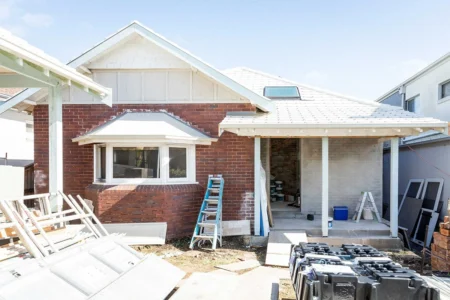
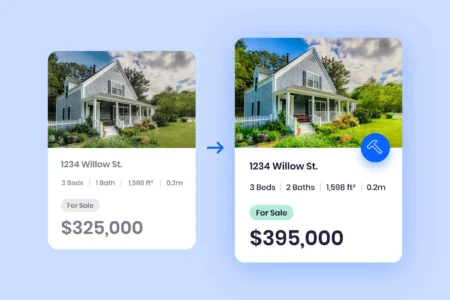
- Renovations and Improvements
Not all renovations increase value equally.
Industry data consistently shows:
- Kitchen and bathroom updates often retain 60–80% of their cost
- Over-customization can reduce buyer appeal
- Luxury upgrades may not translate to proportional value increases
Value contribution depends on alignment with local buyer expectations.
- Energy Efficiency and Systems
Energy-efficient features can improve marketability, but valuation impact varies.
Studies from the U.S. Department of Energy suggest energy-efficient homes may sell for modest premiums in certain markets, but effects are inconsistent and often secondary to location.
Factors Largely Outside Control but Often Misunderstood
- School District Boundaries
School district lines can materially affect value—even for buyers without children.
Homes located in higher-rated districts often command premiums due to broader buyer demand, as shown in multiple housing market studies.
- Market Cycles and Timing
Housing markets are cyclical.
Short-term value fluctuations may reflect:
- Economic conditions
- Credit availability
- Buyer sentiment
Long-term trends are more closely tied to fundamentals like employment and supply.
What Does NOT Reliably Increase Value
Common misconceptions include:
- Cosmetic upgrades without functional improvement
- Over-improving beyond neighborhood norms
- Assuming past appreciation guarantees future growth
Market context always constrains value outcomes.
Appraisals vs. Market Value
Appraised value reflects:
- Historical sales data
- Lending risk standards
Market value reflects:
- What buyers are willing to pay today
These values usually align, but not always—especially in fast-moving markets.
Why Some Homes Underperform Despite Improvements
A home can underperform if:
- The neighborhood declines
- Inventory increases
- Buyer preferences shift
- External costs rise
Individual effort cannot always offset external conditions.
Long-Term Perspective on Home Value
Over long periods, value tends to reflect:
- Location fundamentals
- Regional economic strength
- Land scarcity
- Population trends
Short-term fluctuations often matter less than structural factors.
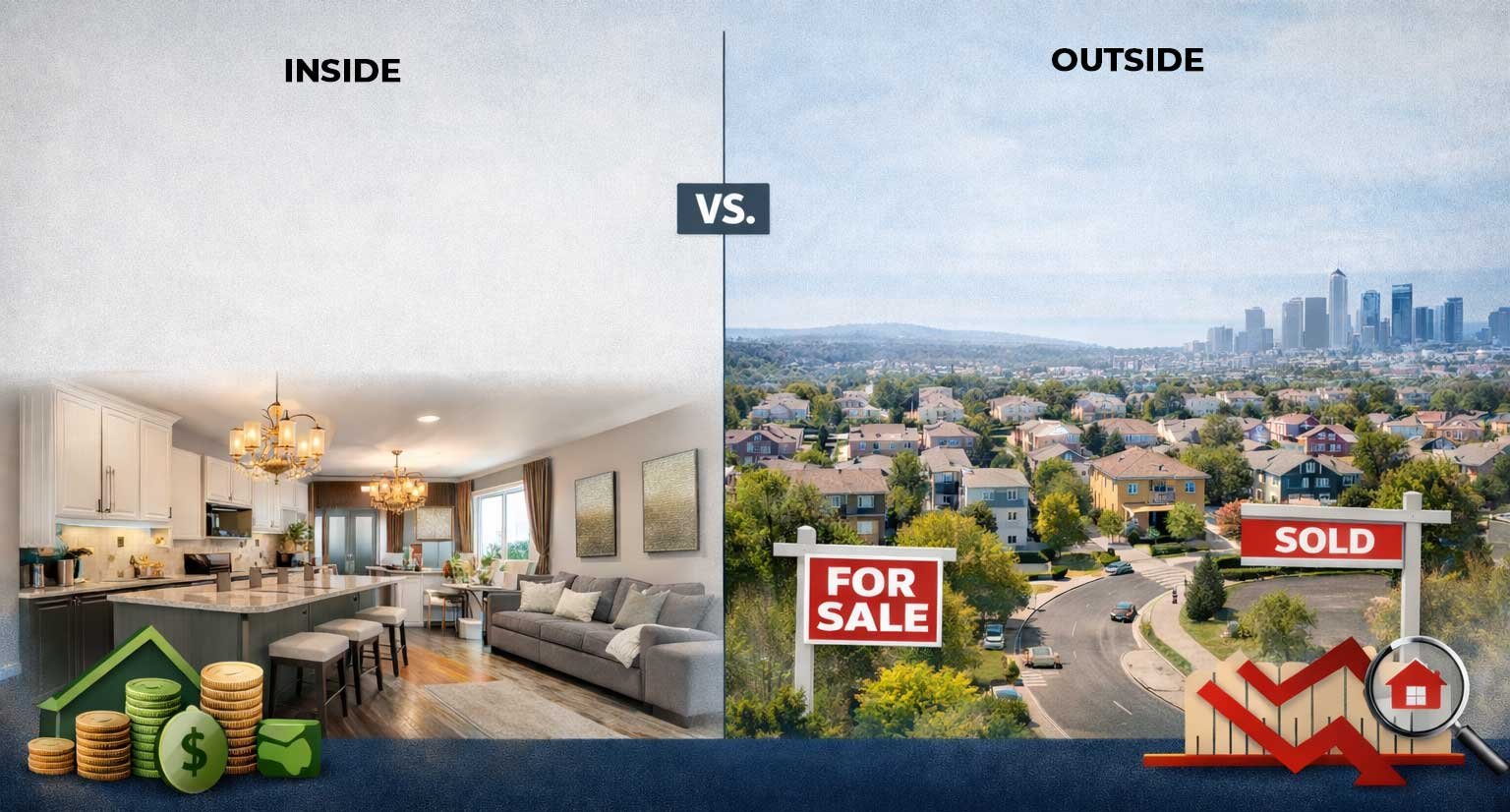
Summary: Inside vs. Outside Your Control
Largest drivers (outside control):
- Location
- Supply and demand
- Interest rates
- Economic conditions
- Taxes and insurance
Secondary drivers (partial control):
- Condition
- Layout
- Renovation quality
Understanding these distinctions helps explain why value behaves differently across markets and time periods.
Author Information
Written by:
Asim Iftikhar — Real Estate Contributor, ACT Global Media
Florida Real Estate License: SL3633555
Florida Notary Commission: HH 709161
Editorial Disclosure
This article is provided for general informational purposes only and does not constitute real estate, legal, financial, or investment advice.
Fair Housing & Civil Rights Notice
ACT Global Media supports fair housing principles. Content is presented for general education and does not endorse discrimination or preferences prohibited by law.