



Buying a home in Florida follows the same broad U.S. steps (financing, contract, inspections, appraisal, title/closing), but the details that shape cost and risk often depend on Florida-specific factors—insurance pricing, property taxes and exemptions, HOA rules, flood/wind exposure, condo documentation, and local market competitiveness. For home buyers in Florida, understanding these state-specific considerations is essential to making informed decisions and managing both costs and risks effectively.
This educational guide walks through the Florida homebuying process from planning to closing, with neutral, consumer-focused explanations and data context from public sources. It is not legal, financial, real estate, or mortgage advice, and it is not a solicitation.
1) Start with the “why” and the real monthly cost
Many buyers begin with a target purchase price. In practice, affordability is usually determined by the total monthly housing cost—which commonly includes:
- Principal & interest (if financing)
- Property taxes
- Homeowners insurance (and possibly wind/hurricane and/or flood insurance)
- HOA/condo fees (if applicable)
- Maintenance and utilities (not part of underwriting DTI, but part of real cash flow)
Florida is a good example of why this matters: insurance and HOA costs can materially change the monthly number even when two homes have the same price.
For statewide context, the U.S. Census Bureau’s QuickFacts (ACS 2020–2024) provides Florida baseline figures such as median value of owner-occupied housing units, median selected monthly owner costs, and median household income (Source: U.S. Census Bureau, QuickFacts—Florida, ACS 2020–2024).
A helpful mindset before you shop:
- Treat affordability as a monthly budget question, not a list-price question.
- Plan for “known unknowns” (insurance quotes, HOA requirements, property tax estimates, and inspection findings).
2) Build your homebuying file (documents and readiness)
Whether you plan to finance or pay cash, preparing documentation early reduces delays later.
Common items buyers are asked for (especially if financing):
- Government-issued ID
- Income documentation (W-2s, pay stubs, tax returns if self-employed)
- Asset documentation (bank statements, investment accounts)
- Employment history
- Current housing history (rent/mortgage)
- Explanation letters for certain credit events (varies by lender)
If you’re financing, you’ll also want a clear list of your recurring debts (auto, student loans, credit cards) because these affect underwriting ratios and payment-based qualification.
3) Understand prequalification vs preapproval
Prequalification is typically an early estimate based largely on information you provide.
Preapproval generally involves a deeper review and more documentation.
In competitive markets, sellers often view a stronger financing profile as reducing fall-through risk—especially if the home has multiple offers. The Consumer Financial Protection Bureau (CFPB) publishes a consumer home loan toolkit explaining the mortgage shopping process and key documents you’ll receive (Source: CFPB, “Your Home Loan Toolkit”).
Educational takeaway:
- If you plan to finance, more complete documentation earlier generally reduces surprises later.
- Even with a preapproval, final approval still depends on underwriting, appraisal, and property/condition requirements.
4) Choose a Florida-focused home search strategy
Home Buyers in Florida searches often require extra attention to factors that can affect cost, insurability, and resale:
Property condition and insurability
- Roof age and condition
- Electrical system type and panel condition
- Plumbing material (older pipes can raise risk/insurance concerns)
- Prior claims history (sometimes relevant)
- Evidence of water intrusion, mold, or structural movement
Flood and wind exposure
Flood zone, elevation, drainage patterns, and local windstorm considerations can influence insurance costs and requirements.
HOA/condo rules
- Monthly dues, special assessments, reserves
- Rental restrictions (important for investors and some owner-occupants)
- Approval processes and application fees
- Pet rules, parking rules, and use restrictions
Practical planning point: In many Florida transactions, it’s smart (educationally) to evaluate HOA documents and insurance implications as early as possible rather than waiting until the final week.
5) Make an offer with the right “risk controls” (terms matter)
Once you find a property, the offer isn’t just price. It’s also:
- Earnest money deposit
- Inspection period length
- Financing terms (if any)
- Appraisal-related protections (if used)
- Closing date timeline
- Seller concessions request (if any)
- Inclusions/exclusions (appliances, fixtures)
Florida-specific emphasis: inspection period discipline
Home Buyers in Florida commonly rely on an inspection period to:
- Identify defects and safety issues
- Estimate repair scope
- Confirm major systems condition
- Decide whether to proceed, renegotiate, or cancel under contract terms (as applicable)
Educational note: Contract terms and deadlines are legally meaningful. If you are unsure what a clause means, a Florida real estate attorney is the best resource for legal interpretation.
6) Open escrow/title and start the “closing checklist” immediately
After contract acceptance, the closing process typically involves a title company or attorney (varies by transaction structure and county norms). Typical early steps include:
- Open title/escrow file
- Order title search and begin curing title issues (if any)
- Schedule inspections
- Start insurance shopping (especially critical in Florida)
- If financing: begin full underwriting process
7) Order inspections (and know what they do and don’t do)
Inspections are not about predicting every future issue. They are designed to identify visible or discoverable defects and risks as of the inspection date.
Common Florida inspections buyers consider:
- General home inspection
- Four-point inspection (often insurance-driven for older homes)
- Wind mitigation inspection (can influence insurance credits)
- Roof inspection (especially if roof age is a concern)
- Termite/WDO inspection
- Sewer scope (when applicable)
- Pool inspection (if applicable)
How to use inspections well (educational framework):
- Separate safety/structural issues from cosmetic issues.
- Ask for written documentation and photos.
- Use the report to inform your decision: proceed, renegotiate, or cancel under contract terms (as applicable).
8) Insurance and Florida closing reality:
In Florida, insurance can be one of the biggest swing factors in affordability and closing readiness.
A buyer may need:
- Homeowners insurance binder before closing (common with mortgages)
- Flood insurance (if required or chosen)
- Wind/hurricane coverage structure understanding
- Separate policies or endorsements depending on property type and location
Practical implication:
- Two similar homes can have meaningfully different monthly costs due to insurance pricing differences.
- Insurance quotes can also influence a lender’s final “cash to close” and escrow estimates.
9) The appraisal vs. the market: why values sometimes diverge
If financing, a lender typically requires an appraisal. An appraisal is not the same thing as the market’s emotional bidding behavior. It’s a valuation opinion based on standardized methods and comparable sales.
If an appraisal comes in below contract price, outcomes depend on contract terms and negotiations:
- Buyer and seller may renegotiate
- Buyer may bring additional funds (if feasible)
- Buyer may cancel under specific protections (if present)
- Buyer may pursue a reconsideration of value (process varies)
Educational reminder: the appraisal protects the lender’s collateral position; it is not a guarantee of future resale value.
10) Know the two core CFPB documents and their timing
In most consumer mortgage transactions, the CFPB’s integrated disclosure rules (TRID) require standardized forms that help borrowers compare costs:
Loan Estimate (LE)
Lenders generally must deliver a Loan Estimate within three business days after receiving your application (Source: CFPB, Loan Estimate resources).
Closing Disclosure (CD)
Borrowers generally must receive the Closing Disclosure at least three business days before consummation/closing (Source: CFPB, Closing Disclosure resources).
Why this matters:
- These forms are designed for “apples-to-apples” comparisons and clarity on fees.
- Reviewing them early helps prevent last-minute surprises.
11) Final walkthrough: what you’re verifying
The final walkthrough is typically done shortly before closing (timing varies). It is meant to confirm:
- The property is in substantially the same condition as when you agreed to buy it
- Agreed repairs (if any) were completed as documented
- Appliances/fixtures included in the contract remain in place
- No new damage occurred
The walkthrough is not a substitute for inspections, and it’s not designed to uncover hidden defects. It’s a condition check tied to the contract.
12) Closing day: what happens and what you pay
At closing, the buyer typically signs:
- Settlement documents
- Mortgage documents (if financing)
- Title and recording documents
Common cost categories (educational overview):
- Lender fees (origination/processing—varies)
- Title/settlement fees
- Recording fees and taxes (varies by county/city)
- Prepaids/escrows (insurance, property taxes—varies)
- HOA items (application/transfer fees—if applicable)
Costs vary widely by transaction and location. For statewide context on housing costs and income, ACS-based QuickFacts helps frame affordability but does not replace a loan estimate or settlement statement (Source: U.S. Census Bureau, QuickFacts—Florida; Source: U.S. Census Bureau, QuickFacts—Orange County, Florida).
13) After closing: the first 30 days of ownership checklist
Many first-time owners focus on closing day and then get surprised by what comes next.
Common post-closing tasks:
- Change locks or re-key (security)
- Confirm insurance policy issuance and renewal dates
- Set up utilities and services
- Store closing documents securely
- Track homestead exemption deadlines (where applicable)
- Plan maintenance schedule (HVAC servicing, gutters, pest prevention)
Educational note: Property tax exemptions and filing rules vary by county and circumstance. Official county property appraiser resources are the appropriate source for eligibility and deadlines.
14) A Florida-focused “clean process” checklist
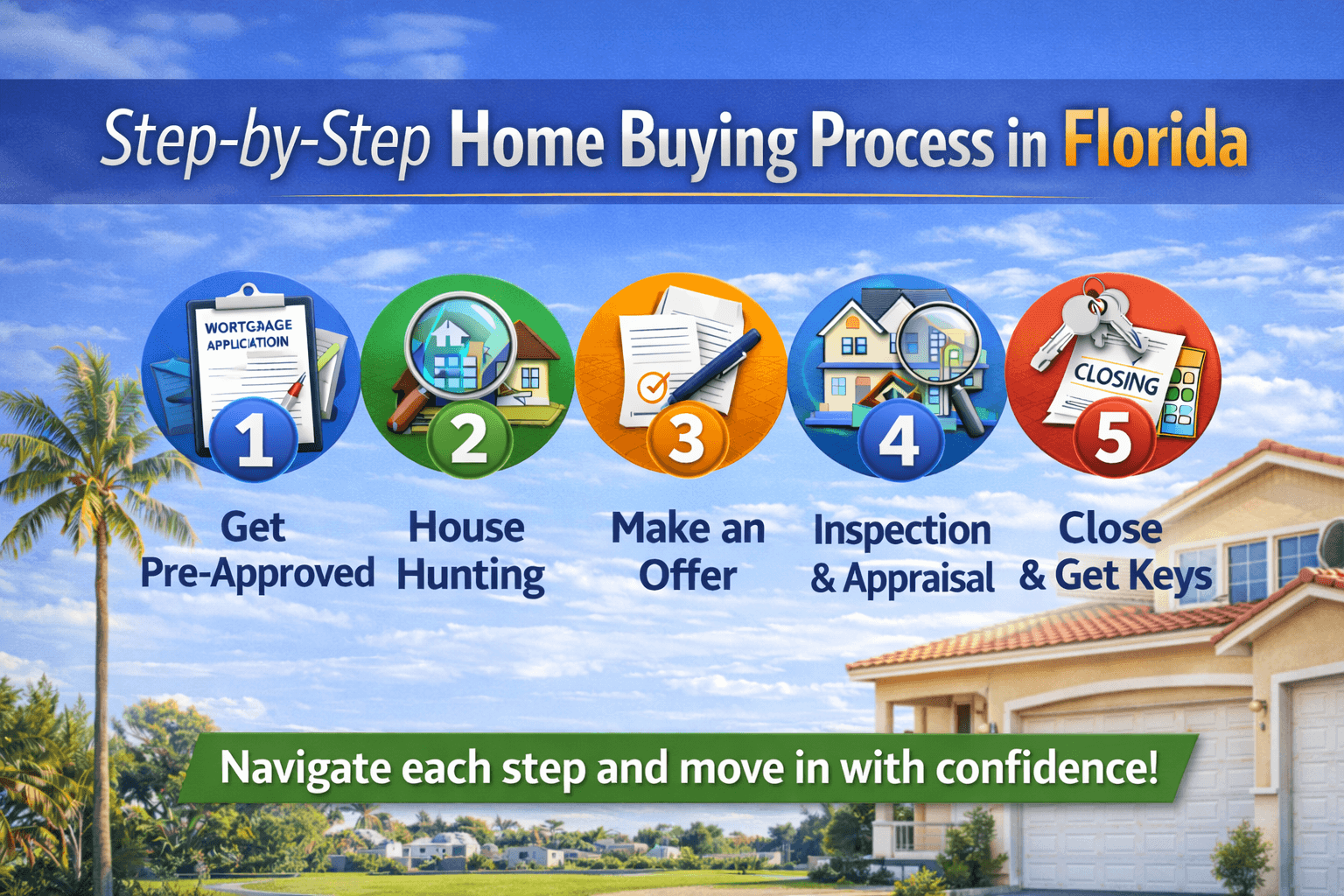
Here’s a simple step-by-step sequence you can publish as a reader-friendly checklist:
- Define monthly budget range (include taxes/insurance/HOA estimates)
- Gather documents and stabilize credit activity (avoid major changes during underwriting)
- Compare financing scenarios (educational comparison using CFPB tools)
- Start home search with Florida risk filters (insurance/HOA/flood/wind/roof)
- Make offer with clear deadlines and protections (as applicable)
- Open escrow/title; order inspections immediately
- Get insurance quotes early; confirm binders if financing
- Appraisal ordered (if financing)
- Review Loan Estimate and Closing Disclosure carefully (CFPB forms and timing)
- Final walkthrough
- Closing and funding
- Post-closing setup and recordkeeping
Author Credit
Written by:
Asim Iftikhar — Real Estate Contributor, ACT Global Media
Florida Real Estate Sales Associate License: SL3633555
Florida Notary Public Commission: HH 709161
Asim Iftikhar contributes educational content on U.S. residential real estate processes, housing fundamentals, and market concepts. Content is presented for general informational purposes using publicly available sources.
Educational & Regulatory Disclosure
This article is provided for general informational and educational purposes only. It does not constitute real estate, mortgage, credit, financial, legal, or tax advice, and it is not a solicitation or an offer to provide services. Requirements, timelines, costs, and program rules vary by lender, county, property type, and individual circumstances. Readers should consult qualified, licensed professionals for guidance specific to their situation