



A Data-Based Comparison of Costs, Flexibility, and Long-Term Considerations
Introduction
The decision to rent or buy a home in the United States is often framed as a financial milestone, but national housing data shows that the choice is neither linear nor universal. Renting and homeownership coexist as long-term housing solutions for millions of U.S. households, shaped by income levels, housing costs, labor mobility, and local market conditions.
According to the U.S. Census Bureau, the national homeownership rate stood at approximately 65.7%, meaning that more than one in three U.S. households rents their primary residence. This proportion has remained relatively stable over several decades, reinforcing that renting is not simply a temporary stage for all households.
Housing is also the largest expense category for U.S. households. The Bureau of Labor Statistics (BLS) Consumer Expenditure Survey shows that housing-related costs account for roughly one-third of total household spending, exceeding transportation, food, healthcare, and other major categories. Because housing dominates household budgets, even modest differences between renting and owning can materially affect financial flexibility, mobility, and risk exposure.
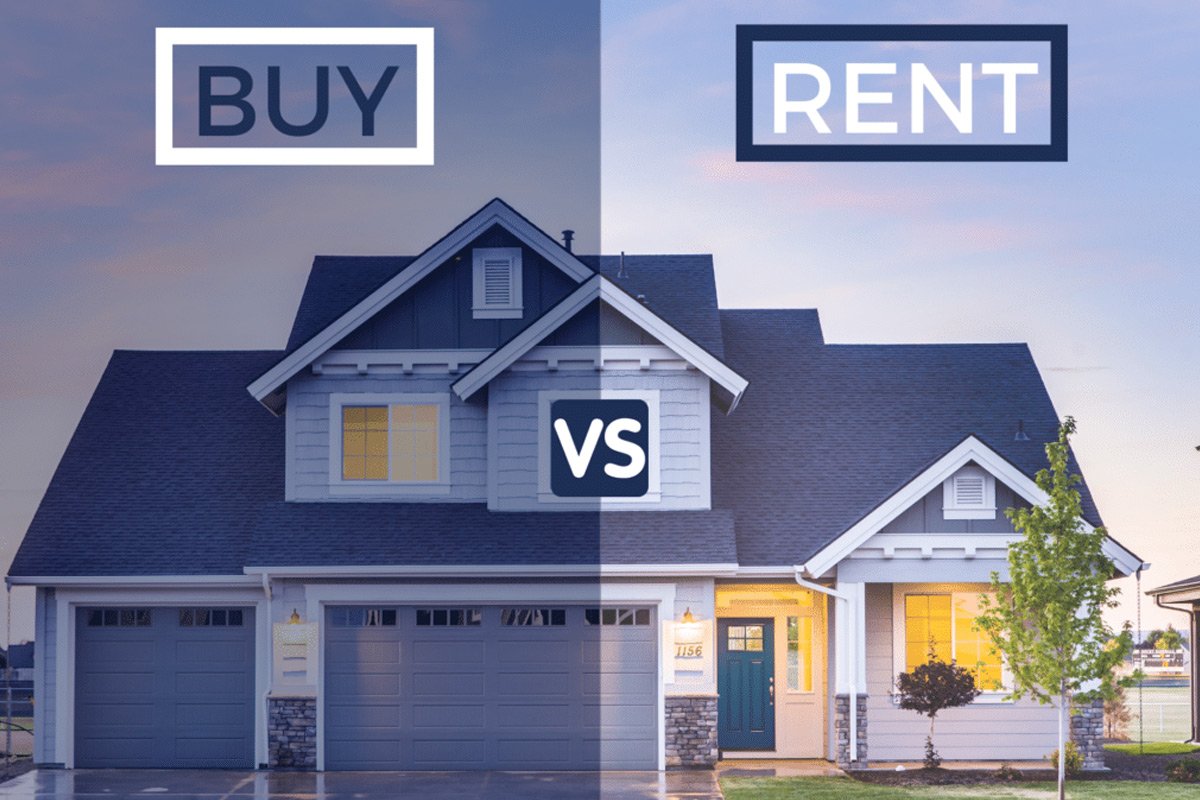
This article provides a neutral, data-driven overview of how U.S. households commonly evaluate renting versus buying. It draws on government sources (Census Bureau, BLS, Federal Reserve) and reputable private housing market data (Zillow, Realtor.com, Redfin) to explain cost structures, mobility patterns, and long-term considerations—without offering personalized advice or recommendations.
The U.S. Housing Landscape: Renting and Owning Side by Side
Homeownership and Renting at the National Level
The Census Bureau’s Housing Vacancy Survey shows that U.S. homeownership has fluctuated between approximately 63% and 69% over the past 40 years. Periods of expansion and contraction have reflected changes in credit availability, demographics, and economic conditions, but neither renting nor owning has disappeared as a dominant housing option.
Renters in the U.S. include:
- Younger households entering the workforce
- Households relocating frequently for employment
- Older households downsizing or prioritizing flexibility
- High-income households in high-cost metropolitan areas
This diversity underscores why renting versus buying cannot be evaluated using a single financial rule or benchmark.
Monthly Housing Costs: Renters vs. Owners
Rental Costs in the U.S.
The BLS Consumer Price Index (CPI) highlights the importance of rent in household spending. “Rent of primary residence” is one of the largest individual CPI components, while “owners’ equivalent rent” (a measure used to estimate housing services consumed by homeowners) accounts for more than 23% of the CPI basket.
Private housing platforms provide additional context:
- Zillow reported that national median asking rents remained near $2,000 per month in 2024, with significant variation by metro area.
- Realtor.com rental data shows that while rent growth moderated from 2021–2022 peaks, rents in many large cities remain well above pre-2020 levels.
- Redfin reported that rents declined year-over-year in some markets during parts of 2024, but affordability pressures persist due to high absolute rent levels.
Renting costs are typically predictable over a lease term, but renewal increases depend on local supply, demand, and regulatory frameworks.
Ownership Costs Beyond the Mortgage
Homeownership involves a broader and more variable cost structure. In addition to mortgage principal and interest, homeowners commonly pay:
- Property taxes
- Homeowners insurance
- Utilities
- Maintenance and repairs
- HOA dues (where applicable)
The BLS Consumer Expenditure Survey shows that homeowners spend over $25,000 per year on housing on average, including both mortgage and non-mortgage expenses. Importantly, non-mortgage costs may change annually even when mortgage payments are fixed, adding variability to ownership expenses.
Transaction Costs and the Role of Time Horizon
One of the most significant structural differences between renting and buying is the presence of transaction costs in homeownership.
Buying and Selling Costs
Research from the Federal Reserve and housing economists estimates that:
- Closing costs, transfer taxes, and real estate commissions can total 8%–10% of a home’s value over a full purchase-and-sale cycle.
These costs are not incurred monthly; instead, they are concentrated at entry and exit. As a result:
- Shorter ownership periods increase the effective annual cost of buying
- Longer ownership periods spread transaction costs across more years
This is why neutral housing analyses emphasize expected length of stay as a key factor in rent-vs-buy comparisons.
Mobility and Labor Market Dynamics
How Often Americans Move
According to U.S. Census Bureau migration data:
- Approximately 9–10% of Americans move each year
- Renters move at more than twice the rate of homeowners
Higher mobility among renters reflects:
- Lower exit costs
- Fewer legal and transactional barriers
- Greater flexibility in response to job changes
Renting is often associated with households prioritizing geographic or employment flexibility, while homeownership is more common among households with stable employment and longer expected tenure in one location.
Equity, Wealth, and Long-Term Financial Outcomes (Educational Context)
The Federal Reserve’s Survey of Consumer Finances (SCF) consistently shows that:
- Median net worth of homeowners is significantly higher than that of renters
- Housing equity represents a substantial share of household wealth for owners
However, SCF data also shows wide dispersion:
- Wealth outcomes among homeowners vary significantly
- Timing of purchase, local market conditions, leverage, and income stability matter
- Homeownership does not guarantee wealth accumulation
These findings support a neutral conclusion: ownership can contribute to wealth for some households, but outcomes are not uniform or risk-free.
Risk Allocation: Renting vs. Owning
Risks Commonly Associated With Renting
Renters typically face:
- Exposure to rent increases
- Limited control over property changes
- Dependence on landlord decisions
At the same time, renters usually avoid:
- Large, unexpected repair costs
- Property value fluctuations
- Direct exposure to property tax and insurance changes
Risks Commonly Associated With Owning
Homeowners typically face:
- Market value volatility
- Rising property taxes or insurance premiums
- Maintenance and capital expense risk
Private market studies cited by Zillow and Realtor.com frequently note that maintenance and insurance costs have increased in recent years, particularly in disaster-prone regions.
Risk exists in both renting and owning; the difference lies in how that risk is distributed and managed.
Regional Variation and Local Market Effects
Rent-versus-buy dynamics vary significantly by region due to:
- Home price levels
- Rent-to-price ratios
- Property tax rates
- Insurance costs
- Wage levels
Redfin and Zillow research shows that in some markets, monthly ownership costs exceed rents by a wide margin, while in others the gap is smaller or reversed over longer time horizons. Federal Reserve regional housing studies similarly emphasize that local conditions matter more than national averages.
Housing Supply, Demand, and Market Cycles
Housing outcomes are also shaped by:
- New construction levels
- Zoning and land-use regulations
- Population growth and migration
Realtor.com and Zillow housing market outlooks consistently show that supply constraints in many metro areas continue to influence both rents and prices, affecting affordability regardless of tenure choice.
Summary: A Neutral, Data-Based Perspective
From a data-driven standpoint, renting versus buying in the U.S. is best understood as a comparison of:
- Cost structure
- Time horizon
- Mobility needs
- Risk exposure
- Local market conditions
Public data confirms that both renting and owning remain rational long-term housing choices for different households under different circumstances.
AUTHOR INFORMATION:
Written by:
Asim Iftikhar — Real Estate Contributor, ACT Global Media
Asim Iftikhar is a Florida-licensed real estate professional, notary public, and residential real estate investor with over 15 years of experience contributing educational content on U.S. housing markets and real estate fundamentals.
Editorial Disclosure
This article is provided for general informational purposes only and does not constitute real estate, financial, legal, or investment advice.
Regulatory Notice
Housing costs, risks, and outcomes vary by location, market conditions, and individual circumstances. Information is based on publicly available U.S. government data and reputable private housing market research