



Polk County sits in the geographic center of Florida, between the Tampa Bay region and Greater Orlando. That location has made it a long-term “spillover” market: when prices or supply tighten in nearby metros, demand often expands outward into more affordable counties with buildable land and expanding job bases. In 2026, Polk’s investment outlook—frequently highlighted in Florida real estate news—is shaped by the same big forces affecting the state overall: population growth, insurance and HOA cost pressure, interest rates, and a post-pandemic shift in where people live and work. However, Polk’s local fundamentals matter just as much as the broader macro story.
This article is an educational market overview designed to help readers understand the forces that can influence residential investment performance in Polk County. It is not financial, legal, or real estate advice, and it does not recommend specific properties, neighborhoods, or strategies.
1) Where Polk County Fits in Florida’s “Growth Geography”
Polk County is anchored by the Lakeland–Winter Haven metro area and includes a mix of established cities, growing suburban corridors, and rural areas. Its central location affects demand in three practical ways:
- Commuter flexibility and job access
Polk is positioned within reach of multiple job centers (Tampa Bay, Orlando, Lakeland/Winter Haven itself). Commuting patterns can influence tenant demand, rent tolerance, and resale liquidity when buyers are priced out of core metros. (Educational context: commuting is a demand driver, not a guarantee of returns.) - Land availability and new construction capacity
In Florida, the ability to add housing supply varies widely by county. A market with more developable land can sometimes respond faster to demand spikes through new building, which can affect resale competition and rent growth. - “Affordability migration” inside Florida
When higher-cost areas become out of reach, households often look for alternatives that still provide job access and amenities. That dynamic can support long-run housing demand—but it can also create more competition among investors in the same “affordable” zones.
2) Polk County’s Demographics and Income Context
Two baseline numbers shape what households can reasonably pay for housing:
- Household income (what residents can afford)
- Housing costs (prices, rents, insurance, taxes, HOA)
Median household income is commonly sourced from the U.S. Census Bureau’s American Community Survey (ACS). Florida’s Economic & Demographic Research (EDR) office compiles county-level ACS income figures in a standardized format.
Why investors care:
- Income helps frame rent ceilings (what tenants can support).
- Income trends can influence retail demand, school enrollment pressure, and household formation.
- In tighter affordability periods, stable or rising incomes can support demand even when interest rates are higher.
Important limitation: county medians include a wide distribution. A median figure does not represent every neighborhood or household type.
3) The “Affordability Squeeze” Is Real—and It’s Bigger Than Polk
Housing affordability is not a niche issue; it’s a national and Florida-wide constraint. Two widely referenced public indicators help illustrate this:
- HUD: severe rent burden remains elevated
HUD’s “Worst Case Housing Needs” reporting shows millions of very low-income renter households remain severely cost-burdened (spending a large share of income on rent and utilities), underscoring that rental affordability pressures remain a persistent challenge. - NAR: share of listings affordable to middle incomes can be limited
NAR has published affordability distribution analysis showing that many households can afford only a small fraction of for-sale listings at certain income levels, reinforcing how prices and rates can narrow buyer pools.
What this means for Polk:
- If affordability tightens, the pool of qualified buyers can shrink, affecting days on market and the “price ceiling” for certain submarkets.
- If affordability improves (through rates, prices, or income), demand can rebound quickly—especially in “value” counties.
4) Rental Market Benchmarks: Using HUD Fair Market Rents (FMR) as a Reference Point
One practical way to anchor rent conversations—without relying on one listing platform—is to use HUD Fair Market Rents (FMR). FMRs are not “the rent,” but they provide a government-produced benchmark used in housing programs and policy. HUD publishes metro-level FMR schedules, including for the Lakeland–Winter Haven area.
How to use FMRs:
- As a baseline reference for typical market rent levels by bedroom size.
- As a way to compare year-to-year directional changes when HUD updates schedules.
- As a guardrail when evaluating whether a rent projection seems unrealistic.
What FMRs are not:
- A guarantee of what any specific unit will rent for.
- A substitute for local comp analysis, property condition review, or unit-level positioning.
5) Polk’s Opportunity Set: 6 Common Investment “Lanes” (and What Drives Each)
Below are six common Polk County residential investment lanes. These are categories, not recommendations. Each lane’s performance depends on micro-location, property condition, financing, insurance costs, HOA rules, and execution quality.
Lane 1: Workforce rental (single-family homes)
Why it can work:
- Demand is often supported by households priced out of ownership, new arrivals, and life-stage renters.
- Single-family rentals can appeal to households seeking space, yards, or school-zone continuity.
Key sensitivity:
- Insurance, maintenance, and vacancy/turnover costs can materially change net results, especially in Florida.
Lane 2: Entry-level “resale-friendly” homes
Why it can work:
- Entry-level inventory is often constrained relative to demand, which can support liquidity.
- Smaller homes can sometimes have broader buyer pools.
Key sensitivity:
- Price ceilings: if you renovate beyond neighborhood norms, resale may not reward the spend (the “over-improvement” problem).
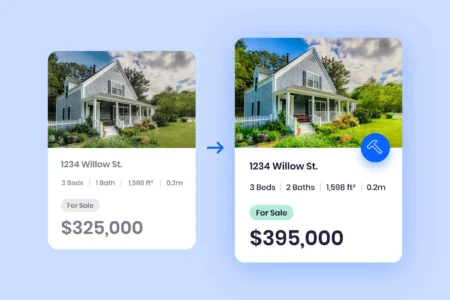
Lane 3: Value-add renovations (light to moderate rehab)
Why it can work:
- Buyers often pay for move-in readiness (time savings, fewer repair hassles).
- Some improvements have historically shown stronger buyer appeal than others.
Key sensitivity:
- Cost inflation in materials/labor can compress margins.
- Neighborhood comparables set the limit; the market will not pay infinite premiums.
Lane 4: New construction / build-to-rent spillover effects
Even if you are not building, new supply affects existing inventory:
Potential benefits:
- More development can bring amenities, retail, and infrastructure investment.
Potential headwinds:
- New builds compete with resales—especially if builders offer incentives, rate buydowns, or closing cost credits.
Lane 5: Small multifamily
Why it can work :
- Multiple units can diversify vacancy risk (one vacancy doesn’t drop rent to zero).
Key sensitivity:
- Local zoning, permitting, insurance, and operating complexity.
Lane 6: “Stability-first” buy-and-hold (long horizon)
Why it can work:
- Long hold periods can reduce sensitivity to short-term price moves.
Key sensitivity:
- Holding costs (insurance, taxes, maintenance) can rise even if rents or values don’t.
6) Practical, Data-Based Filters Investors Commonly Use
This is a framework many investors use to standardize evaluation. It does not guarantee outcomes.
- Liquidity filter (resale reality)
- How long do comparable homes typically take to sell?
- How many price reductions are common in current conditions?
National housing coverage in late 2025/early 2026 has highlighted increased discounting and negotiation in some markets compared with 2020–2022 conditions.
(Use this as context, not a local metric for Polk; always validate locally.)
- “All-in monthly cost” filter (ownership reality)
For buyers and landlords, total monthly cost matters more than price alone:
- Principal & interest (if financed)
- Property taxes
- Insurance
- HOA (if applicable)
- Maintenance reserve assumption
- Rent ceiling filter (tenant reality)
Compare:
- HUD FMR (benchmark)
- Local rent comps (similar beds/baths, condition, location)
Then stress-test vacancy and repairs.
- Regulatory/HOA filter (rule reality)
- HOA leasing restrictions?
- Minimum lease terms?
- Approval requirements?
- Rental caps?
This is critical in Florida where HOA/COA rules can materially impact rental strategy.
7) Polk-Specific “Why It Could Be Attractive” Themes
Theme 1: Central Florida demand corridor
Polk benefits from proximity to multiple employment zones and logistics/industrial growth patterns seen in Central Florida generally. Florida EDR market profiles highlight county-level labor and employment context using public data sources.
Theme 2: Mix of price points and property types
Counties with a broader mix can offer more “fit” for different budgets—though the correct lens is always neighborhood-level, not county-wide averages.
Theme 3: Ongoing affordability-driven household decisions
The ACS income context and HUD affordability stress context together explain why rental demand and entry-level demand can remain resilient even when rates are elevated.
8) Risks and Constraints Investors Should Understand
- Insurance volatility
Florida insurance costs and availability can change faster than rents or home values. This is one of the biggest “model risk” variables for Florida buy-and-hold.
- Property tax changes and assessment growth
Even if millage rates are stable, assessed values can move. Budget for escrow/payment variability if financed.
- Renovation ROI limits (the neighborhood ceiling)
If nearby comps do not support a premium, “nice upgrades” may not translate into resale dollars.
- New construction competition
When builders increase supply or offer incentives, resales can face more competition—especially for similar-sized homes.
- Localized market behavior
County-level averages hide micro-markets. Two areas 15 minutes apart can behave very differently in inventory, buyer demand, and rent resilience.
9) A Neutral “Opportunity Scoring” Model You Can Use
To compare areas without making claims, some investors score opportunities:
Score (1–5) across:
- Liquidity (typical DOM / sale-to-list behavior locally)
- Rent resilience (vacancy, rent comps vs benchmark)
- Cost volatility (insurance/HOA/taxes sensitivity)
- Supply pressure (new construction nearby, permit activity trends)
- Tenant/buyer profile fit (unit size, school access, commuting patterns)
- Operational complexity (rehab scope, property age, maintenance risk)
Then require that a deal only proceeds when it meets minimum thresholds across multiple categories—not just “looks cheap.”
10) Bottom Line: What Polk’s Data Suggests (and What It Doesn’t)
What the data can support:
- Polk County sits in a growth-influenced region of Florida, where housing affordability and supply dynamics matter heavily.
- Household income context, affordability stress data, and HUD rent benchmarks provide a grounded way to frame realistic housing costs and rent ceilings.
- NAR and HUD research support the broader reality that affordability and supply constraints shape buyer/renter behavior nationally and in many regions.
What the data cannot do:
- Predict a specific property’s performance.
- Replace neighborhood-level comps, inspection realities, insurance quotes, HOA document review, or professional advice.
Written by:
Asim Iftikhar — Real Estate Contributor, ACT Global Media
Florida Real Estate Sales Associate License: SL3633555
Florida Notary Commission: HH 709161
Editorial disclosure:
This article is provided for general informational purposes only and does not constitute real estate, investment, financial, legal, or tax advice.
Fair Housing notice: ACT Global Media supports equal housing opportunity. This content is educational and does not express any preference or limitation based on any protected characteristic under federal, state, or local law.