



Understanding Real Estate Investment Risks in Florida
Florida has long been considered one of the most attractive real estate markets in the United States. Strong population growth, favorable tax policies, warm climate, and expanding employment opportunities have drawn millions of new residents and investors to the state over the past two decades.
However, despite strong long-term demand, real estate investment in Florida carries several unique risks that vary by city and region. These risks include:
- climate and hurricane exposure
- rising insurance costs
- housing affordability pressures
- population migration shifts
- market volatility and price corrections.
Understanding these risks is essential for investors evaluating long-term real estate opportunities in Florida.
Recent housing data illustrates how rapidly market conditions can change. For example, several Florida metropolitan areas experienced significant housing price declines in 2025 following the pandemic-era housing boom. Cities such as Cape Coral and Naples saw home values fall by 7% or more year-over-year, reflecting cooling demand and rising ownership costs.
At the same time, insurance costs in coastal areas have risen dramatically. Some properties in high-risk flood zones now face annual insurance premiums exceeding $6,000 per year, significantly affecting property investment returns.
Florida’s housing market also faces structural challenges related to climate risk. Research shows that rising sea levels and increased flooding may threaten large portions of coastal real estate over time, with tens of thousands of properties potentially exposed to chronic flooding in the future.
This article examines real estate investment risks across Florida cities, including:
- market volatility and price corrections
- climate and environmental risks
- insurance and financing challenges
- demographic and migration trends
- regulatory and infrastructure factors.
The analysis incorporates data from:
- U.S. Census Bureau
- American Community Survey (ACS)
- National Association of Realtors (NAR)
- U.S. Department of Housing and Urban Development (HUD)
- housing market research and regional economic studies.
The goal is to provide a neutral, educational overview of how investment risks vary across Florida real estate markets.
Florida’s Real Estate Market Growth and Volatility
Florida’s real estate market expanded dramatically during the early 2020s.
Between 2020 and 2024, the state gained roughly 1.8 million new residents, creating unprecedented housing demand and pushing home prices sharply higher.
Median home values in Florida rose more than 60% during this period, reflecting strong migration and investor demand.
However, rapid price growth can also create market instability. When housing prices increase faster than incomes, affordability declines and demand can weaken.
Several Florida cities have recently experienced price corrections following the pandemic boom.
In Cape Coral, for example, home prices dropped 11% over two years, one of the steepest declines among U.S. metropolitan housing markets.
These shifts illustrate how real estate markets can move through cycles of rapid expansion followed by stabilization or correction.
Key Investment Risks in Florida Real Estate
Real estate investors evaluating Florida markets often consider several categories of risk.
Climate and Environmental Risk
Florida’s geography exposes much of the state to climate-related risks.
These include:
- hurricanes
- storm surges
- coastal flooding
- sea level rise.
Research shows that Florida has more homes at risk from sea-level rise than any other state.
Estimates suggest that roughly one in eight Florida homes could face chronic flooding by the end of the century, potentially affecting large portions of the housing market.
Flood risk has direct implications for real estate investment because it influences:
- property values
- insurance costs
- financing availability.
Coastal cities such as Miami, Fort Lauderdale, and Cape Coral face higher exposure to these risks.
Rising Property Insurance Costs
Insurance costs have become one of the most significant investment risks in Florida real estate.
Insurers face increasing claims related to hurricanes, flooding, and extreme weather events.
As a result, homeowners insurance premiums have increased dramatically in many regions.
Some coastal properties now require annual insurance premiums exceeding $6,000, significantly increasing operating expenses for homeowners and investors.
Higher insurance costs can reduce rental profitability and increase ownership expenses.
Housing Market Volatility
Real estate markets naturally experience cycles of expansion and correction.
Cities that experienced rapid price increases during the pandemic housing boom are particularly vulnerable to price adjustments.
For example:
- Cape Coral experienced price declines of more than 7% year-over-year during recent market corrections.
- Punta Gorda saw home values drop nearly 8% within one year, reflecting reduced demand and rising ownership costs.
These fluctuations illustrate how markets that grow quickly may also experience stronger corrections.
Affordability Constraints
Housing affordability is another major risk factor affecting real estate markets.
When home prices rise faster than incomes, fewer buyers can afford to purchase homes.
This can reduce demand and slow price growth.
Florida’s housing affordability has declined in several metropolitan areas due to rising home prices and higher mortgage rates.
Higher borrowing costs also influence affordability and investor demand.
Foreclosure Trends
Foreclosure activity can also influence local housing markets.
Recent housing reports indicate that Florida had the highest foreclosure rate in the United States in 2025, with filings on approximately 0.44% of residential properties.
Although foreclosure rates remain far below levels seen during the 2008 financial crisis, rising foreclosures can signal financial stress within housing markets.
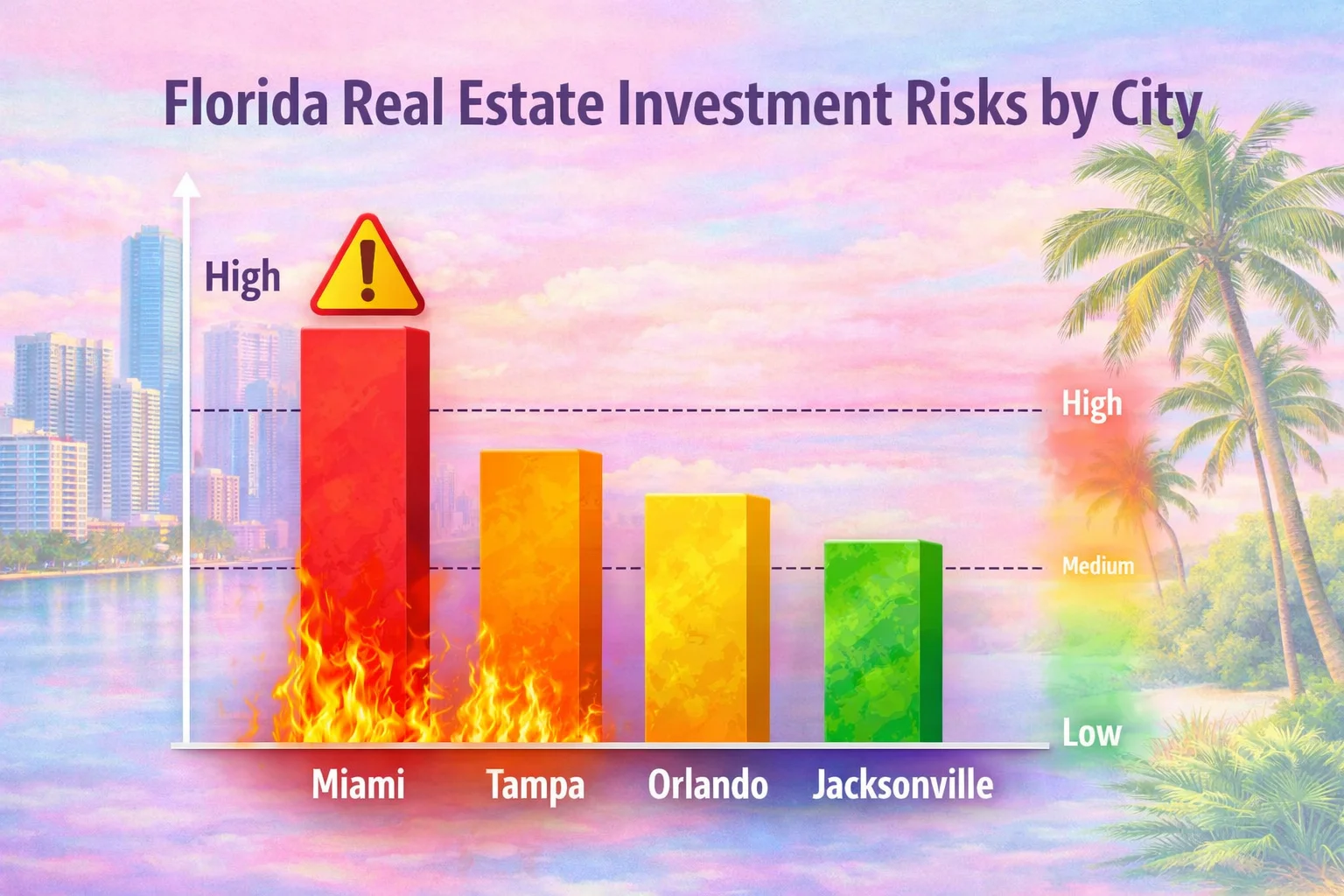
Investment Risks by Major Florida Cities
Investment risks vary significantly across Florida cities due to differences in geography, economic structure, and housing supply.
Miami
Miami is one of the largest and most internationally recognized real estate markets in the United States.
However, the city also faces several investment risks.
The UBS Global Real Estate Bubble Index ranked Miami as the world’s most vulnerable housing bubble market, citing rapid price increases and rising ownership costs.
Key risks in Miami include:
- high property prices
- rising insurance costs
- climate exposure and flooding
- regulatory changes affecting older condo buildings.
Despite these risks, Miami remains attractive due to strong international demand and economic activity.
Cape Coral and Fort Myers
Southwest Florida cities such as Cape Coral and Fort Myers experienced rapid growth during the pandemic housing boom.
However, these markets have recently faced significant price corrections.
Cape Coral saw housing prices fall 11% over two years, reflecting cooling demand and rising costs.
Insurance costs and hurricane exposure also contribute to investment risk in this region.
Orlando
Orlando remains one of Florida’s fastest-growing metropolitan areas.
However, rapid population growth has increased housing supply in some areas, leading to market adjustments.
Recent market reports describe Orlando’s housing market as “bearish” in certain segments, with increasing inventory and slower price growth.
Investors evaluating Orlando properties must consider:
- rental demand trends
- population growth
- new housing construction levels.
Tampa
Tampa has experienced strong population and job growth.
However, rising home prices and insurance costs have increased investment risk in certain neighborhoods.
Rapid development and housing supply expansion can also affect price stability.
Jacksonville
Jacksonville has historically offered more affordable housing than many other Florida cities.
Lower home prices can reduce investment risk.
However, the city’s real estate market remains sensitive to broader economic conditions, including employment trends and migration patterns.
Pensacola and Gulf Coast Cities
Cities along the Florida Panhandle and Gulf Coast face unique environmental risks due to hurricane exposure.
For example, Hurricane Ivan caused more than $6 billion in damage in the Pensacola region, destroying thousands of homes and businesses.
These events demonstrate how natural disasters can affect local housing markets.
Insurance and Lending Risks
Insurance availability and mortgage lending policies can influence real estate investment decisions.
In high-risk coastal areas, lenders may impose stricter underwriting requirements due to climate risks.
Insurance costs also affect property valuations and investment returns.
Rental Market Risks
Rental demand is an important factor for investors purchasing properties intended for rental income.
However, rental markets can fluctuate due to:
- population changes
- housing supply increases
- economic conditions.
Recent reports indicate that rental demand has softened in some Florida markets compared with pandemic-era peaks.
Demographic and Migration Trends
Population migration has played a major role in Florida’s housing market growth.
However, recent data suggests that some residents are leaving the state due to rising living costs and insurance expenses.
Migration shifts can affect housing demand and price stability.
Infrastructure and Regulatory Factors
Infrastructure development, zoning policies, and building regulations also influence real estate investment risk.
Cities with strong infrastructure and economic diversification may experience more stable housing markets.
Regulatory changes — particularly those affecting condominium buildings and coastal development — can also affect property values.
Long-Term Outlook for Florida Real Estate Investment
Despite the risks outlined above, Florida remains one of the largest and most active real estate markets in the United States.
Several factors continue to support long-term housing demand:
- population growth
- favorable tax policies
- strong tourism and service industries
- expanding job markets.
However, investors must carefully evaluate location-specific risks when analyzing properties.
Understanding local economic conditions, climate exposure, and insurance costs is essential for assessing potential investment outcomes.
Conclusion
Florida’s real estate market offers both opportunities and risks for investors.
Key findings include:
- rapid price growth during the pandemic housing boom followed by market corrections in several cities.
- rising insurance costs and climate exposure affecting coastal real estate markets.
- housing affordability challenges influencing demand.
- varying risk levels across cities depending on geography and economic conditions.
Cities such as Miami, Cape Coral, Orlando, Tampa, and Jacksonville each face unique investment risks related to market volatility, insurance costs, and environmental exposure.
Understanding these factors can help explain how real estate investment risk varies across Florida’s housing markets.
Author
Asim Iftikhar — Real Estate Contributor, ACT Global Media
Florida Real Estate License: SL3633555
Florida Notary Commission: HH 709161
Asim Iftikhar contributes educational real estate content focused on U.S. residential processes, market structure, and consumer understanding. Content is informational and general in nature.
Editorial Disclosure
This article is provided for educational and informational purposes only and does not constitute financial, investment, or real estate advice. Housing markets vary by location and are influenced by economic conditions, climate factors, and regulatory policies. Readers should consult official government sources and qualified professionals when evaluating real estate investment decisions.