


Choosing between a condominium, townhouse, or single-family home is one of the most consequential decisions U.S. homebuyers make. While purchase price often dominates early discussions, the type of property you own can have a lasting impact on monthly expenses, maintenance responsibility, financing options, resale demand, and long-term ownership costs. For a closer look at how condos and single-family homes compare in a specific market, see our analysis of condo vs single-family homes in Orlando.
According to data from the National Association of Realtors, housing preferences vary significantly by life stage, income, location, and household size. However, many buyers underestimate how much ownership structure and shared obligations influence affordability and risk over time.
This article provides a U.S.-specific, educational, neutral comparison of condos, townhouses, and single-family homes. It explains how each property type differs in legal ownership, cost structure, maintenance responsibility, financing considerations, and long-term tradeoffs. This content is informational only and does not provide advice or recommendations.
Understanding Property Type vs. Property Style
Before comparing costs and responsibilities, it is important to distinguish property type from architectural style.
- Property type refers to how ownership and legal rights are structured.
- Style refers to physical design (e.g., one-story, two-story, detached).
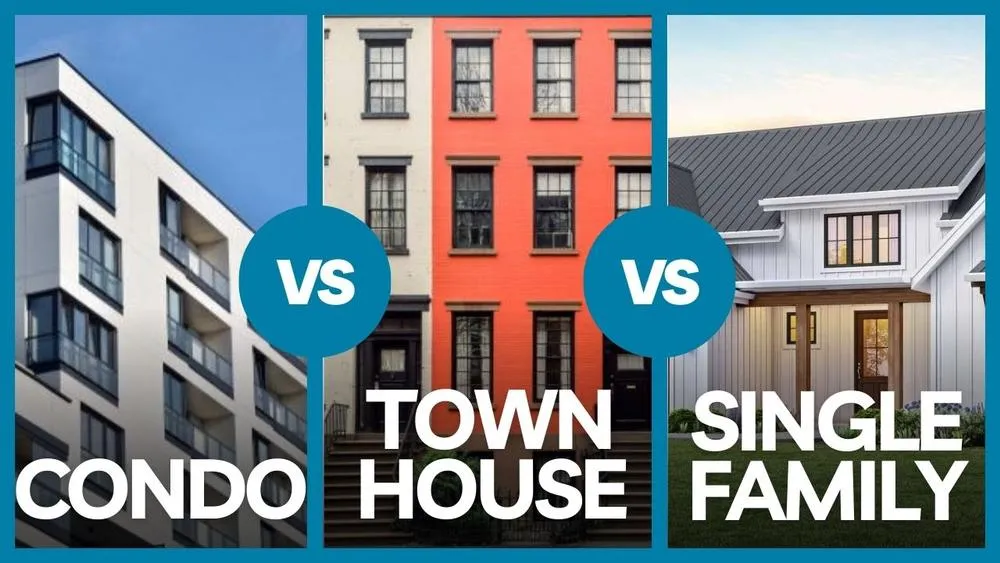
For example, a townhouse can look like a single-family home but still have shared walls and an HOA. The legal structure not appearance determines obligations and risks.
Condominiums (Condos)
Ownership Structure
In a condominium, the owner typically holds:
- Fee-simple ownership of the interior living space (often defined from the unfinished drywall inward)
- An undivided interest in common elements shared with other owners
Common elements usually include:
- Land
- Roofs
- Exterior walls
- Structural systems
- Hallways, elevators, amenities
The condominium association owns and manages these common elements on behalf of all owners.
Maintenance Responsibilities
Condo owners are generally responsible for:
- Interior finishes
- Fixtures and appliances
- Personal property
The HOA is responsible for:
- Exterior building maintenance
- Roofs and structural components
- Common systems (depending on governing documents)
- Shared amenities
This structure reduces individual maintenance responsibility but increases reliance on HOA management.
Cost Structure
Condos often have:
- Lower purchase prices compared to other property types in the same area
- Higher HOA fees, sometimes several hundred dollars per month
HOA fees for condos often cover:
- Exterior maintenance
- Building insurance (master policy)
- Amenities
- Management and reserves
Over time, HOA fees can materially affect total ownership cost.
Financing Considerations
Condos are subject to additional lender scrutiny in the U.S. mortgage market.
Lenders may evaluate:
- HOA financial health
- Reserve funding levels
- Delinquency rates
- Pending litigation
- Insurance coverage
Some loan programs restrict financing for certain condos, which can affect buyer demand and resale liquidity.
Long-Term Tradeoffs
Advantages:
- Lower maintenance burden
- Amenities and shared services
- Often lower upfront cost
Tradeoffs:
- HOA dependency
- Potential special assessments
- Limited control over building decisions
- Resale sensitivity to HOA health
Townhouses
Ownership Structure
Townhouse ownership typically includes:
- Fee-simple ownership of the structure
- Ownership of the land beneath the unit
- Shared walls with adjacent units
Unlike condos, townhouse owners usually own the exterior walls and roof, though maintenance responsibility may be shared through an HOA.
Maintenance Responsibilities
Townhouse maintenance varies widely:
- Some HOAs handle exterior maintenance and landscaping
- Others require owners to maintain roofs, siding, and driveways
Interior maintenance is always the owner’s responsibility.
This hybrid structure creates a middle ground between condos and single-family homes.
Cost Structure
Townhouses generally:
- Cost more than condos
- Cost less than single-family homes
- Have moderate HOA fees
HOA fees may cover:
- Landscaping
- Exterior painting
- Private roads
- Limited amenities
Financing Considerations
Townhouses typically face:
- Fewer lending restrictions than condos
- Broader loan program eligibility
Because townhouse ownership is fee simple, lenders often treat them similarly to single-family homes for underwriting purposes.
Long-Term Tradeoffs
Advantages:
- More space than condos
- Lower maintenance burden than single-family homes
- Broader financing options than condos
Tradeoffs:
- Shared walls
- HOA rules and fees
- Limited exterior customization
Single-Family Homes
Ownership Structure
Single-family homes provide:
- Fee-simple ownership of both the structure and the land
- No shared walls
- Maximum control over the property
Some single-family homes are still subject to HOAs, particularly in planned communities.
Maintenance Responsibilities
Owners are responsible for:
- Roofs
- Exterior walls
- Landscaping
- Driveways
- All systems and repairs
There is no shared cost unless an HOA exists.
Cost Structure
Single-family homes generally:
- Have higher purchase prices
- Have no HOA fees (unless in planned communities)
- Have higher maintenance and insurance costs
While there are fewer shared expenses, costs are more variable and unpredictable.
Financing Considerations
Single-family homes typically:
- Qualify for the widest range of mortgage programs
- Face fewer underwriting restrictions
- Appeal to the broadest buyer pool
This often supports stronger long-term resale demand.
Long-Term Tradeoffs
Advantages:
- Maximum autonomy
- No shared walls
- Strong resale liquidity
Tradeoffs:
- Higher maintenance burden
- Higher repair risk
- Greater cost variability
Comparing Total Cost of Ownership
Purchase price alone does not reflect true ownership cost. Buyers often underestimate:
- HOA fees over time
- Maintenance and repair cycles
- Insurance differences
- Resale friction
Illustrative Cost Comparison
| Factor | Condo | Townhouse | Single-Family |
| Purchase Price | Lower | Moderate | Higher |
| HOA Fees | High | Moderate | None/Low |
| Maintenance | Low | Medium | High |
| Insurance | Lower | Medium | Higher |
| Resale Liquidity | HOA-dependent | Moderate | High |
Resale and Market Demand Considerations
Resale demand varies by property type:
- Single-family homes generally attract the largest buyer pool
- Townhouses appeal to buyers seeking balance
- Condos are more sensitive to HOA health, fees, and financing rules
Market conditions, location, and building quality can outweigh property type in some cases, but structural differences still matter.
Lifestyle and Use Considerations
Beyond cost, buyers should consider:
- Noise tolerance
- Privacy needs
- Outdoor space
- Pet restrictions
- Rental restrictions
- Community rules
HOA-governed properties often impose limitations that may affect long-term satisfaction.
Common Misconceptions
“Condos are always cheaper long-term.”
Lower purchase price does not guarantee lower total cost when HOA fees and assessments are considered.
“Townhouses are the same as condos.”
Ownership and financing structures differ materially.
“Single-family homes have no shared rules.”
Many are still governed by HOAs.
Summary: Choosing the Right Property Type
Each property type serves different needs:
- Condos emphasize convenience and shared responsibility
- Townhouses balance autonomy and maintenance sharing
- Single-family homes offer maximum control with higher responsibility
Understanding ownership structure, cost allocation, and long-term tradeoffs helps buyers evaluate total housing cost, not just purchase price.
Once you’ve decided on the property type and completed your purchase, understanding the next steps is crucial. Each ownership structure—whether a condo, townhouse, or single-family home—has unique responsibilities after closing, from HOA rules to maintenance and taxes. Learning what happens after your offer is accepted can help buyers prepare for inspections, financing, and all the post-offer steps to ensure a smooth transition into their new home.
Author Information
Written by:
Asim Iftikhar — Real Estate Contributor, ACT Global Media
Florida Real Estate License: SL3633555
Florida Notary Commission: HH 709161
Editorial Disclosure
This article is provided for general informational purposes only and does not constitute real estate, legal, financial, or investment advice