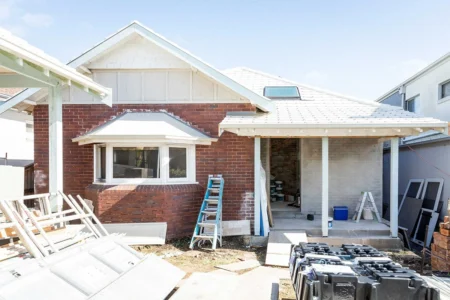



Fix-and-flip investing has become one of the most recognizable strategies in residential real estate. The model involves purchasing a property—often below market value—renovating or improving it, and reselling it for a profit.
Although the strategy appears straightforward, the financial outcomes of house-flipping projects vary widely. Successful investors rely on careful market research, accurate cost estimates, and disciplined acquisition strategies.
However, inexperienced investors frequently encounter costly mistakes that can eliminate profit margins or even result in financial losses.
The scale of the house-flipping market highlights the importance of proper investment analysis. According to real estate analytics firm ATTOM, approximately 308,922 homes were flipped in the United States in 2023, representing 8.1% of all home sales nationwide.
More recent market reports indicate that flipped homes continue to represent roughly 6–9% of U.S. residential transactions annually, reflecting sustained investor participation in renovation projects.
Despite strong activity, profit margins have declined in recent years. Industry data suggests that the typical house flip produced about $60,000 in gross profit in 2025, with an average return on investment (ROI) of roughly 23% before expenses, significantly lower than historical peaks earlier in the decade.
These declining margins make disciplined project management increasingly important.
Fix-and-flip projects involve several complex variables, including:
- acquisition costs
- renovation expenses
- financing costs
- holding costs
- resale market conditions.
Even small miscalculations in any of these variables can dramatically affect investment outcomes.
This article provides a comprehensive analysis of the most common mistakes in fix-and-flip projects, supported by housing market research and statistical data from:
- U.S. Census Bureau
- American Community Survey (ACS)
- National Association of Realtors (NAR)
- U.S. Department of Housing and Urban Development (HUD)
The goal is to present an educational, research-based overview of common risks associated with renovation investments.
Overview of the Fix-and-Flip Investment Model
A typical fix-and-flip project involves three phases:
- Acquisition – purchasing a property below market value
- Renovation – improving the property through repairs and upgrades
- Disposition – selling the property for a profit.
The strategy relies heavily on accurate financial projections.
Investors estimate profitability by calculating:
- After Repair Value (ARV)
- renovation costs
- holding costs
- expected sale price.
When these estimates are inaccurate, investors may experience significant financial losses.
For a more detailed breakdown of how to evaluate a property from acquisition to resale, investors can follow a structured analysis process.
👉 How to analyze a fix-and-flip deal step by step
Housing Market Context for Fix-and-Flip Investors
Understanding housing market trends is essential for renovation investors.
According to the National Association of Realtors, the median existing home price in the United States reached approximately $389,800 in 2024, reflecting significant price growth over the previous decade.
Meanwhile, U.S. housing inventory remains historically constrained.
The U.S. Census Bureau and HUD reported that total housing starts in 2024 averaged approximately 1.42 million units annually, which remains below the long-term level required to meet population growth and household formation.
Limited supply has increased demand for renovated homes.
However, rising home prices also reduce margins for investors purchasing properties at higher acquisition costs.
Mistake #1: Overestimating After Repair Value (ARV)
One of the most common mistakes in fix-and-flip investing is overestimating the After Repair Value (ARV).
ARV represents the estimated market value of a property after renovations are completed.
Investors typically estimate ARV using comparable sales (“comps”).
These are recently sold properties with similar characteristics.
However, errors often occur when investors:
- use outdated comparable sales
- compare properties in different neighborhoods
- assume unrealistic renovation premiums.
Even small ARV miscalculations can eliminate profits.
For example:
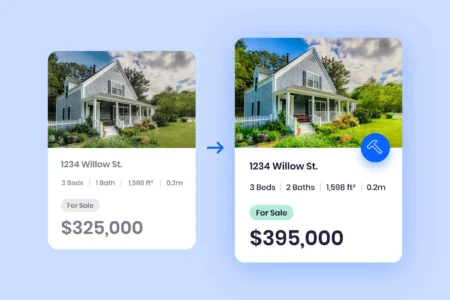
If an investor expects a property to sell for $350,000 but the actual resale value is $325,000, the $25,000 difference may eliminate most profit margins.
Mistake #2: Underestimating Renovation Costs
Renovation costs represent one of the largest variables in a flip project.
Industry data suggests that full home renovation costs typically range between $15 and $60 per square foot, although luxury projects may exceed $150 per square foot depending on materials and structural changes.
Underestimating renovation costs can occur for several reasons:
- hidden structural issues
- outdated electrical systems
- plumbing problems
- foundation repairs.
Unexpected repairs are particularly common in older homes.
According to housing data from the American Housing Survey, the median age of owner-occupied homes in the United States exceeds 40 years, increasing the likelihood of structural repair needs.
Investors often mitigate this risk by including a 10–20% contingency budget for unexpected repairs.
Mistake #3: Ignoring Holding Costs
Holding costs refer to expenses incurred while the investor owns the property.
These costs include:
- mortgage payments
- property taxes
- insurance
- utilities
- maintenance.
The average fix-and-flip project typically takes five to six months from purchase to resale, depending on renovation complexity and market conditions.
Holding costs during this period can significantly reduce profits.
For example:
Monthly holding cost: $2,000
Project duration: 6 months
Total holding cost:
$12,000
Investors who ignore holding costs may underestimate total project expenses.
Mistake #4: Over-Improving the Property
Over-improving occurs when investors spend more on renovations than the local market can support.
For example, installing luxury finishes in a moderate-priced neighborhood may not increase resale value proportionally.
Real estate values are heavily influenced by neighborhood comparables.
If most homes in the area sell for $300,000, spending $120,000 on luxury upgrades may not produce a resale price of $420,000.
Understanding neighborhood price ceilings is therefore essential.
Mistake #5: Poor Contractor Selection
Renovation projects often depend on contractors and skilled trades.
Hiring unreliable contractors can result in:
- construction delays
- poor workmanship
- unexpected cost increases.
Contractor shortages have become a growing challenge in the renovation industry.
Labor shortages in construction trades such as carpentry, plumbing, and electrical work have increased renovation timelines and project costs.
Investors often mitigate this risk by obtaining multiple bids and verifying contractor credentials.
Mistake #6: Inadequate Market Research
Successful real estate investments depend heavily on local market conditions.
Investors must analyze factors such as:
- neighborhood demand
- housing supply
- price trends
- buyer demographics.
According to the U.S. Census Bureau, population growth and migration patterns strongly influence housing demand.
Regions experiencing rapid population growth may offer stronger resale opportunities for renovated homes.
Failing to analyze local market conditions may lead investors to renovate properties in areas with limited buyer demand.
Mistake #7: Poor Financing Strategy
Many fix-and-flip investors use short-term financing.
Common financing options include:
- hard money loans
- private lending
- home equity loans.
Hard money loans often carry higher interest rates but provide faster approvals.
If projects take longer than expected, financing costs can increase dramatically.
For example:
Loan amount: $200,000
Interest rate: 10%
Loan term: 12 months
Annual interest expense:
$20,000
Delays in renovation timelines can increase financing costs and reduce profitability.
Mistake #8: Ignoring Transaction Costs
Real estate transactions involve multiple costs beyond renovation expenses.
These include:
- real estate commissions
- title insurance
- closing costs
- transfer taxes.
Real estate commissions alone often range from 5% to 6% of the final sale price.
For a $350,000 property, commissions may exceed $20,000.
Failure to include these expenses in project budgets can distort profitability estimates.
Mistake #9: Poor Project Timeline Management
Renovation timelines significantly affect investment returns.
Construction delays may occur due to:
- permit approvals
- contractor scheduling conflicts
- material shortages.
Longer renovation timelines increase holding costs and financing expenses.
Professional investors typically create detailed renovation schedules to manage project timelines effectively.
Mistake #10: Emotional Decision-Making
Real estate investment decisions should be based on financial analysis rather than emotional attachment to a property.
Inexperienced investors sometimes:
- fall in love with a property
- overestimate resale potential
- ignore unfavorable market conditions.
Successful investors typically follow strict financial criteria when evaluating properties.
Statistical Modeling of Fix-and-Flip Profits
Investors can simplify these calculations and evaluate potential deals more accurately by using a dedicated fix-and-flip calculator. Tools like this help estimate total investment, projected profit, and return on investment based on real inputs.
👉Fix and flip Calculator
Typical flip economics may resemble the following example:
| Category | Amount |
| Purchase price | $180,000 |
| Renovation costs | $45,000 |
| Holding costs | $12,000 |
| Selling costs | $20,000 |
| Total investment | $257,000 |
| Resale price | $320,000 |
| Profit | $63,000 |
This hypothetical scenario aligns closely with industry profit averages reported by ATTOM.
However, profit margins can vary widely depending on local market conditions and renovation costs.
Technology and Real Estate Deal Analysis
Modern real estate technology tools help investors analyze potential projects more accurately.
These platforms often include:
- automated ARV estimates
- renovation cost calculators
- ROI projections.
Data-driven analysis can reduce investment risk and improve decision-making.
Conclusion
Fix-and-flip investing can be a profitable real estate strategy, but it also involves significant financial risk.
Industry data indicates that hundreds of thousands of homes are flipped annually in the United States, representing approximately 6–9% of residential property sales.
However, declining profit margins and rising renovation costs have increased the importance of disciplined investment analysis.
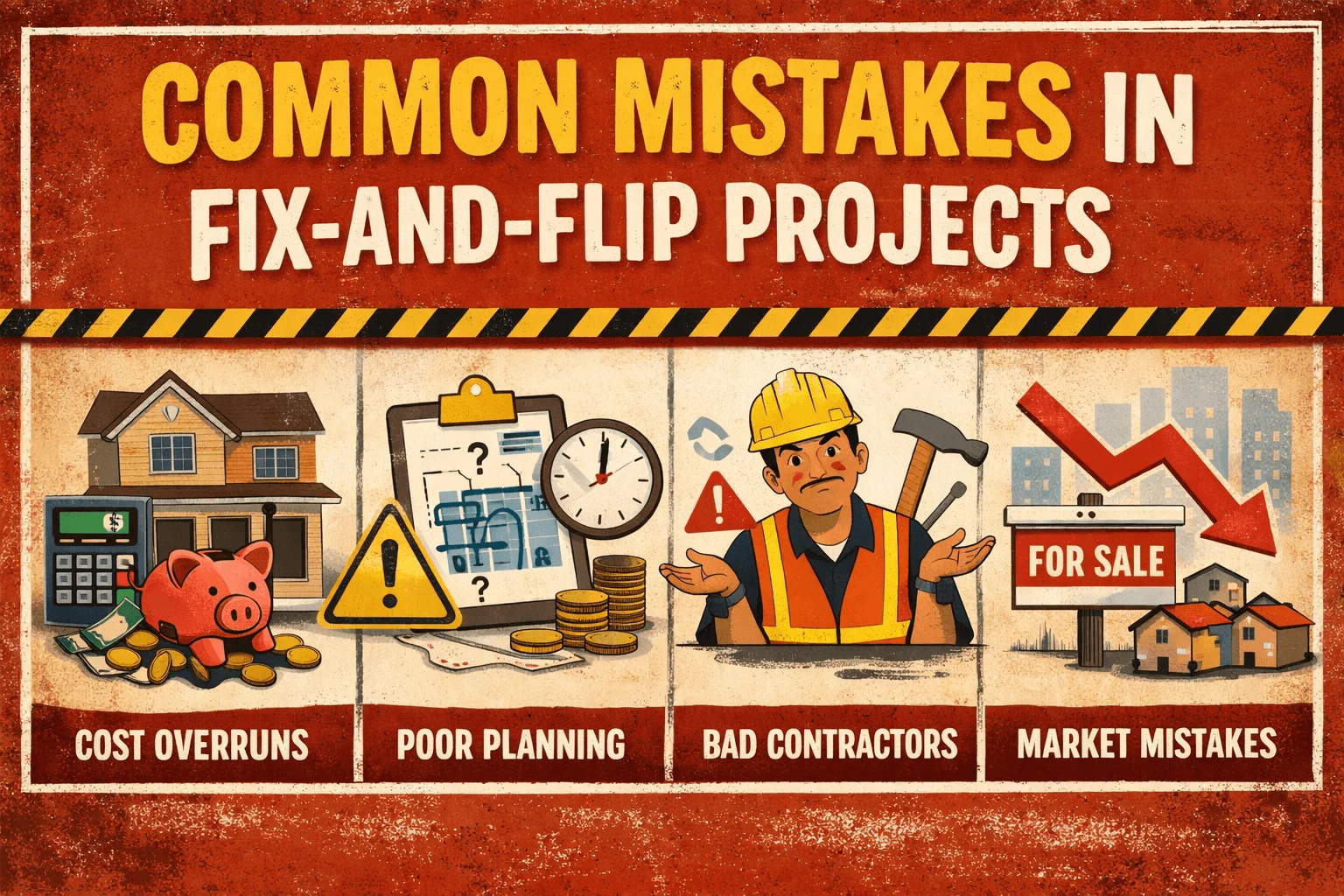
Common mistakes in fix-and-flip projects include:
- overestimating ARV
- underestimating renovation costs
- ignoring holding expenses
- poor contractor selection
- inadequate market research.
By understanding these risks and incorporating accurate financial modeling, investors can better evaluate potential renovation projects and reduce the likelihood of costly errors.
Real estate investing requires careful analysis of market conditions, property characteristics, and financial projections.
Avoiding common mistakes remains one of the most effective ways to improve long-term investment outcomes.
Author
Asim Iftikhar — Real Estate Contributor, ACT Global Media
Florida Real Estate License: SL3633555
Florida Notary Commission: HH 709161
Asim Iftikhar contributes educational real estate content focused on U.S. residential processes, market structure, and consumer understanding. Content is informational and general in nature.
Editorial Disclosure
This article is provided for educational and informational purposes only and does not constitute financial, investment, legal, or tax advice. Real estate investments involve risk, and actual outcomes may vary depending on market conditions, renovation costs, financing terms, and property characteristics. Readers should consult qualified professionals before making real estate investment decisions.