



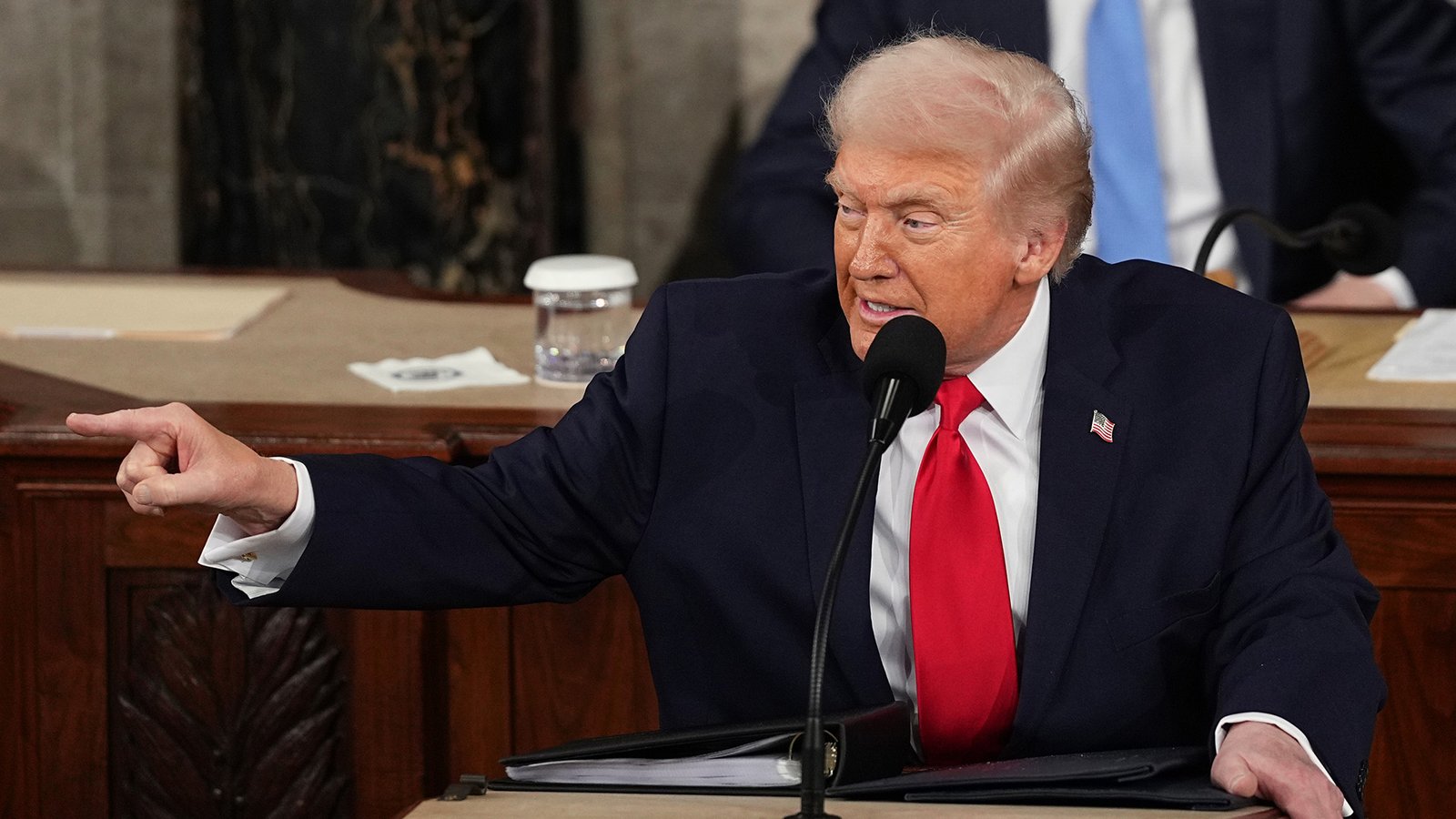
President Donald Trump’s State of the Union mixed economic optimism and patriotic tributes with sharp attacks on Democrats, signaling a combative election-year message ahead of crucial U.S. midterm battles.
WEBDESK – Act Global Media
US President Donald Trump delivered one of the longest State of the Union addresses in modern history, combining strong economic messaging, patriotic symbolism, and increasingly combative political rhetoric ahead of crucial midterm elections.
The nearly two-hour speech served as both a governance update and a political roadmap for Republicans seeking control of Congress later this year.
Here are the key takeaways from Trump’s high-stakes address:
Economy takes center stage — despite public anxiety
Trump opened in what analysts described as “sales mode,” painting a glowing picture of the U.S. economy and repeatedly declaring that America was experiencing a “roaring” economic revival.
He highlighted falling fuel prices, easing mortgage rates, lower prescription drug costs, and record stock market performance, insisting that millions of Americans were benefiting from his policies.
However, polling data suggests a disconnect between White House optimism and public sentiment, with many Americans still concerned about inflation and household finances — a challenge Republicans face heading into elections.
Heavy dose of patriotism and symbolism
The president leaned heavily on patriotic imagery throughout the speech, honoring the Olympic gold medal-winning U.S. men’s hockey team and awarding military hero Capt. Royce Williams, the Congressional Medal of Honor, alongside First Lady Melania Trump.
The moments drew bipartisan applause and appeared designed for strong social media resonance beyond the chamber.
Political observers noted the emphasis reflected Trump’s effort to frame national pride as a central campaign theme.
Sharp and darker turn against Democrats
After early ceremonial unity, Trump shifted tone dramatically, launching repeated attacks on Democrats, blaming them for rising healthcare costs, affordability challenges, and threats to Social Security.
At several points, the president directly accused Democrats of “destroying the country,” drawing loud reactions from both sides of the aisle.
While the rhetoric energized his MAGA base, analysts say its broader electoral appeal remains uncertain among independent voters.
Supreme Court criticism softened
Trump briefly addressed the recent Supreme Court ruling that struck down elements of his tariff policy, describing the decision as “unfortunate” — a noticeably restrained response compared to earlier criticism.
Despite economic studies showing tariffs increased domestic costs, Trump maintained they were benefiting American workers and could eventually reduce reliance on income taxes.
Renewed claims of election fraud
With midterm elections approaching, Trump revived longstanding allegations of widespread election cheating, calling on Congress to mandate nationwide voter photo ID laws.
The claims echo assertions repeatedly rejected by courts and election officials but remain central to Trump’s political messaging.
Immigration omissions raise questions
Although immigration has long been a defining issue of Trump’s presidency, the speech avoided mention of controversial enforcement actions earlier this year, including incidents involving civilian deaths in Minneapolis.
Critics noted the absence as significant amid rising public concern over federal immigration tactics.
Tough stance on Iran signals military readiness
Trump also adopted a hard line on Iran, warning he would never allow Tehran to obtain nuclear weapons while leaving open the possibility of military action if diplomacy fails.
The remarks come as the United States maintains one of its largest military deployments in the Middle East in decades.
A record-breaking speech
True to form, Trump delivered the longest State of the Union address on record, lasting nearly one hour and 48 minutes, underscoring both the political stakes and the president’s effort to dominate the national narrative ahead of November’s elections.
The speech ultimately blended economic reassurance, nationalist appeal, and partisan confrontation — offering a preview of the political battles likely to define the months ahead.