

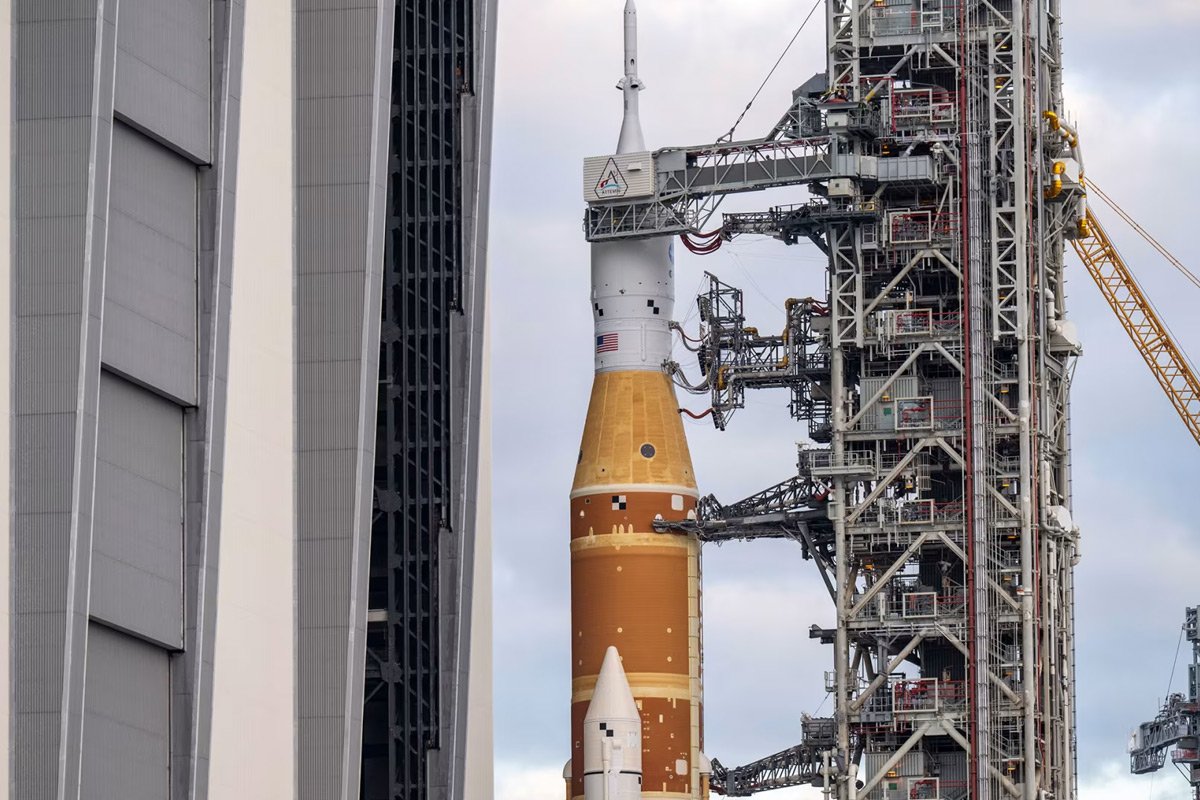
NASA is moving closer to its long-awaited goal of returning astronauts to the Moon, but the mission is unfolding alongside growing debate over whether the spacecraft set to carry humans is fully ready for the task.
The upcoming crewed lunar mission is part of NASA’s Artemis programme, which aims to land astronauts on the Moon for the first time since 1972 and establish a long-term human presence on the lunar surface. Central to the effort is the Space Launch System (SLS) rocket and the Orion spacecraft, both designed to take astronauts farther into space than ever before.
While NASA officials have repeatedly expressed confidence in the programme, critics — including aerospace experts and former agency insiders — have raised concerns about safety, cost, and technical complexity. Some point to delays, budget overruns, and limited real-world testing as red flags for a spacecraft that will carry humans beyond low-Earth orbit.
One major concern centres on the immense power of the SLS rocket, described as the most powerful rocket NASA has ever built. Engineers acknowledge that with such power comes increased risk, particularly during launch. Others argue that Orion’s heat shield, life-support systems, and emergency abort capabilities still require more operational data from crewed missions.
NASA maintains that safety remains its top priority and says each Artemis mission builds on years of testing, simulations, and uncrewed flights. Agency leaders argue that space exploration has always involved risk and that delaying missions indefinitely could stall progress and innovation.
Supporters of Artemis also note the broader goals of the programme, including preparing for future missions to Mars, strengthening international partnerships, and inspiring a new generation of scientists and engineers.
As NASA prepares for the next phase of lunar exploration, the debate highlights a familiar tension in spaceflight: balancing bold ambition with the responsibility to protect human lives. The success — or failure — of Artemis could shape the future of human space exploration for decades to come.
