

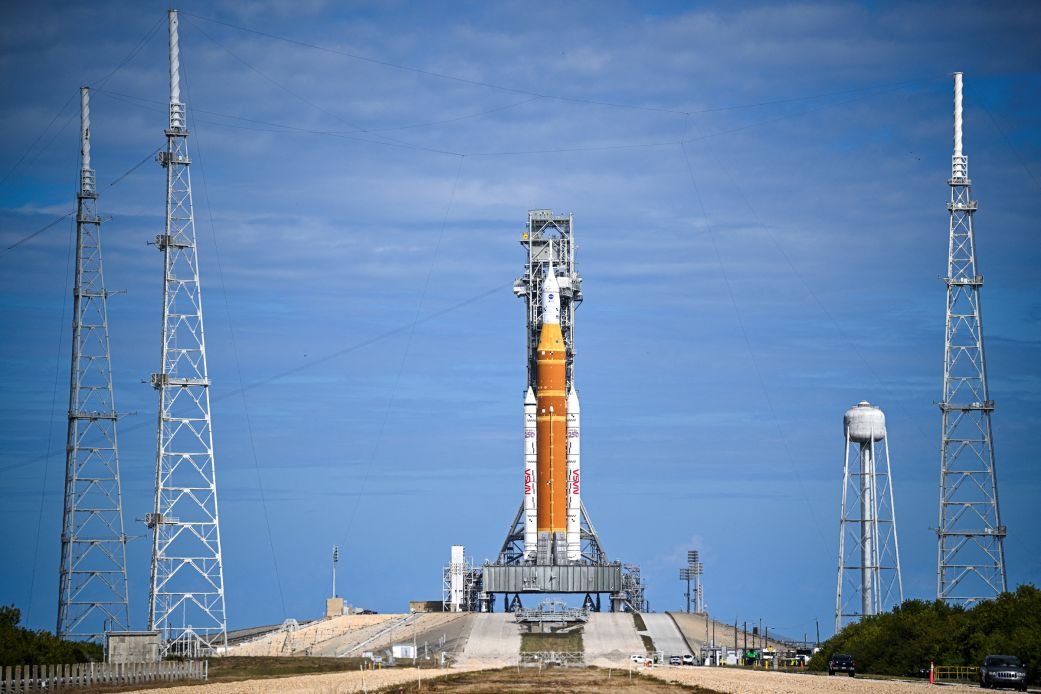
NASA has delayed the launch of a landmark moon mission, citing the need for additional technical checks and safety reviews, in a move that underscores the agency’s cautious approach to deep-space exploration. The mission, described as a critical step in humanity’s return to the Moon, is part of NASA’s long-term strategy to establish a sustained human presence on the lunar surface.
Officials said the postponement was prompted by data gathered during final pre-launch evaluations, which indicated that more time was required to assess key systems. While no new launch date was immediately announced, NASA emphasized that the delay was made out of an abundance of caution to ensure mission success and crew safety where applicable.
The mission is expected to test advanced technologies designed to support future human landings, including improved propulsion, navigation, and life-support systems. It also plays a central role in preparing for longer-term goals such as lunar bases and eventual crewed missions to Mars.
NASA administrators stressed that launch delays are not uncommon in complex space missions, particularly those involving new or upgraded systems. Engineers will use the additional time to conduct thorough inspections, address any anomalies, and verify that all components meet strict performance and safety standards.
Despite the setback, the mission continues to generate strong international interest, with several global partners contributing instruments, research objectives, or technical expertise. The data collected during the flight is expected to provide valuable insights into lunar conditions, radiation exposure, and spacecraft performance in deep space.
The delay comes amid renewed global competition and collaboration in space exploration, as multiple countries and private companies accelerate their own lunar ambitions. NASA reiterated that careful preparation remains essential, noting that mission success depends on getting every detail right before liftoff.
Once launched, the mission is expected to mark a major milestone in modern space exploration and lay the groundwork for a new era of scientific discovery on and around the Moon.
