



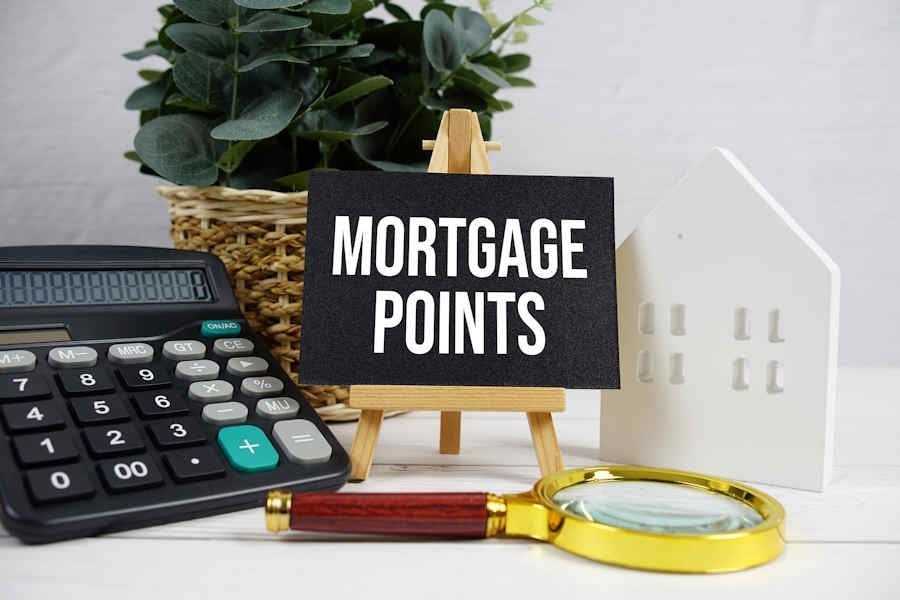
Discount points can feel like a simple deal: pay extra upfront, get a lower interest rate, save money every month. In reality, points are a pricing tradeoff, not a universal bargain. Whether paying points is “worth it” depends on (1) how long you’ll keep the mortgage, (2) how much the points actually reduce the rate, (3) what else you could do with that cash (down payment, reserves, debt paydown), and (4) the broader 2026 context—where homeowner costs (including insurance) have been rising and affordability is tight.
In early 2026, widely cited benchmarks show mortgage rates around the low-6% range: Freddie Mac’s weekly PMMS reported the average 30-year fixed at 6.09% (Feb. 12, 2026) and 15-year fixed at 5.44%. Rates move, and your quote depends on credit, LTV, occupancy, property type, and lender pricing. But the key is: when the rate environment is not ultra-low, more borrowers start considering points—exactly what CFPB has documented in recent years.
This article explains points in a lender-neutral way, shows a break-even model, adds deeper scenario modeling, and includes compliance-safe notes for YMYL publishing.
Educational only. Not mortgage advice, not credit advice, and not an offer to lend. Points, lender credits, rates, and underwriting vary by lender and borrower.
1) What mortgage “points” are
Discount points are upfront charges you pay to your lender in exchange for a lower interest rate. CFPB describes points as a way to make tradeoffs: pay more at closing to reduce the rate; or take lender credits to reduce closing costs but accept a higher rate.
Key terms (plain English)
- Discount points: You pay cash now → your rate is lower for the life of the loan.
- Lender credits: You pay less cash now → your rate is higher.
- “No-cost” loan: Often means lender credits offset many closing costs—but you typically pay through a higher rate over time (a pricing structure, not “free”).
Important: Points do not guarantee a fixed amount of rate reduction. The “price” (points) for a given rate varies by lender, day, and borrower profile. That’s why the decision should be made with math, not rules of thumb.
2) Why points became more common as rates rose
CFPB has reported that as overall interest rates rose, more borrowers paid discount points, and it flagged that the tradeoffs can be complex, creating risk for consumers. In its press release summarizing the analysis, CFPB stated the share of homebuyers paying discount points roughly doubled from 2021 to 2023.
Why this matters for 2026 borrowers:
When rates hover around ~6% (and sometimes higher), buyers and refinancers look for ways to reduce payments. But paying points is only beneficial if the time you keep the loan is long enough to recover the upfront cost.
3) The 2026 affordability reality: cash is expensive, not just rates
Points are paid at closing—so they compete with:
- down payment
- cash reserves (emergency fund)
- appraisal gaps / repairs
- moving and setup costs
NAR’s 2025 Profile of Home Buyers and Sellers reported the median down payment was 19% overall (10% first-time, 23% repeat), the highest for first-time buyers since 1989 and for repeat buyers since 2003. That context matters because paying points can reduce the cash available for down payment or reserves.
At the same time, the U.S. Census Bureau noted that median monthly owner costs for homeowners with a mortgage rose to $2,035 in 2024 from $1,960 in 2023 (inflation-adjusted), and described the increase as primarily driven by higher mortgage costs and insurance fees.
Implication: A household might “win” on interest rate via points but still feel squeezed if insurance/taxes/fees rise or if they sacrificed emergency liquidity to buy down the rate.
4) The core math: points are worth it when you beat the break-even
Break-even formula
Break-even months=Cost of pointsMonthly payment savings from the lower rate\textbf{Break-even months} = \frac{\text{Cost of points}}{\text{Monthly payment savings from the lower rate}}Break-even months=Monthly payment savings from the lower rateCost of points
If you expect to keep the mortgage longer than the break-even period, points are more likely to be financially beneficial (all else equal). If you expect to sell or refinance before break-even, points are less likely to pay back.
What to use for “Cost of points”
From your Loan Estimate:
- include points (and any lender fees tied specifically to the lower-rate option)
- compare to the lender-credit or zero-point option
CFPB’s consumer materials explain points and credits as deliberate tradeoffs in how you pay closing costs and interest over time.
5) A 2026 example: break-even in real numbers
Assume:
- Loan amount: $400,000
- Term: 30-year fixed
- Option A: 6.25% with zero points
- Option B: 6.00% with points costing $4,000
- Monthly P&I savings from 0.25% rate drop: roughly $65–$75/month (illustrative; depends on exact amortization)
Break-even:
- $4,000 ÷ $70 = 57 months (about 4.75 years)
Interpretation:
If you expect to keep the mortgage longer than ~5 years, points might make sense. If you’re likely to move or refinance in 2–4 years, points are less likely to pay back.
This is why a simple “pay points if you can” rule fails—your time horizon is everything.
6) Deeper modeling: the “two break-even tests” most people forget
Test #1: Payment break-even (the standard)
That’s the months-to-recover formula above.
Test #2: Liquidity and risk break-even (the 2026 reality test)
Ask: What’s the value of keeping that cash liquid?
In a world where homeowner costs have risen (including insurance fee pressure cited in ACS reporting), liquidity can be protective. If paying points reduces your reserves below a safe buffer, the risk cost can outweigh the interest savings—especially if you face:
- job disruption
- surprise repairs
- insurance premium shocks
- escrow increases
This is not about “fear”—it’s about resilience.
7) The “invest the difference” comparison
Paying points is like making an upfront investment to generate a monthly “return” (the payment savings). The question becomes:
- What is the implied return on that upfront cash?
- Is it competitive with alternative uses?
A simple “implied return” view
If $4,000 in points saves $70/month:
- Annual savings ≈ $840
- Simple annual return ≈ $840 / $4,000 = 21% (simple, not discounted)
Sounds amazing—but it only holds if you keep the loan long enough and ignore time value. When you discount future savings and consider prepayment/move risk, the effective return can drop sharply.
Present value
If you’re uncertain you’ll keep the loan for 2–4 years, the present value of savings may not exceed the points cost. This is especially relevant in markets where homeowners refinance again when rates move—or relocate due to job and family reasons.
8) When paying points is more likely to make sense
Points may be more likely to be worth it when:
- A) You expect to keep the mortgage long enough
If your expected holding period is well beyond break-even, you reduce the risk of “wasting” points.
- B) You are buying stability (fixed rate) and plan to stay put
In early 2026, market commentary has emphasized rates near ~6% and the importance of affordability. NAR has forecast mortgage rates averaging around 6% in 2026 (forecast commentary, not a promise). A borrower who expects to hold a fixed mortgage longer might value the lower payment and long-term certainty.
- C) The points pricing is efficient
Sometimes a lender offers meaningful rate reduction for relatively modest points. Other times, the buy-down is expensive. You only know by comparing multiple quotes.
9) When paying points is less likely to make sense
Points may be less likely to be worth it when:
- A) You may sell or refinance before break-even
Common examples:
- you expect to move in 2–4 years
- you may refinance if rates fall
- you’re buying a “starter” home
- B) Your cash is better used elsewhere
- increasing down payment to reduce mortgage insurance or improve pricing (program-dependent)
- keeping reserves higher in case of payment shocks
- paying down high-interest revolving debt (sometimes improves DTI and cashflow)
NAR’s data showing higher down payments in 2025 underscores how cash constraints are real for many buyers.
- C) You are “rate-chasing” in a volatile environment
Trying to time micro-moves in rates can cause decision fatigue. A safer approach is to compare:
- a zero-point option
- a modest points option
- a lender-credit option
and choose based on your time horizon and risk tolerance.
10) Points vs lender credits: the mirror image decision
CFPB’s explanation is straightforward:
- Points: pay more now, lower rate.
- Credits: pay less now, higher rate.
A high-quality way to publish this for readers is to show three columns conceptually:
- Higher rate / lower cash (credits)
- Middle rate / normal cash
- Lower rate / higher cash (points)
Then run break-even against the middle or the credit option.
Key insight: Credits can be rational if you expect to refinance or sell sooner—because they shorten (or eliminate) break-even by reducing upfront costs.
11) Compliance notes: fair lending and fair housing
Mortgage content must avoid discriminatory framing and remain neutral and educational. HUD notes that the Fair Housing Act protects people from discrimination when getting a mortgage and in other housing-related activities.
(For ACT Global Media publishing: keep examples generic, avoid steering language, and avoid suggesting different advice based on protected characteristics.)
Bottom line: is it worth paying points in 2026?
Paying points is “worth it” when the math and your time horizon align:
- Calculate the monthly savings from the lower-rate option.
- Divide points cost by monthly savings to get break-even months.
- If you expect to keep the loan comfortably beyond break-even—and paying points doesn’t compromise your reserves—points may be rational.
- If your horizon is short or uncertain, lender credits or a zero-point option may be more rational.
Finally, remember the broader context: homeowner costs (including insurance fees) have been rising, which makes liquidity and payment resilience especially valuable in 2026. And CFPB has specifically flagged that point tradeoffs are complex and can create consumer risk—meaning it’s smart to slow down and compare options rather than defaulting to the lowest advertised rate.
Author credit
Beenish Rida Habib — Mortgage & Lending Contributor, ACT Global Media
Florida-licensed Mortgage Loan Originator (NMLS #1721345)
Beenish Rida Habib contributes educational content explaining U.S. mortgage and credit concepts in a neutral, consumer-focused format.
Editorial & disclosure
This article is educational and informational only and does not constitute mortgage advice, credit advice, financial advice, or an offer to lend. Examples are simplified illustrations and do not include taxes, insurance, HOA dues, mortgage insurance, or lender-specific pricing adjustments. Always review official loan disclosures (Loan Estimate and Closing Disclosure) and compare multiple offers before making decisions