

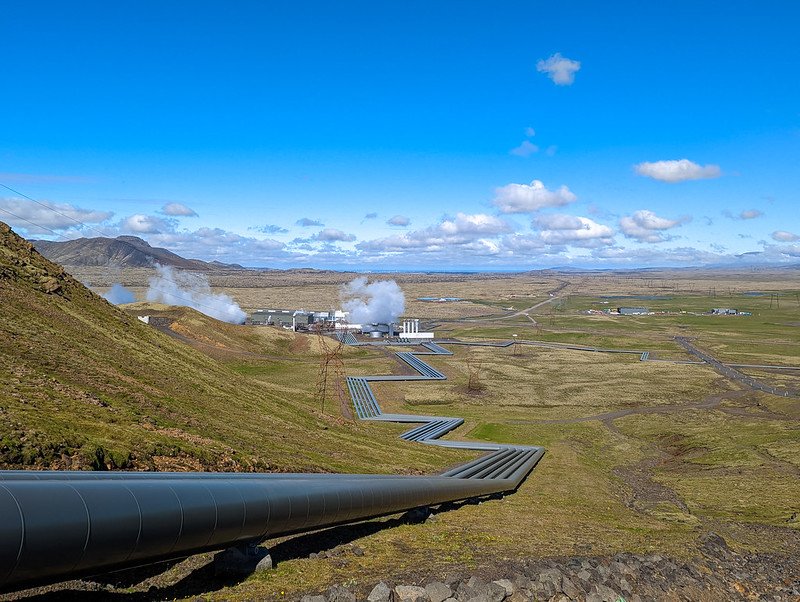
Iceland has officially switched on what is being described as the world’s largest carbon removal plant, marking a significant step forward in global climate technology efforts.
The facility is designed to capture carbon dioxide (CO₂) directly from the air using advanced direct air capture (DAC) technology. Unlike traditional emissions reduction strategies that focus on preventing new greenhouse gases from entering the atmosphere, this approach removes existing carbon already contributing to global warming.
Once captured, the CO₂ is transported underground, where it reacts with naturally occurring basalt rock formations. Over time, the carbon mineralizes and turns into solid stone, permanently locking it away and preventing it from re-entering the atmosphere.
One of the plant’s key advantages is its reliance on Iceland’s abundant geothermal energy. By powering the system with renewable energy, the facility avoids generating additional emissions during the carbon capture process — a critical factor in ensuring overall climate benefit.
Scientists and climate experts emphasize that while cutting emissions remains the top priority, carbon removal technologies are increasingly seen as essential in achieving long-term net-zero goals. The Intergovernmental Panel on Climate Change (IPCC) has repeatedly highlighted the need for both emissions reduction and carbon removal to limit global temperature rise.
However, experts also caution that the plant’s current capacity remains small compared to the billions of tons of CO₂ emitted globally each year. Scaling up operations, reducing costs, and deploying similar facilities worldwide will be necessary to make a measurable global impact.
Despite these challenges, the launch represents a symbolic shift — from simply mitigating future emissions to actively repairing past environmental damage. For climate technology advocates, it is a milestone in the evolving fight against climate change.
