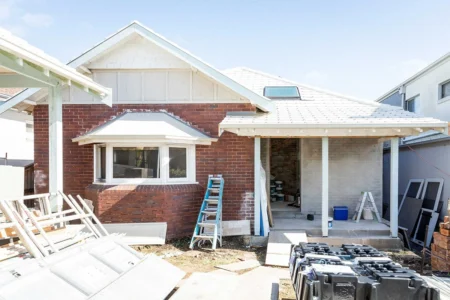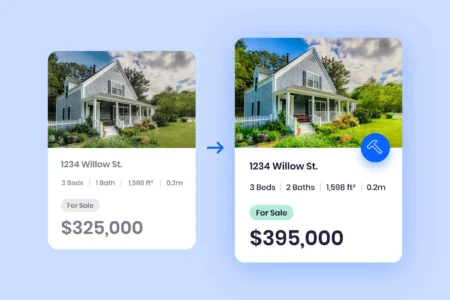




Fix-and-flip investing looks simple on social media: “Buy low, renovate, sell high.” In reality, profitable flips are closer to project finance than “real estate shopping.” You are underwriting (1) the property, (2) the construction plan, (3) the resale buyer pool, and (4) time risk—while absorbing Florida-specific cost volatility (insurance, permits, trades, HOA rules in some communities). For a deeper dive into typical fix-and-flip costs in Florida, Click here to check out our detailed guide.
A useful way to ground the analysis is to remember how expensive ownership already is in Florida. The U.S. Census Bureau’s ACS-based QuickFacts for Florida reports a median monthly owner cost with a mortgage of $1,959 and a median home value of $359,000 (ACS 2020–2024). High carrying costs mean time overruns and “small” budget errors can compound quickly.
This guide gives a copy-paste, step-by-step fix-and-flip deal analysis framework that stays:
- educational only (no individualized advice)
- SAFE Act / CFPB / FTC compliant (no loan terms, no inducement)
- AdSense/Ezoic/Mediavine eligible
- Fair Housing aligned
- Publisher-grade and evergreen
Step 1) Define the flip as a business model
A flip isn’t just “a renovated house.” You’re selling a product to a specific buyer segment. Buyer behavior matters because it affects your exit price and days on market.
NAR’s 2025 buyer/seller reporting highlights that down payments have become larger: the median down payment was 19% overall (10% first-time, 23% repeat) in 2025—levels not seen in decades for some segments. Translation: in a higher-rate environment, buyers are often payment-sensitive and more selective, and your rehab must match what that buyer pool values.
Your first decision: What is your likely retail buyer?
- Entry-level owner occupant (price-sensitive, expects clean financing-ready condition)
- Move-up buyer (expects higher finish level and fewer “DIY” compromises)
- Investor buyer (often values durability and rent-ready functionality)
This decision determines your rehab scope and the comps you should use.
Step 2) Set the “ARV box” (After-Repair Value) before you look at costs
ARV is the ceiling. Everything else is downstream. If your ARV is wrong, your numbers are fake.
2A) Pull comps like an appraiser
Use 3–6 sold comps and 1–3 pending comps if available. Your best comps match:
- Same neighborhood/micro-area (avoid crossing major boundaries)
- Similar GLA (living area), bed/bath count, lot size, year built
- Similar finish level after rehab (not “kinda close”)
2B) Build a comp-adjustment grid (simple and repeatable)
Create a table with:
- Sale price
- $/sqft
- Condition/finish notes
- Days on market
- Concessions (if known)
Then estimate ARV as a range, not a single number:
- Low ARV (conservative)
- Base ARV (most likely)
- High ARV (stretch)
Pro rule: If your deal only works at “high ARV,” it’s not a deal—it’s a bet.
Step 3) Estimate rehab costs using a scope-based method (not gut feel)
3A) Separate rehab into four buckets
- Mandatory / safety / systems (roof leaks, electrical hazards, plumbing failures)
- Functional upgrades (kitchen/baths, flooring, HVAC if needed)
- Curb appeal (paint, landscaping, exterior lighting)
- Market positioning upgrades (features buyers pay for in your comp set)
3B) Use an ROI sanity check (don’t over-improve)
Many renovations do not return 100% of cost at resale. NAR’s remodeling coverage often cites partial cost recovery for major projects (e.g., kitchens), and NARI/NAR data emphasizes that ROI varies widely by project type and market.
Investor takeaway: Upgrade to the level of the comps you’re using—no more. Over-improving is one of the most common silent profit killers in flips.
3C) Add a contingency line item (non-negotiable)
- Light cosmetic: 5–8%
- Medium rehab: 10–12%
- Heavy rehab: 15%+
Florida flips can face trade availability and hidden issues. Contingency is not pessimism; it’s survival.
Step 4) Calculate the full cost stack
Most new flippers miss entire categories. Use this checklist.
4A) Acquisition costs
- Purchase price
- Buyer closing costs (title, recording, escrow, inspections)
- Any immediate safety/boarding/cleanup needed
4B) Holding costs (monthly burn rate)
Holding cost = interest/carry + taxes + insurance + utilities + lawn/pool + HOA (if any)
Florida’s ownership cost context matters: median owner costs with a mortgage are high statewide. Even if you aren’t “a homeowner,” your carrying stack behaves similarly—money leaks every month.
4C) Selling costs
- Agent commission (if applicable)
- Seller closing costs
- Staging (optional)
- Repair credits / concessions (market-dependent)
- Transfer taxes/fees as applicable
4D) Permits and compliance
Budget for permits and inspections when needed. Unpermitted work can cause resale, appraisal, or insurance issues.
Step 5) Build the flip pro forma
Here is a clean structure you can reuse:
Fix-and-Flip Pro Forma (template)
ARV (Base): $_____
Purchase Price: $_____
Rehab Budget: $_____
Contingency: $_____
Acquisition Closing Costs: $_____
Holding Costs: $_____ (___ months × $/mo)
Selling Costs: $__
Total Project Cost (TPC): = sum of all costs
Projected Profit (Base): = ARV − TPC
Profit Margin: = Profit ÷ ARV
ROI on Cash Invested: = Profit ÷ Cash Invested (if you track cash-in)
Step 6) Compute MAO (Maximum Allowable Offer) using a range, not a single rule
Many investors use “rules” (70% rule, 75% rule). These are not laws; they are shortcuts.
A better approach is to set a profit target and back into MAO:
MAO = ARV − (Rehab + Contingency + Holding + Selling + Desired Profit)
Example (educational numbers)
- ARV (base): $360,000
- Rehab: $55,000
- Contingency (10%): $5,500
- Holding: $18,000 (6 months × $3,000/mo)
- Selling: $28,000
- Desired profit: $35,000
MAO = 360,000 − (55,000 + 5,500 + 18,000 + 28,000 + 35,000)
MAO = 360,000 − 141,500 = $218,500
This method is more transparent than quoting a rule.
Step 7) Run statistical-style sensitivity tests
Instead of pretending you know the future, stress test the two biggest variables:
- ARV
- Time / holding cost
7A) ARV sensitivity (±5% and ±10%)
If ARV base is $360,000:
- −10% = $324,000
- −5% = $342,000
- Base = $360,000
- +5% = $378,000
- +10% = $396,000
Recalculate profit at each ARV point while keeping costs constant. This tells you how exposed you are to appraisal/market shifts.
7B) Timeline sensitivity (4, 6, 8 months)
Holding costs behave like a meter running. If your monthly burn is $3,000:
- 4 months = $12,000
- 6 months = $18,000
- 8 months = $24,000
A two-month delay can erase five figures of profit in some deals.
7C) A simple “break-even ARV” calculation
Break-even ARV = Total Project Cost
If your total costs are $330,000, your break-even ARV is $330,000.
Anything below that is a loss before considering opportunity cost.
Step 8) Check marketability: does your rehab match what buyers actually pay for?
Use remodeling research as a sanity check for where value tends to show up, recognizing ROI is not guaranteed. NAR’s remodeling materials and NARI’s Remodeling Impact report emphasize that some projects recover more than others and that homeowner “joy” is not the same as investor profit.
For flips, high-impact (often) includes:
- Clean, durable flooring
- Updated kitchen/baths aligned with comp set
- Roof/HVAC risk reduction (buyers fear big-ticket failures)
- Strong curb appeal (first impression matters)
Low-impact (often) includes:
- Ultra-custom finishes that don’t match neighborhood norms
- Overbuilt outdoor features with high cost but limited buyer willingness to pay
Step 9) Add Florida-specific “deal killers” to your checklist
Before you finalize an offer, scan these:
- Insurance friction: roof age, wind mitigation, claims history
- HOA/COA: rental limits (if your Plan B is rent), approval rules, fees
- Permits/open permits: can delay close or resale
- Flood/ drainage issues: can affect insurance and buyer demand
- Title issues: liens, probate complexity
These don’t automatically kill a deal; they change your timeline and costs, which changes MAO.
Step 10) Build a decision rule you’ll actually follow (prevent emotional offers)
Use a three-tier decision rule:
Greenlight (proceed)
- Profit margin meets target at Base ARV
- Still positive at −5% ARV
- Timeline overrun of +2 months still leaves acceptable profit
Yellowlight (proceed only if you gain a concession)
- Deal works only at base, fails at −5%
- Or timeline sensitivity is too tight
Action: lower price, reduce scope, or demand seller credits.
Redlight (pass)
- Deal requires “high ARV” or unrealistic timeline
- Or risks you can’t price (major structural uncertainty)
This makes your flip business repeatable.
A quick note on renovation financing
Some owner-occupants use FHA’s 203(k) program to finance purchase/refinance plus rehab into one mortgage, with rehab funds held in escrow and released as work is completed. This is not a flip strategy by itself, but it’s relevant context for how rehab projects can be structured in the broader housing system. For those comparing exit strategies, see our guide on fix-and-flip vs rental property and which makes more money in 2026 to understand potential returns across investment approaches.
Author credit
Asim Iftikhar — Real Estate Contributor, ACT Global Media
Florida Real Estate License: SL3633555
Florida Notary Commission: HH 709161
Asim Iftikhar contributes educational real estate content focused on U.S. residential processes, market structure, and consumer understanding. Content is informational and general in nature.
Compliance, Fair Housing, and Editorial Notice
This article is for educational and informational purposes only. It does not constitute real estate, legal, tax, or investment advice, and it is not an offer or inducement to buy or sell any property. Figures are examples and simplified models; real outcomes vary by property condition, contractor performance, permitting, insurance availability, HOA rules, financing terms, and market conditions.
ACT Global Media supports Equal Housing Opportunity principles and fair housing and civil-rights compliance