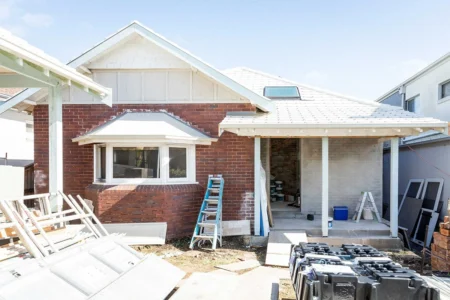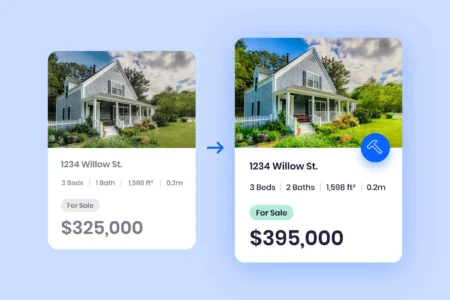





Home renovations are often discussed as a way to “increase home value,” yet real-world data shows that not all improvements translate into higher resale prices. In the United States, renovation outcomes depend heavily on market conditions, location, buyer expectations, and the type of upgrade performed. For homeowners following real estate news in Florida, understanding which renovations add value and which do not is especially important, as local market trends and buyer demand can strongly influence the return on investment from home improvement projects.
According to data from the National Association of Realtors, homeowners frequently overestimate how much value renovations add at resale. While some projects consistently improve marketability, many high-cost upgrades recover only a portion of their costor, in some cases, none at all.
This article provides an advanced, U.S.-specific, data- and research-based overview of renovations that tend to add value versus those that often do not. It explains why certain upgrades perform better than others, using publicly available research and industry data. This content is educational only and does not provide advice or recommendations.
Renovations can also impact resale value depending on market conditions. Our guide on mortgage rates vs home prices in 2026 explains how housing trends affect property value.
How “Value” Is Measured in the U.S. Housing Market
Before comparing renovations, it is important to define what “adding value” means.
In practice, value is measured by:
- Resale price impact
- Buyer demand and time on market
- Appraisal outcomes
- Comparison to similar nearby homes (comps)
Most valuation professionals rely on comparable sales, not renovation cost. This means a $50,000 renovation does not automatically increase value by $50,000.
The Cost-Recovery Concept
A common way researchers evaluate renovations is through cost-recovery ratios—the percentage of project cost reflected in resale value.
For example:
- 80% cost recovery means $40,000 of value for a $50,000 project
- 50% cost recovery means $25,000 of value for a $50,000 project
Cost recovery varies by:
- Market conditions
- Neighborhood norms
- Timing of sale
- Buyer preferences
Renovations That Tend to Add Value (Data-Backed)
The following categories consistently show stronger resale performance across U.S. markets, though outcomes still vary.
- Exterior and Curb Appeal Improvements
Why they matter:
Exterior appearance influences buyer perception before a showing even begins.
According to research summarized by National Association of Realtors, curb appeal improvements often provide some of the highest cost-recovery ratios.
Common examples include:
- Entry door replacement
- Siding replacement
- Garage door replacement
- Exterior painting
Industry studies frequently show 60–100%+ cost recovery for modest exterior upgrades, depending on materials and region.
- Minor Kitchen Remodels
Why they matter:
Kitchens are a focal point for buyers, but scale matters.
Data from industry remodeling surveys shows:
- Minor kitchen updates (cabinet refacing, countertops, fixtures) often recover 60–80% of cost
- Major, luxury kitchen remodels often recover less than 60%
Buyers typically value clean, functional, updated kitchens over high-end customization.
- Bathroom Updates (Mid-Range)
Bathroom improvements generally perform better when:
- They address dated finishes
- They improve functionality
- They stay within neighborhood norms
Mid-range bathroom remodels often recover 55–70% of cost, according to aggregated U.S. remodeling data.
Luxury spa-style bathrooms do not consistently outperform simpler updates in resale value.
- Energy-Efficiency Improvements (Selective Impact)
Energy-related upgrades can improve marketability, though resale premiums vary.
Studies cited by the U.S. Department of Energy suggest that:
- Insulation improvements
- Energy-efficient windows
- HVAC upgrades
may contribute to modest resale premiums in certain markets, especially where energy costs are high.
However, energy upgrades rarely recover full cost unless they replace visibly outdated systems.
- Necessary System Replacements
Replacing failing systems (roof, HVAC, plumbing) typically:
- Protects value
- Prevents buyer discounts
- Improves inspection outcomes
While these projects often show low visible ROI, they help avoid negative value adjustments during resale.
Renovations That Often Do NOT Add Proportional Value
The following upgrades frequently underperform relative to cost.
- High-End Luxury Upgrades
Examples include:
- Professional-grade appliances
- Imported stone finishes
- Custom cabinetry far above neighborhood norms
Data shows luxury upgrades often recover 30–50% of cost unless located in high-end markets where such finishes are expected.
- Over-Customization
Highly personalized renovations can reduce buyer appeal, such as:
- Unusual layouts
- Bold color schemes
- Niche design features
Buyers tend to discount properties that require “undoing” customization.
- Room Conversions That Reduce Functionality
Converting:
- Bedrooms into offices
- Garages into living space
- Dining rooms into specialty rooms
can reduce appeal if the home no longer matches buyer expectations for its size and location.
- Swimming Pools (Market-Dependent)
Pools are one of the most market-dependent features in U.S. real estate.
Research shows:
- In warm climates, pools may support value modestly
- In many regions, pools recover less than 50% of installation cost
- Pools can reduce buyer pools due to maintenance and insurance concerns
- Finishing Basements Without Market Demand
Basement finishes may add usable space, but:
- Appraisals often value them less than above-grade square footage
- Buyer demand varies widely by region
In many markets, finished basements recover 40–60% of cost.
Why Renovation ROI Varies So Widely
- Neighborhood Norms
Renovations that align with nearby homes perform better than upgrades that exceed local standards.
- Market Conditions
In strong seller markets, buyers may overlook dated features. In buyer-leaning markets, condition matters more.
- Timing of Sale
Renovations completed shortly before sale may not fully translate into value if buyers focus on comps rather than recent improvements.
- Appraisal Constraints
Appraisers rely on comparable sales, which limits how much value can be attributed to individual upgrades.
Renovations and Appraisals
Appraisals typically:
- Adjust for condition and quality
- Do not dollar-for-dollar credit renovations
- Focus on market evidence, not receipts
This explains why expensive upgrades do not guarantee higher appraised value.
Renovations vs. Maintenance: An Important Distinction
Maintenance preserves value. Renovations may or may not increase it.
Examples:
- Fixing a roof preserves value
- Upgrading a roof beyond neighborhood standards may not add value
Understanding this distinction is critical for interpreting renovation outcomes.
Common Renovation Myths
“Every renovation adds value.”
False many upgrades recover only part of their cost.
“Renovation cost equals added value.”
Value is determined by market demand, not spending.
“Buyers always pay for upgrades.”
Buyers pay for market-expected upgrades, not personal preferences.
Long-Term Perspective on Renovations
Over long ownership periods:
- Some renovations improve livability rather than resale value
- Value outcomes depend on market cycles
- Location often matters more than upgrades
Renovations cannot override unfavorable market conditions.
Summary: Data-Based Takeaways
From a U.S. housing perspective:
- Exterior and functional upgrades tend to perform best
- Mid-range improvements outperform luxury projects
- Over-customization often reduces buyer appeal
- Maintenance protects value; renovations may or may not increase it
- Market context always constrains outcomes
Understanding renovation performance helps explain why resale value is driven more by market fundamentals than renovation spending alone. For homeowners thinking about long-term investment, it’s also important to understand the overall cost of owning property, not just renovation expenses. Read more about homeownership costs beyond the mortgage.
Author Information
Written by:
Asim Iftikhar — Real Estate Contributor, ACT Global Media
Florida Real Estate License: SL3633555
Florida Notary Commission: HH 709161
Editorial Disclosure
This article is provided for general informational purposes only and does not constitute real estate, legal, financial, or investment advice.
Fair Housing & Civil Rights Notice
ACT Global Media supports fair housing principles. Content is presented for general education and does not endorse discrimination or preferences prohibited by law.