




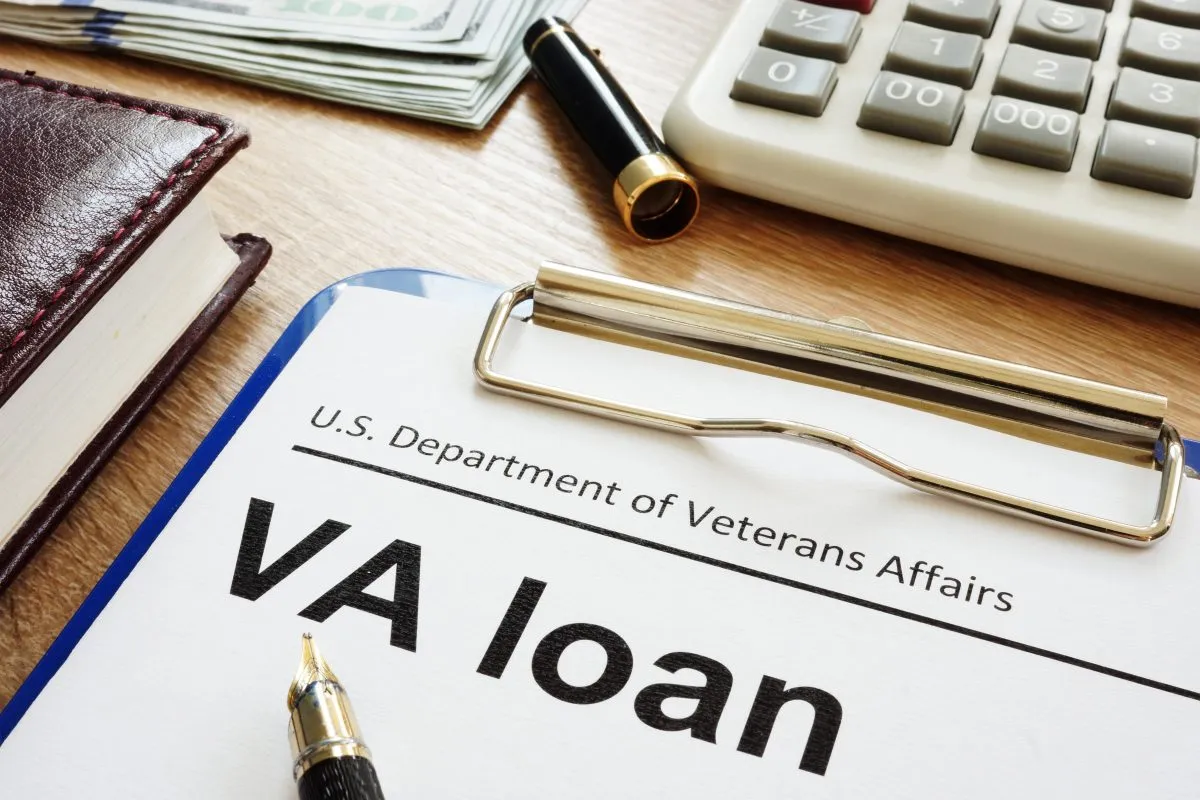
If you have a VA-guaranteed home loan on a Florida property and your credit has taken a hit since you closed, the VA Interest Rate Reduction Refinance Loan universally known as the IRRRL, and sometimes called the VA Streamline Refinance may be the most forgiving refinance path available to you anywhere in the U.S. mortgage market.
Unlike conventional refinances that heavily weight your current credit score, and unlike FHA Streamline Refinances in Florida that still require documented mortgage payment history within strict parameters, the VA IRRRL operates under a framework that the U.S. Department of Veterans Affairs has specifically designed to reduce documentation and underwriting burdens for existing VA loan holders. For Florida veterans, active-duty servicemembers, and eligible surviving spouses navigating a high-rate, high-insurance-cost environment in 2026, understanding exactly what the IRRRL does and does not require is the starting point for any refinance conversation.
Florida’s veteran population makes this conversation especially relevant. The U.S. Census Bureau’s American Community Survey (ACS) 2023 one-year estimates identified Florida as home to approximately 1.4 million veterans the third-largest veteran population of any U.S. state, behind California and Texas. The same ACS data shows Florida’s veteran population is concentrated in the 45-and-older age cohort, a demographic segment with high homeownership rates. The U.S. Census Bureau’s Current Population Survey data consistently shows homeownership rates among veterans exceeding 75% nationally substantially above the overall national homeownership rate of approximately 65.7% reported in the Census Bureau’s Housing Vacancy Survey for 2024.
That combination a large Florida veteran population, high homeownership rates among veterans, and a substantial portion of those homeowners carrying VA-guaranteed mortgages means the pool of Florida veterans who may be eligible to explore a VA IRRRL in 2026 is significant. This guide explains the program in full, with Florida-specific context, data-grounded financial modeling, and the regulatory framework borrowers need to understand before proceeding.
This is an educational guide only. It does not constitute mortgage advice, financial advice, or an offer to lend. Program eligibility, lender overlays, rates, and terms vary. Always obtain an official Loan Estimate from a licensed mortgage professional before making any refinance decision.
What the VA IRRRL Is The Regulatory Foundation
The VA Interest Rate Reduction Refinance Loan is a refinance program authorized under Title 38 of the United States Code, administered by the U.S. Department of Veterans Affairs. The program’s statutory and regulatory basis distinguishes it from FHA and conventional refinance programs in ways that are directly relevant to borrowers with weaker credit profiles.
VA’s own program guidance published through VA Circulars, the VA Lenders Handbook (VA Pamphlet 26-7), and periodic policy updates establishes the IRRRL as a simplified refinance mechanism for existing VA-guaranteed loans. The core policy intent, as reflected in VA guidance, is to reduce the administrative burden on veteran borrowers seeking to lower their interest rate or move from an adjustable-rate mortgage to a fixed-rate mortgage.
VA Pamphlet 26-7, Chapter 6, which governs IRRRL transactions, states that IRRRLs generally do not require a VA credit underwriter. VA circular guidance has further clarified that under certain delinquency thresholds, underwriting is not required at all. This is the regulatory basis for the frequently cited statement that the VA IRRRL is available even when credit has weakened but as with all regulatory statements, the context and conditions matter significantly, and lender overlay policies layer additional requirements on top of the VA program floor.
Who Is Eligible: The Core VA IRRRL Requirements
Eligibility for the VA IRRRL is governed by VA program rules as published in VA Pamphlet 26-7 and periodic VA circulars. The following represents the foundational eligibility framework.
Existing VA-Guaranteed Loan Requirement
The IRRRL is exclusively available to refinance an existing VA-guaranteed mortgage. As with the FHA Streamline Refinance, this is a hard program boundary. Veterans who have conventional, FHA, or USDA loans cannot use the IRRRL to refinance those loans into a VA loan that transaction would be a VA purchase or a VA cash-out refinance, both of which involve full underwriting. The IRRRL applies only when the loan being refinanced already carries a VA guaranty.
To verify whether your existing mortgage is VA-guaranteed, check your original closing documents, your monthly mortgage statement (VA loans do not carry monthly mortgage insurance premiums absence of MI line items is one indicator), or contact your loan servicer directly. VA’s eBenefits portal and the VA Regional Loan Centers can also assist with loan verification for eligible veterans.
Occupancy The Prior Occupancy Standard
Standard VA purchase loan requirements mandate that the borrower certify intent to personally occupy the property as a primary residence. The IRRRL applies a different standard: the veteran must certify that they previously occupied the property as their primary residence. This prior occupancy standard rather than a current occupancy requirement is one of the IRRRL’s most practically significant features for Florida veterans.
Florida’s military population includes large contingents at installations including MacDill Air Force Base (Tampa), NAS Jacksonville, Naval Air Station Key West, Eglin Air Force Base (Fort Walton Beach), Patrick Space Force Base (Brevard County), and multiple Army and Coast Guard installations. Active-duty servicemembers are frequently reassigned, and many Florida veterans who purchased homes near these installations have since been relocated either through permanent change of station (PCS) orders or post-separation relocation. The prior occupancy standard means veterans who have moved away from their Florida property since purchase may still be eligible for an IRRRL on that property, subject to lender policies and VA guidelines on rental and secondary property situations.
Net Tangible Benefit Requirement
VA regulations require that an IRRRL produce a net tangible benefit to the veteran borrower. VA’s net tangible benefit standards, as established in 38 CFR Part 36 and implemented through VA Circular 26-18-30 and subsequent guidance, define specific thresholds:
For a fixed-rate to fixed-rate IRRRL, the new interest rate must be at least 0.5 percentage points lower than the interest rate on the loan being refinanced.
For a fixed-rate to adjustable-rate IRRRL, the new interest rate must be at least 2.0 percentage points lower than the rate on the fixed-rate loan being refinanced.
For an ARM-to-fixed IRRRL, the new fixed rate may be higher than the current ARM rate this transaction is considered inherently beneficial because it removes rate uncertainty, and VA guidance reflects that the stability benefit justifies the potential payment increase.
The net tangible benefit framework exists as a consumer protection mechanism consistent with broader CFPB guidance on mortgage origination practices. Veterans Affairs implemented these quantitative thresholds in part to address concerns about serial refinancing a practice in which veterans are repeatedly refinanced into marginally different loans primarily generating fees for originators rather than meaningful benefit for borrowers.
The Three-Year Recoupment Requirement
VA regulations implemented through the Economic Growth, Regulatory Relief, and Consumer Protection Act (Public Law 115-174) require that for most IRRRLs, the recoupment period the time required for the borrower to recover all fees, closing costs, and expenses through lower monthly payments must not exceed 36 months. This recoupment calculation is defined in statute and regulation, and lenders are required to calculate and disclose it.
The recoupment test effectively codifies a version of the break-even analysis into VA program requirements. Lenders originating IRRRLs must demonstrate that the transaction satisfies this recoupment standard or document a specific exemption.
The Funding Fee
VA loans including IRRRLs carry a VA Funding Fee, which is a one-time fee paid to VA to sustain the loan guaranty program. Unlike FHA’s Mortgage Insurance Premium, the VA Funding Fee is a single upfront charge, not an ongoing monthly cost. The Funding Fee for an IRRRL is 0.5% of the loan amount for all eligible veterans and servicemembers substantially lower than the 1.75% UFMIP charged on FHA loans including FHA Streamline Refinances.
Critically, certain veteran borrowers are exempt from the VA Funding Fee entirely. VA regulations exempt from the Funding Fee: veterans receiving VA compensation for service-connected disabilities, veterans who would be entitled to compensation but for receipt of retirement or active-duty pay, surviving spouses of veterans who died in service or from a service-connected disability, and servicemembers with proposed or memorandum ratings for service-connected disabilities. The exemption determination is made based on VA records, and lenders are required to verify exemption status through VA systems prior to closing.
For a $295,000 IRRRL, the 0.5% Funding Fee is $1,475 which can be financed into the new loan. For an exempt veteran, this cost disappears entirely, improving both the upfront cost picture and the recoupment calculation.
The Credit Question: What VA Says Versus What Lenders Do
The credit question is where the VA IRRRL most significantly diverges from conventional refinance programs and where the distinction between VA program rules and lender overlay policies is most consequential.
VA’s Position on Credit Underwriting
VA Pamphlet 26-7, Chapter 6 states that IRRRLs generally do not require a VA credit underwriter. VA circular guidance has clarified that when the existing VA loan is current meaning the veteran has made the most recent six monthly payments and has no more than one 30-day late payment in the 12 months preceding application underwriting is not required.
This means that under VA’s own program rules, a veteran with a credit score of 550, 520, or even lower could potentially be eligible for an IRRRL if their existing VA loan payment history is clean. VA does not publish a minimum credit score requirement for the IRRRL. This absence of a VA-mandated minimum is not an oversight it is a deliberate policy choice reflecting VA’s mission to serve veterans across diverse financial circumstances.
The Lender Overlay Reality
Despite VA’s position, the practical reality is that most lenders originating VA IRRRLs apply their own minimum credit score requirements. These overlay policies vary across lenders but commonly range from 580 to 640. Some lenders set their IRRRL overlay minimum at 620 the same threshold they apply to conventional loans effectively nullifying the IRRRL’s credit flexibility for borrowers below that threshold at that specific lender.
The gap between VA program rules (no minimum score) and common lender practice (580–640 minimum) has been documented in consumer advocacy research. The Consumer Financial Protection Bureau’s supervisory activities have addressed VA loan origination practices broadly, and VA’s own Loan Technician and oversight functions monitor lender compliance with program requirements.
For veterans with credit scores below common lender overlay minimums, the practical implication is: shop multiple lenders. Because overlay policies are lender-specific, a veteran declined by one lender for an IRRRL due to credit score may be approved by a different lender particularly non-bank mortgage companies and VA-specialised lenders who may maintain lower overlay minimums than large depository institutions.
VA’s Lender Search function, accessible through benefits.va.gov, allows veterans to identify VA-approved lenders. The NMLS Consumer Access portal at nmlsconsumeraccess.org allows license verification for individual loan originators.
Florida-Specific Financial Modeling: Does an IRRRL Make Sense in 2026?
The IRRRL’s eligibility framework matters only if the financial case supports proceeding. The following scenarios use data-grounded inputs relevant to Florida’s 2026 market environment.
The Rate Environment Context
Freddie Mac’s Primary Mortgage Market Survey (PMMS) recorded the national average 30-year fixed mortgage rate at approximately 6.09% as of the week of February 6, 2026. VA loans typically price slightly below conventional loans due to the government guaranty industry data from mortgage market publications suggests VA 30-year fixed rates have historically traded at approximately 0.25 to 0.50 percentage points below comparable conventional rates. For modeling purposes, a reference VA rate of approximately 5.75% to 6.00% is used in the scenarios below. These are not quotes. Actual rates depend on lender pricing, market conditions at time of application, and borrower specifics.
Scenario A: Late 2023 High-Rate VA Origination Strong IRRRL Case
Borrower profile: Florida veteran, VA loan originated October 2023 at 7.25%, current balance $305,000, 29 years and 4 months remaining. No monthly MI (VA loan). Current on payments clean 12-month history.
Current monthly P&I at 7.25% on $305,000 over 29 years 4 months: approximately $2,083.
New IRRRL scenario: 5.85% rate (illustrative, not a quote), 30-year term. VA Funding Fee at 0.5% of $305,000 = $1,525, financed into new loan. New loan balance: approximately $306,525.
New monthly P&I at 5.85% on $306,525 over 30 years: approximately $1,812.
Monthly savings: $2,083 minus $1,812 = $271 per month.
Estimated closing costs paid at closing (title, recording, lender fees): $2,200. VA recoupment calculation: $2,200 ÷ $271 = 8.1 months well within the 36-month statutory maximum. Break-even for total costs including financed Funding Fee: ($2,200 + $1,525) ÷ $271 = 13.7 months.
This represents a strong IRRRL candidate. A Florida veteran who obtained a VA loan in late 2023 at rates in the 7.00%–7.50% range has a compelling financial case for an IRRRL in today’s rate environment, with recoupment well within VA’s 36-month requirement.
Scenario B: 2019 Origination Marginal Case
Borrower profile: Florida veteran, VA loan originated 2019 at 4.50%, current balance $275,000, 22 years remaining. Clean payment history.
Current monthly P&I at 4.50% on $275,000 over 22 years: approximately $1,734.
New IRRRL scenario: 5.85% rate, 30-year term. This transaction would increase the interest rate by 1.35 percentage points. This fails the VA net tangible benefit test for a fixed-to-fixed IRRRL, which requires the new rate to be at least 0.5 percentage points lower. This borrower is not an IRRRL candidate in the current rate environment.
This scenario illustrates that veterans who secured VA loans during the historically low rate period of 2020–2022 (Freddie Mac PMMS data shows 30-year rates reaching a nadir of approximately 2.65% in January 2021) have no viable path to a rate-reduction IRRRL in a 5.75%–6.25% rate environment. The IRRRL is a rate-reduction tool it cannot manufacture savings when current market rates exceed the borrower’s existing rate.
Scenario C: ARM-to-Fixed Protection Against Rate Uncertainty
Borrower profile: Florida veteran, VA hybrid ARM loan (5/1 ARM) originated 2021 at initial rate 3.00%, now past the initial fixed period and subject to annual adjustments. Current adjusted rate: 6.75%. Current balance $290,000, 24 years remaining.
Current monthly P&I at 6.75% on $290,000 over 24 years: approximately $2,028.
New IRRRL scenario: 5.85% fixed rate, 30-year term. VA Funding Fee: $1,450 financed. New loan balance: $291,450.
New monthly P&I at 5.85% on $291,450 over 30 years: approximately $1,724.
Monthly savings: $2,028 – $1,724 = $304. Recoupment of cash closing costs ($2,000): $2,000 ÷ $304 = 6.6 months.
This is a strong case combining two benefits: rate reduction and elimination of future ARM adjustment risk. Florida veterans with hybrid ARMs who are now in the adjustment period represent a natural IRRRL candidate pool in 2026.
Florida’s Veteran Demographics and the Housing Cost Context
Understanding the financial context for Florida’s veteran population requires engaging with Census Bureau data that goes beyond aggregate homeownership statistics.
The ACS 2023 one-year estimates for Florida provide granular detail on veteran economic characteristics. Florida veterans’ median household income, as tracked by the ACS, varies significantly by age cohort and county. Veterans concentrated near major military installations Escambia County (Pensacola NAS), Okaloosa County (Eglin/Hurlburt), Duval County (NAS Jacksonville), Hillsborough County (MacDill) tend to show higher median household incomes reflecting active-duty and recently separated servicemembers with stable employment. Veterans in retirement-heavy counties Sarasota, Charlotte, Indian River, Citrus show income profiles more consistent with fixed-income retirees.
This demographic heterogeneity matters for IRRRL analysis because debt-to-income ratio while not formally computed in a non-credit-qualifying IRRRL becomes relevant when lender overlays include DTI caps, and when the veteran is evaluating whether the refinanced payment is sustainable.
The Census Bureau’s ACS 2024 data on median monthly owner costs ($2,035 nationally for mortgaged homeowners, up from $1,960 in 2023) reflects rising insurance and escrow costs that disproportionately affect Florida. The Insurance Information Institute has documented Florida’s outsized share of national property insurance claims and the resulting premium pressure. For a Florida veteran evaluating an IRRRL, the P&I savings on the mortgage line must be evaluated against the full escrow payment a $271 monthly P&I reduction that coexists with a $200 annual insurance increase produces a net monthly saving of approximately $254, not $271.
The NAR’s Housing Affordability Index methodology, which quantifies affordability as the relationship between qualifying income, prevailing rates, and median home prices, provides additional context. NAR’s data for Florida MSAs consistently shows affordability below the national HAI benchmark, driven by Florida’s combination of above-median home prices in growth corridors and elevated total owner costs. For veterans whose VA loan payments have become difficult to sustain in this environment, the IRRRL’s potential for payment reduction represents genuine financial relief subject to the rate environment making it numerically viable.
What the VA IRRRL Does Not Permit: Important Boundaries
The VA IRRRL’s flexibility on credit documentation does not extend to all transaction types. Several important boundaries define what the program cannot do.
No Cash-Out
The VA IRRRL does not permit cash-out. The new loan amount is limited to the balance of the existing VA loan plus the VA Funding Fee (if financed) and allowable closing costs. Veterans seeking to access home equity from a VA-guaranteed property must use the VA Cash-Out Refinance program, which requires full credit underwriting, a new appraisal, and compliance with loan-to-value requirements.
No Non-VA Loan Refinancing
As established above, the IRRRL cannot be used to refinance a conventional, FHA, or USDA loan. The existing loan must carry a VA guaranty.
No Second Mortgage Subordination Complications (Without Additional Review)
If the veteran has a second mortgage or HELOC on the property, the subordination of that second lien to the new IRRRL must be arranged and confirmed. This is not a disqualifying factor but adds a procedural requirement.
Property Type Considerations
Manufactured homes, condominiums, and multi-unit properties have specific VA eligibility requirements. For condominiums, the project does not need to be on VA’s approved condo list for an IRRRL (unlike VA purchase loans), but the property must still meet basic VA property standards. Veterans in Florida’s substantial condominium market should verify property-specific requirements with their lender.
The Serial Refinancing Problem and VA’s Consumer Protection Response
VA’s implementation of quantitative net tangible benefit thresholds and the 36-month recoupment requirement was substantially motivated by documented abuses in the VA loan refinancing market. The Government Accountability Office (GAO) issued reports in 2017 and 2018 documenting patterns of serial refinancing of VA loans practices in which veterans were encouraged to refinance repeatedly in short intervals, generating origination fees for lenders while providing minimal or negative benefit to veterans.
VA’s regulatory response, codified through subsequent rulemaking and the requirements in Public Law 115-174, established the recoupment test, the net tangible benefit thresholds, and enhanced disclosure requirements as protective measures. The CFPB has also addressed VA loan advertising practices through enforcement actions and guidance on unfair, deceptive, or abusive acts or practices (UDAAP) in the context of misleading VA loan solicitations.
For Florida veterans who receive a disproportionately high volume of direct mail, digital, and broadcast VA loan advertising given the state’s large veteran population understanding the regulatory consumer protections embedded in the IRRRL program is relevant context for evaluating whether a specific refinance offer genuinely serves their interests.
The 36-month recoupment calculation, the 0.5 percentage point net tangible benefit threshold, and the Funding Fee exemption for disabled veterans are not bureaucratic obstacles they are consumer protections designed specifically to prevent the financial exploitation of veterans in mortgage transactions.
SAFE Act, Florida Licensing, and Verification
Under the federal SAFE Act, mortgage loan originators in Florida who are not employed by federally chartered depositories must hold a Florida Mortgage Loan Originator license issued by the Florida Office of Financial Regulation (OFR), in addition to their federal NMLS registration. VA-approved lenders must also maintain their VA lender approval status through periodic recertification with VA’s Regional Loan Centers.
Veterans can verify:
MLO licensure through NMLS Consumer Access at nmlsconsumeraccess.org free public search by name or NMLS ID.
VA lender approval through VA’s Lender Search at benefits.va.gov searchable by state and lender name.
These two verification steps confirming the originator is licensed in Florida and that the lender is VA-approved are the minimum due diligence steps before submitting a full IRRRL application or providing sensitive financial documentation.
Florida veterans who believe they have been subjected to predatory refinancing practices, misleading advertising, or discriminatory treatment in a mortgage transaction can file complaints with:
The CFPB at consumerfinance.gov/complaint The Florida OFR at flofr.gov VA’s Regional Loan Center at 1-877-827-3702 HUD’s Fair Housing complaint process at hud.gov/fairhousing
Fair Housing and Equal Treatment Framework
The Fair Housing Act and the Equal Credit Opportunity Act prohibit discrimination in mortgage lending on the basis of race, color, national origin, religion, sex, disability, familial status, and (under ECOA) age and receipt of public assistance income. These protections apply fully to VA IRRRL transactions.
The Servicemembers Civil Relief Act (SCRA) provides additional protections for active-duty servicemembers, including interest rate caps on pre-service obligations and foreclosure protections. Florida’s Military Land and Tenants’ Rights Act provides parallel state-level protections. Veterans and active-duty servicemembers who believe their SCRA rights have been violated may contact the Department of Justice Civil Rights Division’s SCRA enforcement unit.
This guide does not steer any veteran toward or away from any lender, product, or program on any basis other than publicly established program eligibility criteria.
Summary: The Decision Framework for Florida Veterans in 2026
The VA IRRRL is among the most veteran-favorable refinance tools in the U.S. mortgage market. Its reduced documentation requirements, absence of a VA-mandated minimum credit score, Funding Fee exemptions for disabled veterans, and prior occupancy standard represent genuine programmatic advantages over FHA and conventional refinance options for eligible borrowers.
The financial case in 2026 depends critically on when the existing VA loan was originated. Veterans who secured VA loans at rates above approximately 6.50% primarily those who closed in the second half of 2023 or in 2018–2019 may have meaningful rate-reduction opportunities. Veterans who originated VA loans during the 2020–2022 low-rate period are unlikely to benefit from an IRRRL in the current rate environment.
Florida’s specific context large veteran population (approximately 1.4 million per ACS 2023 estimates), high homeownership rates among veterans, elevated insurance costs, and diverse military installation geography makes the IRRRL particularly relevant as a financial planning tool for a significant segment of the state’s homeowners.
The lender overlay gap between VA’s program rules and individual lender credit score minimums means that veterans with weaker credit should shop multiple VA-approved lenders rather than accepting a single declination as a definitive answer on eligibility. The VA Lender Search and NMLS Consumer Access portal are the appropriate starting points for that search.
No refinance decision should be made without obtaining and reviewing an official Loan Estimate from a licensed mortgage professional. All figures in this guide are illustrative only.
Educational Disclosure
This article is educational and informational only. It does not constitute mortgage advice, financial advice, VA benefit advice, or an offer to lend. All scenarios and calculations are simplified illustrations and may exclude taxes, insurance, HOA dues, and all lender fees. Program eligibility, underwriting criteria, overlay policies, rates, terms, and Funding Fee amounts vary by lender, borrower profile, property type, and market conditions. Figures attributed to third-party sources are cited for educational context only. Readers should verify current VA program requirements directly with VA and obtain an official Loan Estimate from a licensed, VA-approved mortgage professional before making any refinance decision. Rate examples are not quotes and do not represent available terms for any specific borrower.
About the Author
Beenish Rida Habib Mortgage and Lending Contributor, ACT Global Media Florida-Licensed Mortgage Loan Originator NMLS ID: #1721345
Beenish Rida Habib is a Florida-licensed Mortgage Loan Originator contributing educational content on VA lending, FHA programs, and consumer mortgage topics for ACT Global Media. Her content is written in a neutral, consumer-focused, and regulatory-compliant format. All articles are reviewed for SAFE Act compliance, Florida OFR advertising standards, CFPB and FTC educational content guidelines, and VA program accuracy before publication.
Editorial Policy and Source Citations
U.S. Department of Veterans Affairs: VA IRRRL program framework, VA Pamphlet 26-7 Chapter 6, VA Circular 26-18-30, net tangible benefit requirements, Funding Fee schedule and exemptions. Source: benefits.va.gov
U.S. Census Bureau American Community Survey (ACS): Florida veteran population estimate (approximately 1.4 million, ACS 2023 one-year estimates), veteran homeownership data, median monthly owner costs ($2,035 in 2024), owner cost drivers. Source: census.gov/acs
Freddie Mac Primary Mortgage Market Survey (PMMS): 30-year fixed rate benchmark approximately 6.09% as of week of February 6, 2026. National average only, not a quote or Florida-specific rate. Historical rate nadir approximately 2.65% January 2021. Source: freddiemac.com/pmms
National Association of Realtors (NAR) Housing Affordability Index: HAI methodology, Florida MSA affordability context. Source: nar.realtor
Insurance Information Institute: Florida property insurance market dynamics and premium pressure. Source: iii.org
Government Accountability Office (GAO): Serial VA loan refinancing documentation (2017, 2018 reports). Source: gao.gov
Consumer Financial Protection Bureau (CFPB): UDAAP guidance on VA loan advertising, mortgage origination supervisory activities. Source: consumerfinance.gov
Public Law 115-174 (Economic Growth, Regulatory Relief, and Consumer Protection Act): IRRRL recoupment requirement statutory basis. Source: congress.gov