

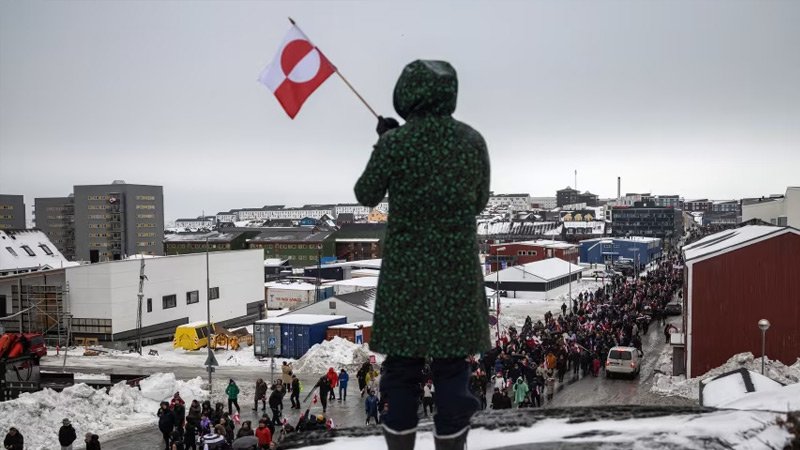
Over the weekend, U.S. President Donald Trump intensified a diplomatic and trade confrontation with key European allies by threatening new tariffs tied to his campaign to gain control of Greenland, the vast Arctic territory governed by Denmark.
WEBDESK | ACTGLOBAL MEDIA | JANUARY 18, 2026
Trump announced on his social platform that starting Feb. 1, 2026, the United States would impose a 10 % tariff on imports from eight European countries — Denmark, Norway, Sweden, France, Germany, the United Kingdom, the Netherlands, and Finland — unless Denmark agrees to negotiate the “complete and total purchase” of Greenland by Washington. The tariff is scheduled to rise to 25 % on June 1 if no agreement is reached.
The announcement marks an extraordinary escalation in tensions between the U.S. and its NATO partners, turning a geopolitical dispute over Arctic sovereignty into a potential trade conflict. European leaders have uniformly condemned the threats, describing them as coercive, damaging to longstanding alliances, and likely to undermine economic ties.
European Response and Unity
European Union leaders, including European Commission President Ursula von der Leyen and European Council President Antonio Costa, warned that linking tariffs to territorial negotiations could trigger a “dangerous downward spiral” in transatlantic relations and weaken collective efforts on shared priorities such as security in Eastern Europe.
National leaders have echoed this unified stance. French President Emmanuel Macron called the tariff threat “unacceptable” and signalled readiness for coordinated EU responses. British Prime Minister Keir Starmer labelled the policy “completely wrong,” saying it punishes allies for supporting NATO’s collective security. Nordic countries, including Sweden and Finland, insisted disputes among allies should be resolved through dialogue, not economic pressure.
Denmark and Greenland have reiterated that the island is not for sale and reaffirmed their sovereignty. Greenlandic officials expressed gratitude for Europe’s support and stressed that the tariff pressure appears aimed more at pressuring allied capitals than Greenland itself.
Broader Implications
The dispute has already strained existing trade negotiations and casts doubt on the future of recent tariff “truce” agreements between the EU and the U.S. Markets and political analysts are watching closely, as the threat of punitive tariffs could ripple through global supply chains and shift diplomatic alignments.
European envoys are scheduled to meet in Brussels to coordinate a formal response, potentially including trade counter-measures and diplomatic actions aimed at defending EU economic interests and upholding international norms on sovereignty and alliance cooperation.
