

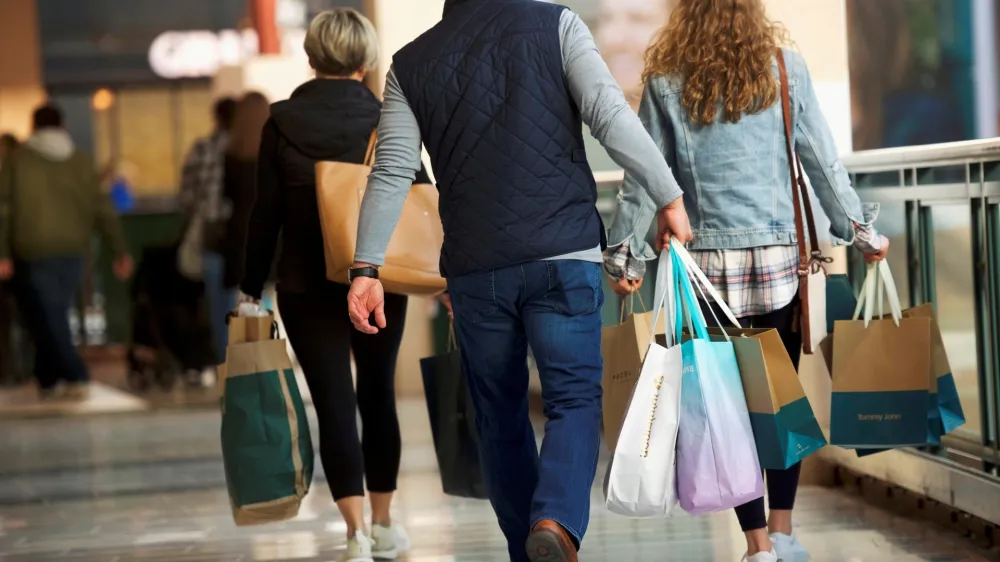
Consumer spending remained resilient throughout the holiday season, defying elevated prices and ongoing cost-of-living pressures, according to recent economic data and retail reports.
Despite higher prices across food, travel, and gift items, shoppers continued to open their wallets, driven by strong employment levels, rising wages in some sectors, and a desire to maintain holiday traditions. Retailers reported steady foot traffic and solid online sales, suggesting consumers were willing to absorb higher costs or adjust their spending habits rather than cut back entirely.
Economists say many households prioritized holiday purchases, even if it meant trading down to discounts, relying on promotions, or using credit. While inflation has eased from previous peaks, prices remain noticeably higher than pre-pandemic levels, putting pressure on budgets — particularly for middle- and lower-income families.
Data indicates that spending growth was strongest in experiences such as travel, dining, and entertainment, reflecting a continued shift away from goods toward services. Online shopping also played a key role, with digital platforms benefiting from last-minute deals and extended holiday sales periods.
However, analysts caution that strong holiday spending does not necessarily signal long-term financial comfort. Rising credit card balances and slower savings growth suggest some consumers may be stretching finances to sustain seasonal spending.
As the new year begins, economists will closely watch whether consumer momentum carries forward or softens under the weight of persistent high prices and borrowing costs. For now, the holiday season has underscored the resilience — and risks — shaping today’s consumer economy.
