Canada’s diplomatic and economic relationship with China spans more than half a century, dating back to the early 1970s when then-Prime Minister Pierre Elliott Trudeau broke new ground by formally establishing ties with the People’s Republic of China. That landmark decision made Canada one of the first Western nations to recognize Beijing’s communist government, setting the stage for decades of engagement that would see both cooperation and conflict.
In 1970, Ottawa’s recognition of the communist government led to the end of official relations with Taiwan and occurred more than a year before similar moves by the United States. Trudeau’s outreach included historic meetings with Chinese leaders, signaling a willingness to build diplomatic bridges with a country that was, at the time, largely isolated from much of the Western world.
Throughout the 1980s and ’90s, high-level exchanges continued, including visits by Chinese premiers to Canada and Canadian leaders traveling to Beijing to advance economic ties. Efforts to grow trade connections were often balanced against criticism from some Canadian policymakers and activists over China’s human rights record, including its 1989 Tiananmen Square crackdown.
More recently, bilateral relations hit a period of strain. In 2018, Canada’s arrest of a senior Huawei executive at the request of the United States triggered retaliation by China, which detained two Canadian citizens on espionage-related charges. These events deepened mistrust and contributed to a diplomatic chill that would linger for years.
Ties deteriorated further when Ottawa imposed steep tariffs on Chinese electric vehicles and other exports in 2024, measures that echoed similar trade restrictions by the United States. Beijing responded with its own levies on key Canadian agricultural products such as canola, seafood and pork, highlighting the economic cost of political disagreements.
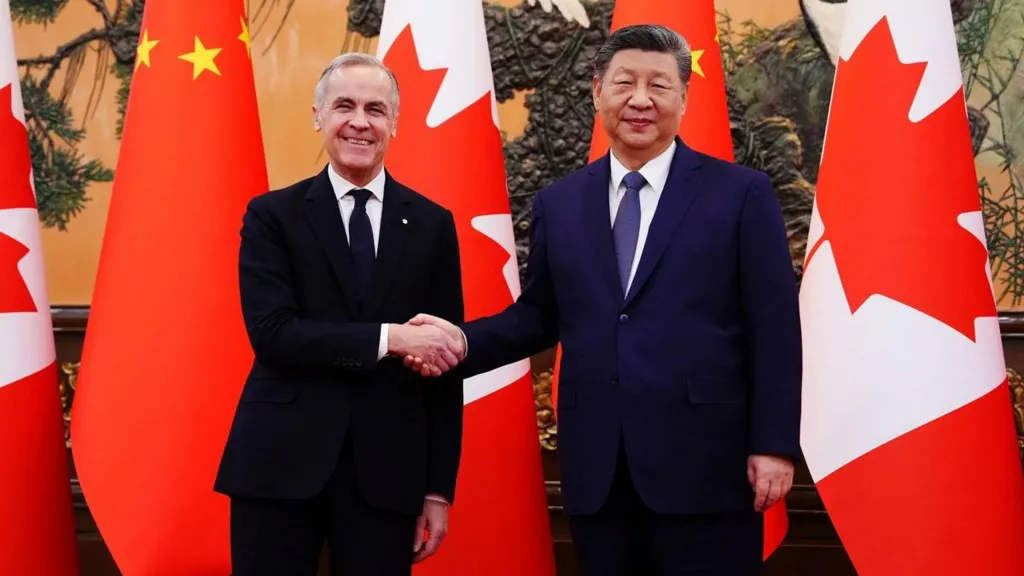
Now, with Mark Carney serving as Canada’s prime minister, Ottawa is attempting to reset the relationship. Carney embarked on an official visit to Beijing in January 2026 — the first by a Canadian leader in nearly a decade — with the goal of repairing diplomatic ties and boosting trade. Chinese state media has urged Canada to pursue a more independent foreign policy, a message that underlines Beijing’s interest in diversifying its partnerships beyond traditional Western alliances.
Carney’s agenda in China is focused on expanding economic cooperation and reducing Canada’s historical reliance on the U.S. market, especially as trade challenges with Washington have prompted Ottawa to explore broader export opportunities. Analysts say this visit reflects both long-standing complexities in Canada-China relations and a strategic effort to build a more stable, mutually beneficial partnership for the future.
Canada Reflects on 50 Years of Relations with China as PM Mark Carney Visits Beijing
 By Media Team