

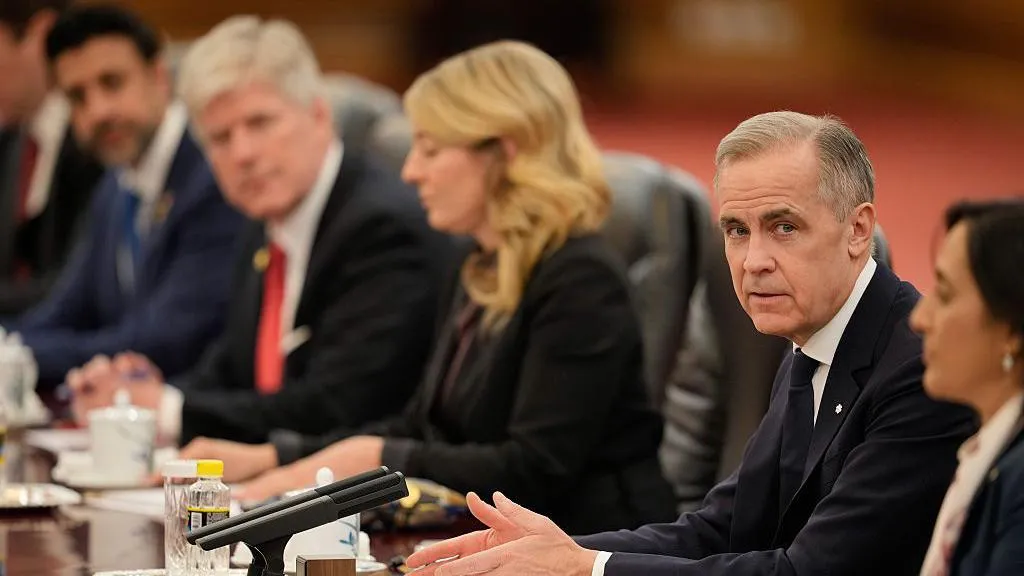
China and Canada have agreed to ease trade tariffs, marking a significant shift in relations following high-level talks between Chinese President Xi Jinping and Canadian Prime Minister Mark Carney in Beijing.
Under the agreement, China is set to reduce tariffs on Canadian canola oil from 85% to 15% by 1 March. In return, Canada will apply its most-favoured-nation tariff rate of 6.1% to Chinese electric vehicles, Carney confirmed during a media briefing.
The announcement represents a major breakthrough after years of diplomatic friction and retaliatory trade measures between the two countries. President Xi described the development as a “turning point” in bilateral relations, while the visit also carries political weight for Carney, who is the first Canadian leader to travel to China in almost ten years.
Carney has been seeking to lessen Canada’s reliance on the United States, its largest trading partner, amid uncertainty created by former US President Donald Trump’s fluctuating tariff policies. The new agreement could also pave the way for increased Chinese investment in Canada, a move likely to draw attention given Canada’s close economic ties with the US.
Speaking to reporters, Carney suggested that recent global trade tensions had contributed to the renewed engagement with Beijing. He noted that Canada’s relationship with China had become more predictable in recent months and described discussions with Chinese officials as practical and conducted with mutual respect.
At the same time, Carney stressed that Ottawa and Beijing continue to disagree on key issues. He said Canada clearly outlined its non-negotiable positions during talks, including concerns over human rights, foreign interference in elections and the need for clear limits governing the relationship.
Analysts say Carney’s visit could serve as a model for other countries grappling with the impact of US trade measures. Meanwhile, China has been working to present itself as a reliable global partner, promoting what it describes as pragmatic, mutually beneficial cooperation.
That approach appears to be gaining traction. Leaders from South Korea and Ireland have visited Beijing in recent weeks, with visits by the UK prime minister and Germany’s chancellor also expected.
Carney said the global landscape has shifted dramatically and that Canada’s strategic choices now will influence its economic and political direction for decades. Earlier in his three-day trip, he suggested that renewed cooperation with China reflects the emergence of a changing global order, noting that the multilateral system has been weakened in recent years.
As talks concluded at Beijing’s Great Hall of the People on Friday, President Xi said stable and constructive relations between China and Canada contribute to global peace, development and prosperity.
