

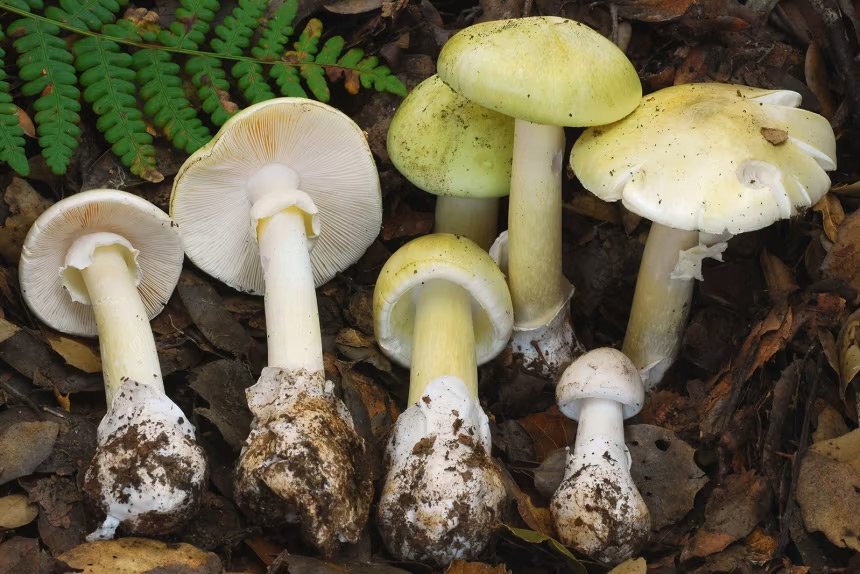
Health officials in California are urging the public to avoid foraging and consuming wild mushrooms after an unusually large outbreak of poisonings linked to highly toxic death cap mushrooms. The California Department of Public Health reported that at least four people have died and three others required liver transplants after consuming the poisonous fungi, with more than three dozen cases of poisoning reported since mid-November.
The surge in deaths and hospitalizations is being linked to an abnormal growth of death cap mushrooms — a species known for deadly amatoxin compounds — following unusually wet weather and early rains in the state. Typically, annual poisonings related to death caps number fewer than five, making this outbreak unprecedented in recent memory.
Experts describe Amanita phalloides, commonly called the death cap, as one of the most poisonous mushrooms in the world. Even a small amount — whether raw, cooked, or dried — can lead to severe liver damage and death. Early symptoms often begin with gastrointestinal distress such as nausea, vomiting, and abdominal pain within 24 hours of ingestion. Those early symptoms may temporarily improve but can mask the progression toward acute liver failure in the days that follow.
Health officials warn that death caps can easily be mistaken for edible varieties, as their appearance changes through growth stages and can resemble safe mushrooms found in local forests and parks. The outbreak has affected people of all ages, from toddlers to adults, prompting the state to issue health advisories in multiple languages to reach diverse communities.
Authorities recommend that individuals only eat mushrooms purchased from trusted sources and seek immediate medical care if symptoms of mushroom poisoning occur. Poison control centers remain available to assist with suspected exposures.
