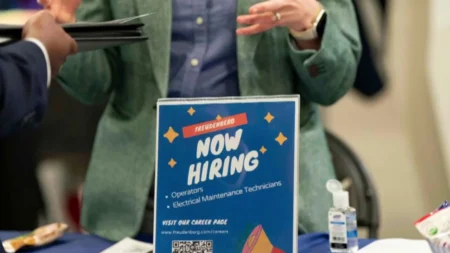





The United States economy lost approximately 92,000 jobs in February, while the national unemployment rate rose to 4.4%, signaling potential weakness in the labor market and raising concerns among economists about the pace of economic growth.
According to the latest labor market data, the unexpected drop in employment reflects slowing hiring across several sectors, including technology, manufacturing, and parts of the service industry. Analysts had previously expected modest job growth for the month, making the decline a surprise for financial markets.
The rise in unemployment from the previous month indicates that more Americans are actively seeking work but are struggling to find jobs as companies adopt more cautious hiring strategies. Businesses in several industries have been reducing workforce expansion plans due to economic uncertainty, higher borrowing costs, and ongoing geopolitical tensions.
Economists say factors such as elevated interest rates, global instability, and slower consumer spending may be contributing to the cooling labor market. Some companies have also implemented layoffs or hiring freezes while they assess future demand and operational costs.
Despite the monthly decline, the broader labor market remains historically strong compared to pre-pandemic levels. However, the February report may signal that the U.S. economy is entering a period of slower growth after years of strong job creation.
Financial markets reacted cautiously to the news, with investors closely watching whether the Federal Reserve may adjust its monetary policy if economic conditions continue to weaken. Rising unemployment and declining job growth could influence future interest-rate decisions.
While one month of job losses does not necessarily indicate a long-term trend, economists say the data will be closely monitored in the coming months to determine whether the slowdown is temporary or the beginning of a broader shift in the U.S. labor market.