



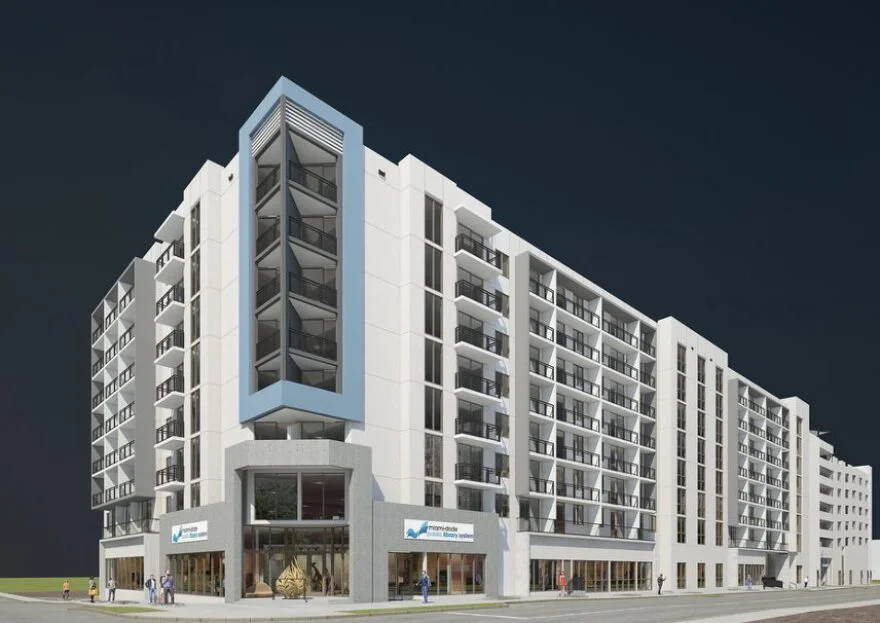
A proposed residential development under Florida’s Live Local Act could replace an existing automotive-related property in Miami-Dade County, highlighting how the statewide affordability initiative is reshaping land-use priorities across South Florida. Developers and housing analysts say projects like this reflect a growing shift toward converting underutilized commercial sites into residential communities as municipalities respond to persistent housing shortages.
The Live Local Act, adopted to encourage workforce and affordable housing construction near employment centers and transit corridors, allows qualifying developments to bypass certain zoning restrictions when affordability thresholds are met. As a result, parcels previously reserved for industrial or automotive uses are increasingly being evaluated for residential redevelopment across high-demand urban areas such as Miami-Dade.
Local planning officials and developers say the proposed replacement of an automotive building with residential units illustrates how the legislation is influencing site-selection strategies throughout the region. Historically, industrial-adjacent or commercial service properties were less likely to transition into housing projects, but the Live Local framework has expanded eligibility for residential conversions where workforce housing commitments are included.
Housing economists note that adaptive reuse and land-use flexibility are becoming essential tools for expanding supply in land-constrained metro areas. According to estimates from the U.S. Census Bureau, South Florida continues to experience strong population growth driven by domestic migration, international investment, and employment expansion in finance, logistics, healthcare, and tourism sectors. These trends are increasing pressure on local governments to identify additional housing opportunities within already developed corridors.
The proposed project also reflects broader efforts to address workforce housing shortages affecting service-sector employees and middle-income households. The Live Local Act offers tax incentives and zoning advantages to developers who commit to reserving a portion of units for households earning within specified income ranges. Analysts say these incentives are encouraging redevelopment of sites that previously had limited residential feasibility under traditional zoning rules.
The timing of the proposal comes as borrowing costs remain an important factor shaping development pipelines nationwide. Mortgage-rate trends tracked by Freddie Mac have remained near the mid-6% range in recent months, increasing demand for rental housing among households delaying homeownership. Developers say workforce-oriented apartment projects supported by policy incentives are becoming more attractive under current financing conditions.
Inflation trends reported by the Bureau of Labor Statistics have also influenced construction economics across Florida. Materials pricing volatility and labor shortages have contributed to estimated cost increases of roughly 5% to 10% in recent years, reinforcing the importance of legislative tools that help offset development expenses and accelerate approvals.
Interest-rate expectations shaped by the Federal Reserve continue affecting how quickly residential projects move from planning to construction. Analysts say projects leveraging Live Local Act provisions may advance more efficiently because regulatory certainty can reduce entitlement timelines compared with traditional rezoning processes.
For developers, replacing an automotive-use building with residential housing represents a strategic shift toward higher-value land utilization in urban employment corridors. Mixed-use redevelopment patterns across Miami-Dade increasingly prioritize housing near transit access and job centers, helping reduce commuting distances and support walkable neighborhood planning goals.
Investors are also monitoring Live Local Act redevelopment proposals closely because workforce housing has become a growing asset class within institutional portfolios. Projects benefiting from zoning flexibility and tax incentives often present more predictable absorption timelines in high-demand rental markets such as Miami-Dade.
The proposal may also influence surrounding property values. Historically, redevelopment initiatives that introduce residential density into service-oriented corridors tend to attract additional retail investment and infrastructure improvements, strengthening neighborhood appeal over time. Analysts say this pattern has already emerged in several Live Local–eligible corridors across South Florida.
For renters and future homebuyers, projects enabled by the Live Local Act could gradually expand housing options within areas previously dominated by commercial uses. Increasing residential supply near employment hubs may help moderate rent growth over time while improving access to transit-oriented neighborhoods.
Looking ahead, planners and housing economists say additional Live Local Act proposals are likely across Miami-Dade County as developers continue identifying redevelopment opportunities on underutilized commercial parcels. While construction costs and financing conditions remain important constraints, policy-driven land-use flexibility is expected to play a growing role in addressing South Florida’s long-term housing supply needs through 2026 and beyond.