



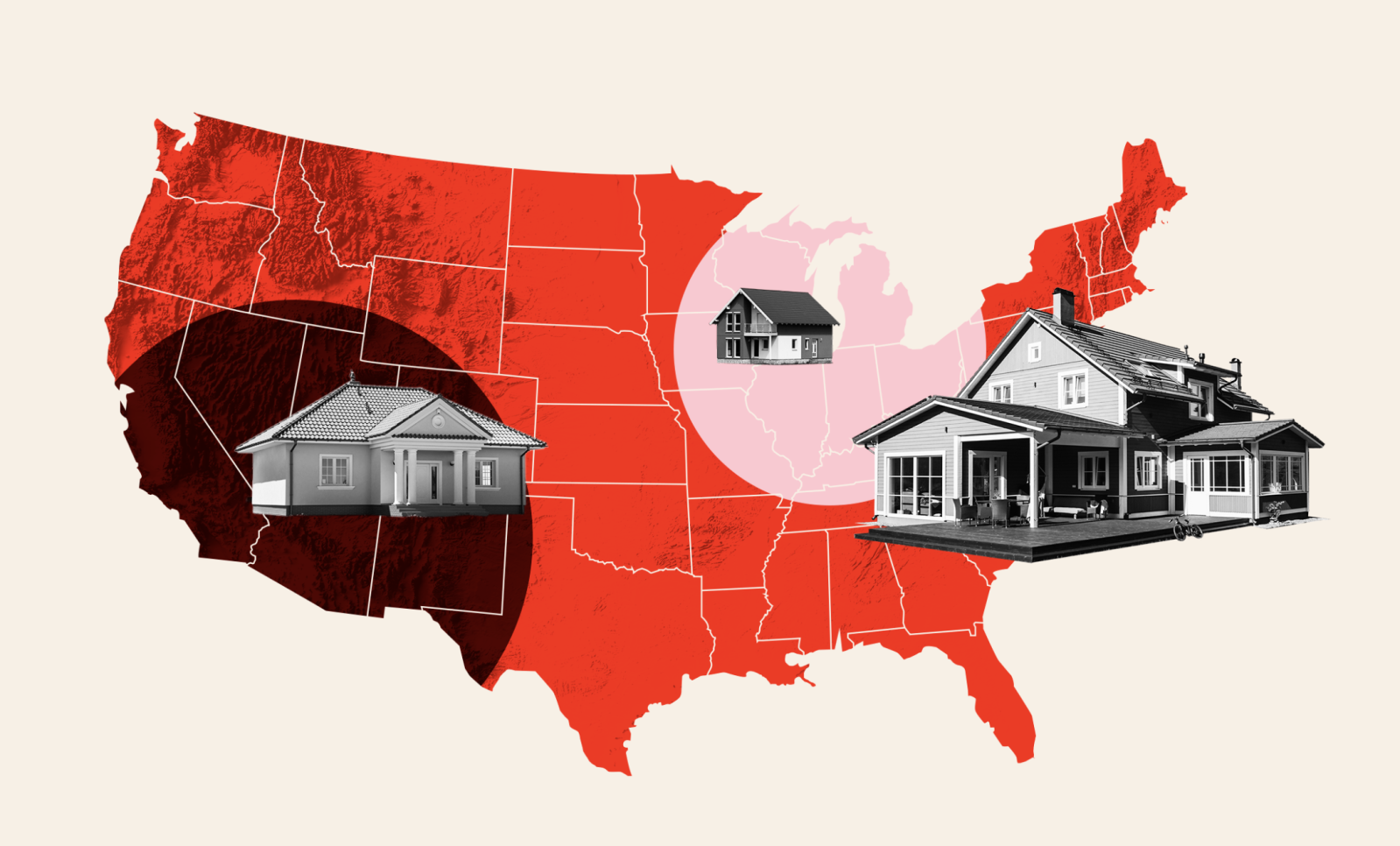
Luxury housing markets across the United States are showing renewed momentum in select coastal and Sun Belt regions, even as elevated mortgage rates continue to slow activity in the broader housing sector. Analysts say cities such as West Palm Beach, New York, Los Angeles, and parts of Texas and the Midwest are emerging as some of the hottest luxury markets in 2026, driven by tight inventory, strong wealth migration patterns, and resilient demand from cash-heavy buyers.
According to recent research from Redfin, the median luxury home price nationally rose about 4.6% year over year to roughly $1.31 million at the end of 2025, compared with just 1.4% growth for non-luxury homes. Analysts say this gap highlights how affluent buyers continue to move forward with purchases even as affordability pressures slow activity in the mid-tier housing segment.
Florida markets remain especially prominent in the luxury segment. West Palm Beach posted one of the strongest gains in pending high-end home sales among major U.S. metros earlier this year, reflecting ongoing migration from high-tax states and continued demand for waterfront property. Industry observers note that South Florida’s combination of climate, tax advantages, and international appeal continues to attract wealth inflows that support pricing strength at the upper end of the market.
New York City also continues to anchor the ultra-luxury category. Recent listings approaching $60 million in Manhattan’s Greenwich Village reflect sustained demand among global buyers for trophy properties in historically supply-constrained neighborhoods. Analysts say transactions above $20 million have exceeded $1 billion in recent years across select downtown Manhattan districts, reinforcing the city’s status as a global luxury housing hub.
These developments are occurring alongside broader macroeconomic pressures shaping housing activity nationwide. Mortgage rates tracked by Freddie Mac have remained in the mid-6% range in recent months, levels that typically reduce purchasing power for middle-income households but tend to have less impact on high-net-worth buyers who often rely on cash or smaller loans.
Inflation trends also continue to influence real estate behavior across income brackets. Data from the Bureau of Labor Statistics shows shelter remains one of the largest contributors to consumer price increases, encouraging some affluent households to shift capital into real estate as a long-term inflation-linked asset class. Economists note that luxury property historically performs differently from entry-level housing during inflationary cycles because ownership costs represent a smaller share of buyer income.
At the same time, policy signals from the Federal Reserve continue to shape expectations for borrowing conditions across the housing market. Higher-for-longer interest-rate scenarios may slow speculative investment in mid-tier housing while leaving demand relatively stable in the ultra-luxury segment.
For homebuyers, particularly those purchasing at the high end, competition remains strongest in coastal metros and migration-driven Sun Belt markets. Cities such as West Palm Beach, Miami, Austin, and parts of Southern California continue to attract executives, entrepreneurs, and remote-enabled professionals seeking larger homes with lifestyle amenities. Industry estimates suggest luxury homes now represent roughly the top 5% of listings in each metro area, often starting near or above $1.2 million nationally.
Investors are also closely watching luxury housing markets as portfolio diversification strategies evolve. Historically, high-end residential property has functioned as both a consumption asset and a wealth-preservation vehicle, particularly in markets with limited land availability. Analysts say that even modest annual price growth of 3%–5% in luxury segments can translate into significant equity gains on multimillion-dollar properties.
Developers and builders are adjusting construction pipelines accordingly. In many growth markets, demand has shifted toward newly built luxury homes featuring waterfront access, energy-efficient design, and resort-style amenities. However, construction costs remain sensitive to labor availability and material pricing, which can increase 5%–10% during inflationary periods and influence project timelines.
Florida continues to stand out as a focal point for luxury housing expansion. Markets such as West Palm Beach and Tampa have experienced strong increases in high-end listings and transaction activity, supported by migration from the Northeast and Midwest. Analysts say Florida’s absence of state income tax and its expanding finance and technology employment base remain important drivers of luxury demand across the state.
For consumers considering luxury purchases, borrowing conditions still matter even at higher price points. A 1% increase in mortgage rates can raise monthly payments by roughly $500–$1,000 on a $1 million loan depending on loan structure and down payment size, which may influence timing decisions for financed buyers even in the upper tiers of the market.
Rent-versus-buy decisions also look different at the luxury level. In many major metros, high-end rental costs have risen alongside home prices, encouraging some affluent households to transition into ownership earlier than planned, particularly when inventory of premium properties remains limited.
Looking ahead, economists say the nation’s hottest luxury housing markets are likely to remain concentrated in coastal cities and migration-driven Sun Belt metros. While interest-rate volatility and global economic uncertainty could influence transaction volume, limited inventory and strong wealth migration trends may continue supporting price stability across the luxury segment through 2026.