



After Repair Value (ARV) is one of the most important metrics used in real estate investment analysis. Investors, lenders, appraisers, and property developers rely on ARV to estimate what a property might be worth after renovations or improvements are completed. In practical terms, ARV represents the future market value of a property in its improved condition, rather than its value in its current state. The concept is widely used in several areas of the real estate properties in Florida, including:
- fix-and-flip investing
- property redevelopment
- renovation lending
- real estate appraisal
- investment property financing.
Accurately estimating ARV can determine whether a real estate project is financially viable. Investors use ARV calculations to evaluate potential profits, lenders use it to assess lending risk, and developers use it to determine whether renovation projects are economically feasible.
House flipping activity demonstrates how important ARV calculations have become in real estate investing. In the third quarter of 2025, flipped homes represented about 6.8% of all U.S. home sales, according to real estate data firm ATTOM.
The same research indicates that the typical flipped property produced roughly $60,000 in gross profit with an average ROI of about 23.1% before expenses. Because renovation projects involve significant financial risk, accurate ARV calculations are essential.
This article explains:
- what After Repair Value means
- how investors calculate ARV
- how comparable sales influence ARV estimates
- how ARV affects profit projections
- statistical trends in the U.S. house flipping market.
The analysis integrates research and housing market data from:
- U.S. Census Bureau
- American Community Survey (ACS)
- National Association of Realtors (NAR)
- U.S. Department of Housing and Urban Development (HUD)
- property market research and industry data.
The goal is to provide an educational, research-based explanation of ARV and its role in real estate investment.
Defining After Repair Value (ARV)
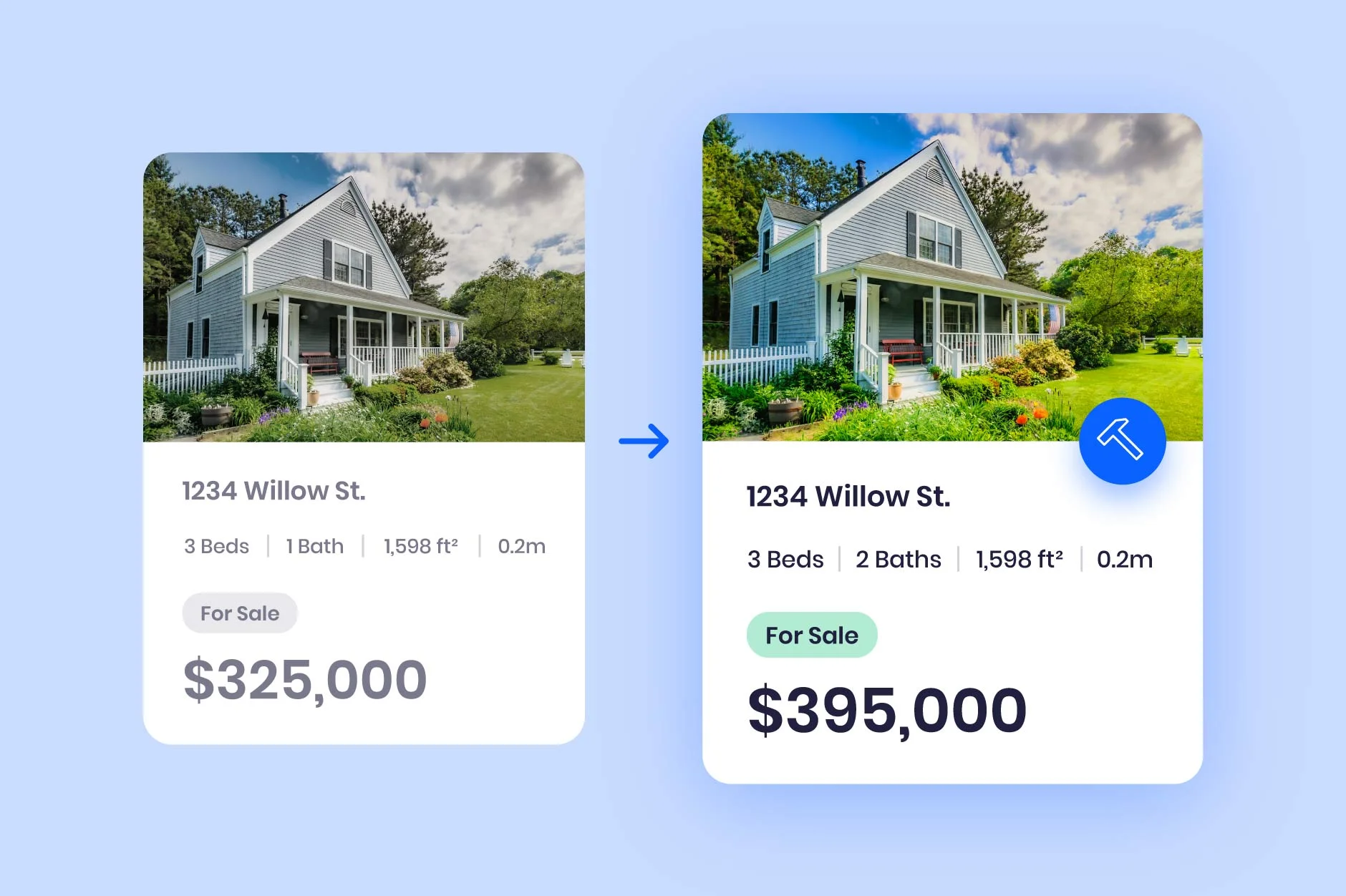
After Repair Value (ARV) is the estimated market value of a property after all planned repairs, renovations, and improvements are completed. This projected value represents the price a property might reasonably sell for in the open market once it has been restored or upgraded.
In contrast:
- Current market value reflects the property’s condition today.
- ARV reflects the property’s potential value after renovations.
For example:
| Property Condition | Estimated Value |
| Current value (needs repairs) | $180,000 |
| Renovation investment | $50,000 |
| Estimated ARV | $300,000 |
In this scenario, the ARV reflects the potential resale value once improvements are completed. Real estate investors often rely on ARV to estimate how much value can be created through renovations.
Why ARV Matters in Real Estate
ARV is important because it provides an estimate of future property value rather than current value. Investors use ARV to answer key questions such as:
- Is this property worth renovating?
- How much profit could this project generate?
- What is the maximum price an investor should pay?
Lenders also rely on ARV when evaluating renovation financing.
For example, many fix-and-flip lenders base loan amounts on a percentage of ARV rather than the property’s current value.
The ARV Formula
Although ARV estimates rely on market analysis, a simplified conceptual formula is often used.
ARV = Current Property Value + Value Added Through Renovation
In practice, ARV is usually determined by comparing similar properties in the same market rather than simply adding renovation costs. Comparable sales analysis helps estimate the price buyers are willing to pay for similar renovated homes.
Comparable Sales (“Comps”)
Comparable sales—often called “comps”—are the primary tool used to estimate ARV. Comps are recently sold properties that share similar characteristics with the subject property. These characteristics include:
- location
- square footage
- number of bedrooms and bathrooms
- property age
- renovation level.
Real estate professionals often use sales from the past three to six months when identifying comparable properties. For example, If renovated homes nearby sold for:
- $305,000
- $315,000
- $320,000
The estimated ARV might be approximately $313,000. The more closely comparable properties match the subject property, the more reliable the ARV estimate.
How Investors Calculate ARV
Professional investors typically follow several steps when estimating ARV.
Step 1: Identify Comparable Sales
The first step is identifying recently sold homes similar to the target property. Investors often analyze:
- MLS listings
- public property records
- real estate data platforms.
Comparable homes should ideally be located within the same neighborhood.
Step 2: Adjust for Property Differences
If comparable homes differ slightly in size or features, investors adjust values accordingly. For example:
- additional bathrooms
- larger square footage
- updated kitchens.
Adjustments help align comparable properties with the subject property.
Step 3: Estimate Post-Renovation Condition
The final step is estimating how the renovated property will compare to existing homes. If the renovation brings the property to the same quality level as nearby renovated homes, those sales prices may represent a realistic ARV estimate.
ARV and the 70% Rule
One of the most widely used formulas in house flipping is the 70% rule. The rule helps investors determine the maximum purchase price for a property. Formula:
Maximum Offer Price = (ARV × 70%) − Estimated Repair Costs
Example:
ARV: $300,000
Repair costs: $40,000
Calculation:
$300,000 × 70% = $210,000
$210,000 − $40,000 = $170,000
Under this rule, the investor should aim to purchase the property for $170,000 or less. The remaining margin helps cover:
- transaction costs
- holding expenses
- profit expectations.
ARV in Fix-and-Flip Investing
ARV is particularly important in fix-and-flip strategies. A typical flip project involves:
- purchasing a distressed property
- renovating the property
- selling it at a higher value.
Investors rely on ARV calculations to determine potential profits. For example:
| Investment Component | Example Cost |
| Purchase price | $160,000 |
| Renovation costs | $45,000 |
| Holding costs | $8,000 |
| Selling costs | $18,000 |
| Total investment | $231,000 |
Estimated ARV: $300,000
Estimated profit: $69,000
Without accurate ARV estimates, investors risk overpaying for properties.
National House Flipping Trends
House flipping remains an active segment of the real estate market. According to ATTOM:
- approximately 297,885 homes were flipped in the United States in 2024.
The same data shows that flipping profits have declined slightly as housing prices increased and renovation costs rose. Median purchase prices for flipped homes reached approximately $259,700, while resale prices averaged about $325,000. These trends highlight how rising acquisition costs can reduce profit margins for investors.
Factors That Influence ARV
Several factors affect ARV calculations.
1-Location: Neighborhood quality and local housing demand play a major role in property values. Homes in strong markets often command higher resale prices.
2- Property Size: Square footage and layout significantly affect property valuation. Larger homes generally command higher prices.
3-Renovation Quality: High-quality renovations often increase resale value more than basic cosmetic improvements. However, excessive upgrades may not always produce proportional value increases.
4-Market Conditions: Housing market conditions—such as supply shortages or rising interest rates—can affect ARV estimates. Strong seller markets often support higher ARV projections.
5-ARV and Lending Decisions: Lenders frequently use ARV to determine financing limits for renovation projects. For example, many renovation loans or fix-and-flip loans may fund up to 70% to 80% of the ARV. This approach protects lenders by ensuring the loan amount remains below the projected market value of the property after renovations.
6-Technology and Automated Valuation Models: Technology is increasingly influencing ARV calculations. Automated valuation models (AVMs) use large real estate datasets to estimate property values.
These systems analyze:
- historical sale prices
- property characteristics
- neighborhood data.
Although AVMs can provide quick estimates, professional investors often combine automated data with local market expertise.
Risks of Incorrect ARV Estimates
Estimating ARV incorrectly can significantly affect investment outcomes. Common risks include:
1-Overestimating Property Value: If ARV is overestimated, investors may pay too much for a property.
2-Underestimating Renovation Costs: Unexpected repair expenses may reduce profit margins.
3-Market Changes: Housing market conditions may change between purchase and resale. These risks highlight the importance of conservative assumptions in investment analysis.
4-ARV vs Current Market Value: Understanding the difference between ARV and current value is critical.
| Metric | Definition |
| Current Market Value | Value of property today |
| After Repair Value | Estimated value after renovations |
A property with significant repair needs may have a much lower current value than its ARV.
5-ARV and Real Estate Investment Strategy: ARV calculations are used in several investment strategies. Examples include:
- fix-and-flip investing
- wholesale real estate transactions
- renovation financing
- property development.
Even homeowners planning major renovations may estimate ARV to evaluate whether improvements will increase property value.
Conclusion
After Repair Value (ARV) is one of the most important concepts in real estate investment analysis. Click the link and read detailed blog on how to Estimate Renovation Costs in 2026
ARV represents the estimated market value of a property after renovations or improvements are completed. Investors use ARV calculations to determine:
- whether a property is worth purchasing
- how much renovation investment is feasible
- potential profit margins.
House flipping statistics illustrate how widely ARV is used. In recent years, flipped homes represented roughly 6.8% of all U.S. home sales, with typical profits around $60,000 per property before expenses.
Although ARV estimates cannot guarantee profitability, careful market analysis and conservative assumptions can help investors make more informed decisions. Understanding ARV and how it is calculated remains essential for anyone involved in real estate investment, property renovation, or housing market analysis.
Editorial Disclosure
This article is provided for educational and informational purposes only and does not constitute financial, legal, tax, or investment advice. Real estate investment involves risk, and actual results may vary depending on market conditions, renovation costs, and property characteristics. Readers should consult qualified professionals before making real estate investment decisions.