



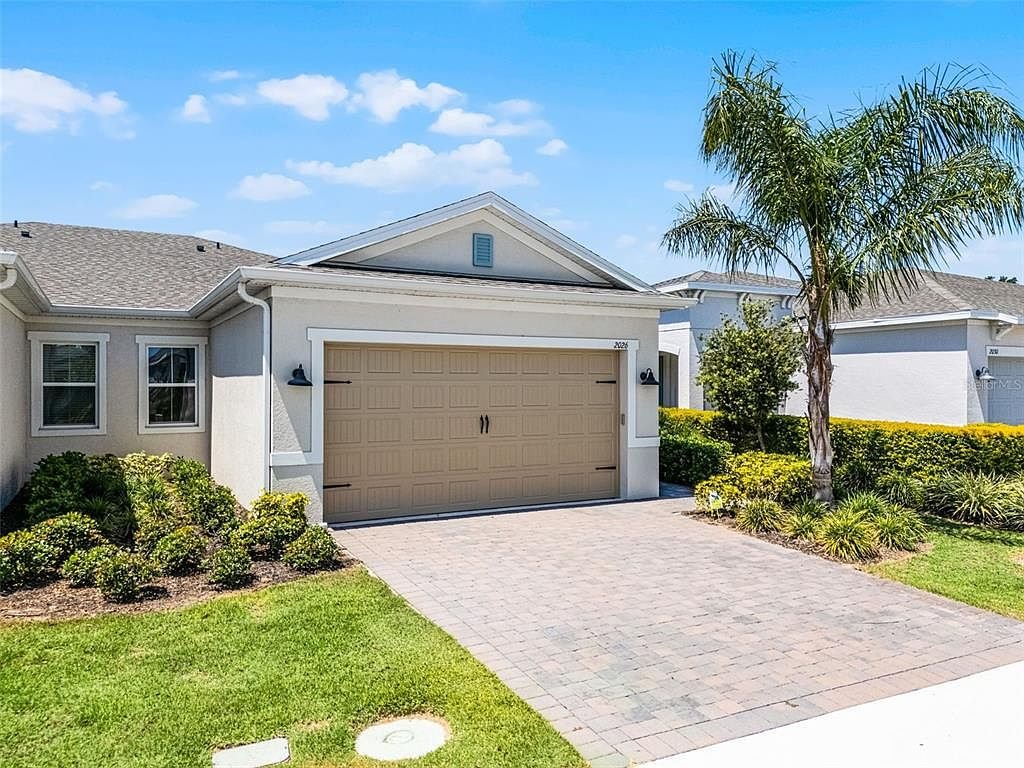
Kissimmee (Osceola County), Florida sits inside the larger Orlando–Kissimmee–Sanford metro—one of the fastest-growing and most closely watched housing markets in the U.S. Because Kissimmee includes multiple price bands (from workforce housing to short-term-rental-adjacent communities), the “headline” price depends on whether you’re looking at the city overall, a specific ZIP code, or a specific neighborhood.
This February 2026 update is written in a publisher-grade, educational format using publicly available, reputable data sources and standard market metrics. It is not a forecast and not a recommendation to buy or sell. Market numbers also update on different schedules, so the cleanest way to read this report is: (1) metro-level direction, (2) Kissimmee city-level list-price signals, and (3) ZIP-level closed-sale signals where available.
1) Quick Snapshot: What the Most Recent Data Suggests (as of February 2026)
Metro-wide pricing context (Orlando–Kissimmee–Sanford):
The metro’s median listing price was $415,000 in January 2026, based on Federal Reserve Economic Data (FRED) housing inventory series sourced from Realtor.com data. Median listing price is a “for-sale market” indicator (what sellers are asking), not the same as closed-sale price.
Kissimmee city-level listing context (Realtor.com city search page):
Realtor.com’s Kissimmee market pages show a median listing price around $367,250 for Kissimmee overall (city-level listing snapshot). This is useful for understanding the asking-price center of gravity across active inventory.
Kissimmee ZIP-level “closed-sale” context (examples):
ZIP-level housing market pages (Redfin and Realtor.com) show that different parts of Kissimmee are moving differently:
- 34741 (Redfin): December 2025 median sale price ~$299,500, down ~7.1% year-over-year, with average days on market ~85.
- 34746 (Redfin): December 2025 median sale price ~$375,000, down ~1.6% year-over-year, with average days on market ~91.
- 34746 (Realtor.com local market): median home sale price ~$389,990 and median rent ~$2,491/month (ZIP-level snapshot).
These can look “inconsistent” at first glance (e.g., Redfin 34746 vs Realtor.com 34746), but it’s normal for sources to differ because:
- they may use different data pipelines, thresholds, and time windows, and
- they may be showing different “as-of” refresh dates inside the same month.
A careful reader treats the market as a set of overlapping indicators rather than one exact number.
2) What “Home Prices” Means (and why different sites show different numbers)
In U.S. housing reporting, “price” can mean several different things:
- Median listing price (asking price): What sellers are listing homes for.
- Median sale price (closed price): What homes actually sold for.
- Price per square foot: Helps compare across different home sizes, but can mislead if property mix changes.
- Home value index/estimate: Model-based estimates for typical homes, not necessarily what a specific home will sell for.
Why numbers differ across platforms:
- Realtor.com often emphasizes listing-market behavior and “hotness” (demand vs supply signals).
- Redfin often emphasizes transaction outcomes and days on market (closed-sales dynamics).
- Zillow often provides “home value” index estimates (model-based, broad-market signals).
Each is useful when interpreted correctly.
3) February 2026 Market Feel: Balanced-to-Competitive, but Not Uniform
Even within the same city, Kissimmee behaves like several micro-markets:
- Areas with heavier investor ownership, short-term rental influence, or seasonal demand can show higher volatility in list prices, DOM, and price cuts.
- Areas with strong owner-occupant demand and limited new inventory can stay resilient even when rates and affordability remain tight.
A practical way to track “market temperature” without making predictions is to watch four neutral indicators:
- Days on market (speed)
- Price reductions (seller flexibility)
- Inventory trend (supply pressure)
- Rent vs price direction (rental market tightness vs purchase market)
ZIP-level Redfin numbers for December 2025 show DOM around ~85–91 days in parts of Kissimmee (e.g., 34741, 34746), which generally signals a market that is less “frenzied” than peak years and more negotiation-driven—though individual submarkets vary.
4) Kissimmee Price Bands: Why ZIP Codes Matter More Than City Averages
City-wide medians blur what’s really happening because Kissimmee includes:
- entry-to-mid priced single-family homes,
- townhomes/condos,
- communities tied closely to Disney-area tourism corridors, and
- new construction pockets that move differently than resale neighborhoods.
Example: 34741 vs 34746
- In 34741, Redfin reports a December 2025 median sale price around $299,500 (YoY down ~7.1%).
- In 34746, Redfin reports December 2025 median sale price around $375,000 (YoY down ~1.6%).
That gap is not “good or bad”—it reflects different housing stock, school zoning patterns, proximity to employment nodes, HOA structures, and buyer mixes.
How to interpret this safely (educationally):
- Use city-level figures to understand overall inventory tone and what’s “typical” on the market.
- Use ZIP-level figures to understand what buyers actually paid in the micro-market closest to your target area.
- Use both to avoid overgeneralizing.
5) Demand Signals: Why the Same Market Can Show “Softness” and “Strength” at the Same Time
A market can have:
- stable or higher list prices (sellers still anchored to prior comps), while also having
- longer days on market and more price reductions (buyers pushing back), especially when affordability is strained.
That pattern is common in many U.S. metros when:
- mortgage rates remain elevated relative to the ultra-low-rate period, and
- homeowners with low existing mortgage rates are less motivated to sell (reducing move-up inventory).
This is one reason analysts often describe housing affordability as a supply-and-transaction-flow problem, not just a pricing problem.
6) Rental Market Context (Why rents matter to purchase demand)
Kissimmee’s housing market is influenced by renters and would-be buyers moving between renting and owning depending on costs.
Realtor.com’s ZIP-level data for 34746 lists:
- median rent around $2,491 per month (ZIP snapshot)
This matters because in many U.S. markets, rent levels influence:
- household budgets (ability to save),
- willingness to renew leases,
- and long-term demand for entry-level homes.
Important limitation: rent medians vary by unit type and by how platforms sample listings. Rent is not “one number” for a city—so this should be read as a directional signal, not a guarantee.
7) Florida-Specific Cost Pressures That Can Affect “Effective Affordability”
In Florida, “home price” is only part of the monthly-cost reality. Buyers and owners often focus on the full “housing payment,” which can be influenced by:
- property taxes (millage rates and assessed value changes),
- homeowners insurance variability,
- flood risk considerations (even outside high-risk zones),
- HOA dues in many planned communities,
- and ongoing maintenance costs in a climate that can accelerate wear.
This is not unique to Kissimmee, but it is especially relevant in Central Florida where many communities have HOA-managed amenities and where insurance costs have been a major household-budget topic in recent years.
8) Population, Household, and Housing Supply Backdrop (Why fundamentals matter)
Housing markets don’t move purely on sentiment. Longer-run drivers include:
- population growth,
- household formation,
- income levels,
- and how fast new housing supply is permitted and delivered.
For a government-source baseline, analysts commonly reference:
- U.S. Census Bureau / American Community Survey (ACS) for household and income patterns, and
- building permits data (Census Building Permits Survey or regional series) to understand construction pipeline direction.
At the metro level, FRED also hosts series connected to the Orlando–Kissimmee–Sanford region, including housing inventory measures and permitting-related series (useful for context; not a forecast).
9) What to Watch Next (March–Spring 2026) — Educational Monitoring Checklist
Rather than guessing outcomes, a safe way to follow Kissimmee’s market is to track a consistent set of metrics monthly:
- Median listing price (city + metro): Shows seller expectations and inventory mix.
- Median sale price (ZIP-level): Shows what buyers actually paid where you care.
- Days on market: A direct signal of how quickly homes are clearing.
- Price reductions: Indicates negotiation pressure.
- New listings vs pending sales: Helps gauge whether supply is building or tightening.
- Rent medians (ZIP-level): Helps understand rental pressure and household tradeoffs.
If you publish monthly updates, keeping the same structure and definitions each time makes your reporting more credible and “evergreen” (readable months later without confusion).
10) Summary: February 2026 Takeaways for Kissimmee (Neutral, Data-Based)
- The broader Orlando–Kissimmee–Sanford metro’s median listing price was $415,000 in January 2026 (FRED/Realtor.com-based series).
- Kissimmee’s city-level listings show a median listing price around $367,250 (Realtor.com city snapshot).
- ZIP-level data shows meaningful differences by area: for example, 34741 and 34746 had different sale-price levels and different year-over-year changes in the latest available closed-sale month on Redfin (December 2025).
- Days-on-market readings in these ZIP examples (roughly ~85–91 days in December 2025 on Redfin for 34741/34746) suggest a market where speed is not uniform and outcomes can depend heavily on pricing, condition, and location.
- Rent signals (e.g., 34746 median rent ~$2,491/month on Realtor.com ZIP snapshot) indicate sustained rental demand, but rents vary widely by unit type and submarket.
This snapshot is designed to be informative, not predictive, and to stay useful even as monthly numbers refresh.
Written by:
Asim Iftikhar — Real Estate Contributor, ACT Global Media
Florida Real Estate Sales Associate License: SL3633555
Florida Notary Public Commission: HH 709161
Editorial disclosure:
This article is provided for general informational purposes only and does not constitute real estate, legal, financial, or investment advice.
Regulatory and fair housing notice:
Content is based on publicly available U.S. sources. Market conditions vary by neighborhood, property type, and individual circumstances. This article does not express preferences about any protected class and is intended as neutral, educational market commentary.